


8:00 PM. November 21.
That was the last time anyone saw Kelsey Hunter.
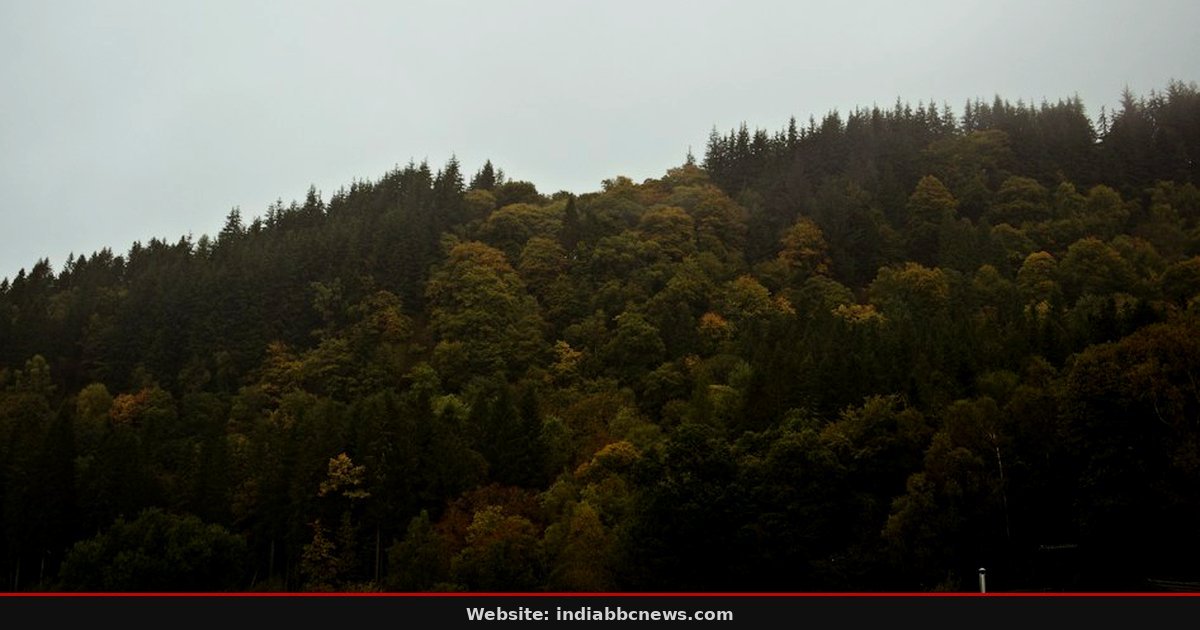
Three days later, the search area in Springholm, Dumfries and Galloway, looks less like a missing person operation and more like a crime scene from a thriller that went too far. Forensic teams in white suits have cordoned off a field, erected yellow tents, and taped off a property while specialist officers dig into the woodland near Reoch Park. The headline doesn’t get softer with time; Police Scotland now formally fears Kelsey, 20, has “come to harm.” It’s a grim pivot from the initial plea for information, a signal that the odds have shifted against us and the family is now bracing for a tragedy that no parent in UK should have to face.
The Shift from Search to Crime Scene The transition happened fast. Within 48 hours, the general public appeal narrowed into a focused forensic sweep. Detective Chief Inspector Stephen McGrath of Police Scotland’s major investigation team confirmed that while they keep an open mind, the investigation has taken a darker turn. “We have to consider the possibility that she may have come to harm,” he said in a statement that weighed heavily on the small town.
Most missing persons cases in rural Scotland end with a reunion, a homecoming, or a simple explanation of where the phone was left charging. This one feels different. The presence of a forensic tent is a visual cue that something physical was found, or rather, something was expected to be found.
What makes the timeline unnerving is the specific detail of her dog. Reports from the Daily Record suggest Kelsey’s dog was found wandering the local area after she vanished. That’s a detail that tugs at the heartstrings in a way that statistics never can. Animals rarely wander far from their owners unless something significant drove the owner away or stopped them from caring for the pet.
It suggests a sudden break in routine, a moment where Kelsey’s day simply snapped. Whether that break was violent or accidental remains the central question that keeps the specialist search teams digging through the damp Scottish bushes. The silence of the woodland is now louder than any siren.
Who Is the Man Arrested in Castle Douglas? A 21-year-old man has been arrested and charged in relation to an assault. He is due to appear at Dumfries Sheriff Court on November 24, a date that looms large in this investigation. Police have not explicitly linked him to Kelsey’s disappearance in public statements, but in small-town investigations, proximity matters. He is the only person currently in custody connected to the area during the critical window.
It’s easy to assume guilt, but the legal reality is more complex. An assault charge is serious, but it doesn’t automatically equal a murder inquiry. However, detectives are building a picture of Kelsey’s life in the days and weeks prior to her disappearance, looking for friction, relationships, and unresolved conflicts.
The concept of “building a picture” is standard police jargon, but it implies a certain intimacy with the victim’s private life that feels intrusive yet necessary. McGrath stated that a key focus is establishing Kelsey’s movements before the last confirmed sighting. They want to talk to her friends. They want to know who she was texting, who she argued with, and who had her phone number.
In a digital age, we think we know everything about the people we like, but we often miss the red flags. We scroll past the sad captions. We ignore the late-night messages. The police are now forced to read the gaps we left behind.
It’s a forensic dissection of a 20-year-old’s social calendar, and it’s the only lifeline the family has left. What This Means for India: The Digital Ghost in the Machine
Why should an Indian reader care about a girl missing in the Scottish Highlands? Because the Kelsey Hunter case mirrors a growing anxiety in India regarding digital silence and physical isolation. We live in a hyper-connected society where our location, our moods, and our whereabouts are constantly broadcast to 500 friends. When that broadcast suddenly stops, the panic is immediate and visceral.
In India, where familial bonds are tight and community oversight is high, a missing person disrupts the social fabric just as it does in Dumfries. The difference is the response mechanism. In the UK, the state machinery kicks in with forensics. In India, the first 24 hours are often community-led, a chaotic mix of WhatsApp forwards and local police stations, before the serious machinery engages.
Kelsey’s case is a reminder that no matter where you are, the world can swallow you whole if you step off the beaten path. There is also a market angle that is often overlooked in these types of tragic narratives. The surge in interest in “safe walking” apps, personal safety tech, and real-time location sharing has accelerated in both the UK and India following high-profile disappearances. Indian startups are pivoting to offer family safety features, knowing that the fear of the unknown drives consumer behavior. If you are an Indian expat in the UK or a parent sending a child abroad, the Kelsey Hunter case is a chilling case study.
It highlights the gap between digital visibility and physical safety. Just because someone is online doesn’t mean they are safe. And just because they are offline doesn’t mean they are gone. It’s a hard lesson to learn, but one that Indian families studying or working in the West are sadly becoming all too familiar with.
The isolation of expat life can make a disappearance seem even more impossible to track, especially in remote areas where cell signal is spotty and help is miles away. The Psychology of Rural Disappearances
Rural Scotland has a dark history of missing persons cases that end in tragedy. From the disappearance of local teenagers to the more high-profile cases in recent decades, the pattern is dismayingly consistent. Small communities hold grudges, secrets, and silences that can last for years. When a young person goes missing in a place like Castle Douglas, the eyes turn inward.
Who knew them? Who didn’t? The social tapestry is thin enough here that everyone knows everyone’s business, which cuts both ways. It helps the police, but it also torments the community.
People start suspecting the neighbor who waved politely. They worry about the friend who seemed distant. The paranoia is a tangible smell in the air, sharper in a small town than in a city where anonymity is a shield.
Experts in criminology often note that rural disappearances are harder to solve because of the lack of CCTV coverage and the vastness of the terrain. A phone signal can bounce off hills, creating dead zones that last for minutes or hours. Those minutes are where evidence goes to die. The forensic teams in Springholm are looking for footprints, traces of fabric, or biological markers.
They are looking for the physical reality of a digital ghost. It’s a brutal game of cat and mouse played on a stage where the audience is the entire town, and the actors are the grieving family. The silence of the hills is not peaceful; it is accusatory. It asks questions that no one in the town wants to answer.
And it waits. It always waits for the next footstep to crunch on the gravel. What Happens Next: The Court Date and the Search
The immediate next step is the court appearance of the 21-year-old man charged with assault. This is not the end of the story, nor is it the beginning of a trial for Kelsey’s disappearance. But it is a pressure point. The defense will argue it was an isolated incident.
The prosecution will look for connections. Every text message, every CCTV frame, and every witness statement is being weighed against this man’s actions. If there is a link, the charges will escalate. If there isn’t, the search continues.
The forensic teams will not stop until they have combed every inch of the designated area. They are looking for a body, or at least, evidence of a body. The yellow tents will stay up as long as there is hope, and hope is a stubborn thing in Scottish weather.
For the family, the next 48 hours will be the hardest. They are being supported by specialist officers, which is a polite way of saying they are being protected from the media and the public. The world moves on, but their world has stopped. The clock on the wall in their living room is ticking louder than ever.
We can only hope that the next update is not a confirmation of the worst fear. But we have to be realistic. The police have said what they have to say. The balls are now in the court of evidence, and in the hands of a God who seems indifferent to the tears of mothers.
We wait. We scroll. We hope. And we pray that the dog leads them back to her, not to her pain.
It’s a prayer that feels faintly, desperately human. And it’s all we’ve got. Frequently Asked Questions
Why did Police Scotland say Kelsey may have come to harm?
Detectives often use this phrasing when the situation shifts from a simple missing person report to a potential crime. It signals that evidence has been found or circumstances are suspicious enough to escalate the investigation. It is a grim update but necessary to manage public expectation and focus resources on criminal inquiry.
Where is Castle Douglas located?Castle Douglas is a large town in the Dumfries and Galloway region of south-west Scotland. It is known for its rural setting and proximity to the Galloway Forest Park, which makes search operations complex due to the dense woodland and limited road access in surrounding areas. Castle Douglas is a large town in the Dumfries and Galloway region of south-west Scotland. It is known for its rural setting and proximity to the Galloway Forest Park, which makes search operations complex due to the dense woodland and limited road access in surrounding areas.
Who is the 21-year-old man arrested in connection to the case?
The man has been charged with an assault but police have not publicly confirmed if he is directly linked to Kelsey Hunter’s disappearance. He is due to appear at Dumfries Sheriff Court on November 24. Investigators are building a profile of Kelsey’s life to determine if any connections exist.
How does this case affect Indian readers or markets?While a UK domestic tragedy, it highlights global concerns about personal safety and digital traceability that resonate strongly with Indian families sending members abroad. It also drives interest in safety tech and real-time tracking apps, a market that is rapidly growing in India as parents seek greater control over their children’s movements. While a UK domestic tragedy, it highlights global concerns about personal safety and digital traceability that resonate strongly with Indian families sending members abroad. It also drives interest in safety tech and real-time tracking apps, a market that is rapidly growing in India as parents seek greater control over their children’s movements.
Source: Daily Mirror UK

