

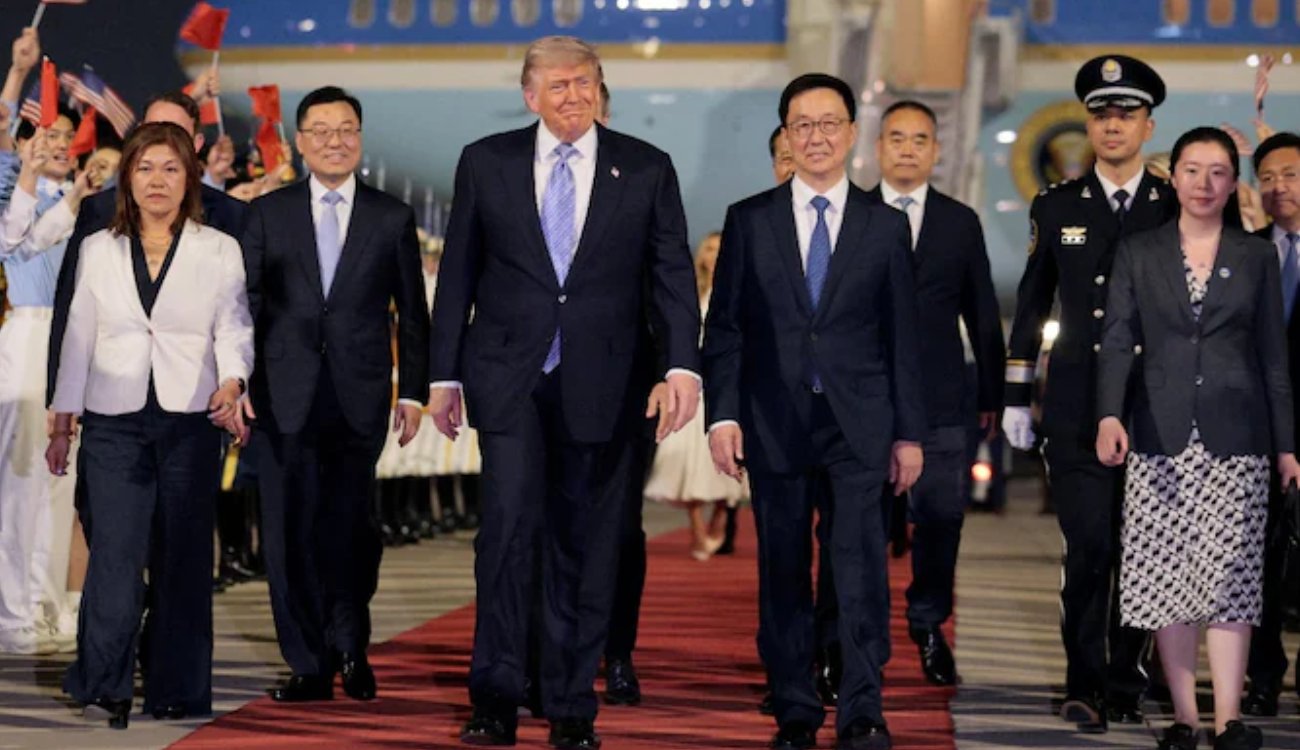
An amazing group of top business and industry leaders are leading the business and tech delegation accompanying US President Trump on his visit to Beijing, including Elon Musk, Jensen Huang, Tim Cook and Larry Fink. This group also includes officials from big organizations like as Meta, Visa, Goldman Sachs, Boeing and Mastercard.
This time, the emphasis and strategy seem more deliberate, in contrast to his 2017 trip, which was marked by big trade deals and high-profile events. Many of the leaders in the entourage are there to deal with long-term commercial and regulatory issues with China.
According to Reuters, the criterion for a member to join this group was to offer a “tangible ask” that may result in real agreements or regulatory approvals during the summit. As such, the optics of many CEOs is not only about optics, they are in China with particular goals in mind.
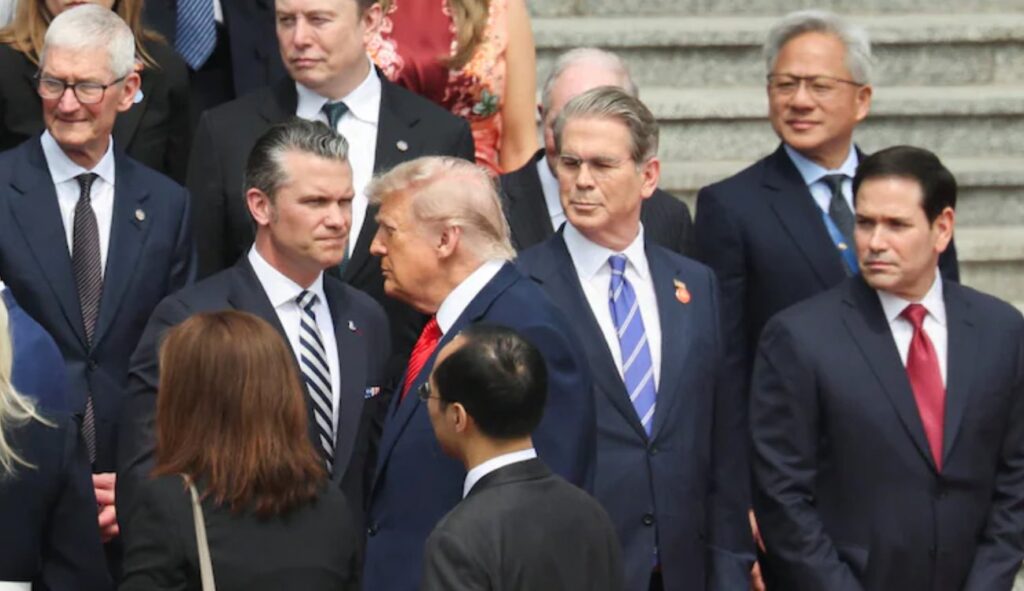
A prominent participant is Jensen Huang, chief executive of Nvidia, whose business has experienced difficulties selling cutting-edge AI processors in China owing to export restrictions and regulatory impediments. For Nvidia’s H200 AI processors, access is critical to the company’s future, since China is a big participant in both the AI and semiconductor sectors.
Elon Musk, who also heads Tesla, has huge economic interests in China as well. Tesla is seeking license to extend its Full Self-Driving system in the world’s biggest car market and depends on Chinese suppliers for equipment used to make solar products. Tesla’s ambitions are now heavily dependent on Chinese authorities, especially after rumors that the corporation is looking to buy some $2.9 billion worth of solar technology from Chinese suppliers.
Tim Cook of Apple sees China as important both as a production base and an important consumer market. Meta also faces criticism from Chinese officials on its purchase of AI firm Manus, which needs regulatory approvals amid heightened scrutiny of foreign investments into sensitive tech fields.
Major financial firms Mastercard and Visa want to extend their footprint in China’s restricted payments industry. Mastercard is looking to increase its stake in a joint venture, while Visa is seeking full control to enter the domestic bank-card clearing market. Other financial executives on the delegation include Citigroup’s Jane Fraser and Goldman Sachs’ David Solomon, who are trying to open more of China’s financial space.
Ultimately, this visit emphasizes a crucial truth: despite continuous trade disagreements, technological limitations, and geopolitical conflicts, American corporations still see benefit in dealing with China. Many in this group rely on the nation for manufacturing, supply networks and consumer markets.
Geopolitical expert Reva Goujon said the businesses are in China to protect access to critical resources and arteries. It might strengthen the US administration’s argument that China is a stable investment partner.
Also politically problematic is the timing of this trip by Trump, with the US economy wrestling with inflation, market volatility and the implications of overseas wars. He wants to maintain a careful trade arrangement with China and reassure American firms that possibilities elsewhere are still available.
The delegation is a broad one includes representatives from the artificial intelligence, banking, aviation and energy industries.
Other significant members, apart from Musk, Huang, Cook and Fink, include:
- Dina Powell McCormick (Meta)
- Kelly Ortberg (Boeing)
- Ryan McInerney, Visa
- Stephen Schwarzman (Blackstone)
- Cargill’s Brian Sikes
- Jane Fraser (Citigroup)
- Jim Anderson (Coherent)
- Henry Lawrence Culp (GE Aerospace)
-David Solomon (Goldman Sachs) - Jacob Thaysen, Illumina
- Michael Miebach (Mastercard)
Some analysts say there may not be any big trade deals right away, but the meeting might help clear necessary bureaucratic hurdles and open up more commercial talks between the two countries. Even little regulatory movement might represent billions of dollars in potential prospects for numerous enterprises.