


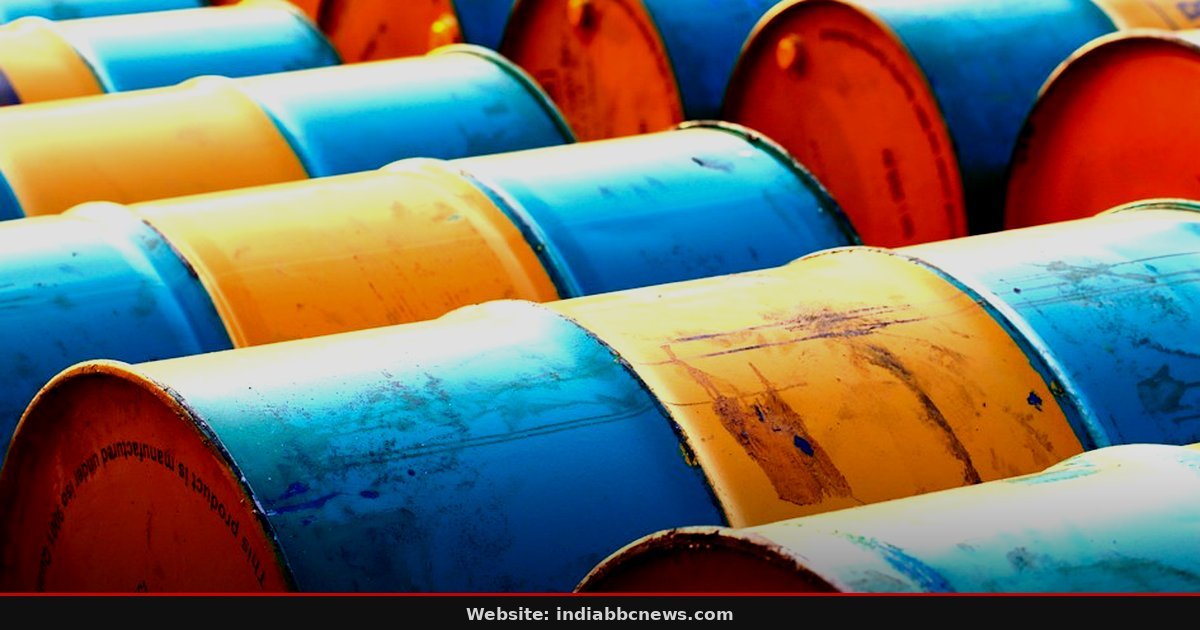
20,085 litres. That is the exact volume of edible oil seized by the Food and Drug Administration (FSSAI) from a warehouse in Pune on Tuesday. The stock belonged to Avenue Supermarts Limited, the parent company of DMart, one of India’s largest retail chains. Officers moved in at a facility in Ambi village, citing a breach of basic food safety standards.
It was not a raid on a back-alley vendor. It was a strike against a major corporate player. The scale of the seizure is staggering for a single operation. Most state-level raids yield a few hundred kilograms at best.
This was a warehouse full. The company has not yet issued a detailed public statement, but internal sources suggest the issue relates to storage conditions and labeling discrepancies. The FSSAI Maharashtra zonal office confirmed the action to journalists, noting that the oil was impounded pending further laboratory analysis. The timing is awkward for the retailer, which has been aggressively expanding its footprint in Maharashtra.
This is not just a regulatory hiccup. It is a potential reputational blow. And it raises uncomfortable questions about supply chain oversight in India’s booming organized retail sector.
The Ambush at Ambi Village
The operation was swift and precise. FSSAI officers arrived at the Avenue Supermarts facility in Ambi, a village on the outskirts of Pune, in the early morning hours. They did not announce their presence. By the time the warehouse staff realized what was happening, the officers had already placed seals on the stored drums.
The seized oil was found to be in violation of the Food Safety and Standards Act, 2006. Specifically, the violations involved improper storage temperatures and missing batch traceability records. These are not minor technicalities. They are the bedrock of food safety.
Without proper temperature control, oils can degrade, producing harmful compounds. Without traceability, you cannot track where contaminated stock came from or where it went. The officers took physical possession of the 20,085 litres. The stock is now in a government-controlled warehouse.
No one can touch it. The company’s local manager was present during the raid. He cooperated with the officers but declined to comment on the specific nature of the violations when asked by reporters on the scene. The silence from the corporate headquarters in Mumbai has been notable.
Usually, DMart issues a press release within hours of any such incident. That silence is telling.
Why did it take so long for this to be detected? That is the question regulators are now facing. The facility in Ambi has been operational for over 5 years. It serves as a key distribution hub for western Maharashtra.
If the storage conditions were consistently poor, how did the oil pass previous inspections? Or were the violations recent? The FSSAI has not clarified this timeline. What is clear is that the agency is under pressure to show it is enforcing the law, not just writing it.
The last major food safety scandal in India involved adulterated milk in 2021. That incident led to a nationwide crackdown. This seizure in Pune is a continuation of that vigilance. But it is also a test.
Can the FSSAI handle a case involving a listed company without appearing biased? The answer will come in the next 30 days, when the lab results are finalized. Until then, the oil sits in a locked room. The drums are cold.
The labels are silent. The investigation is just beginning.
Why This Raid Matters More Than It Looks
Most people think of food safety raids as actions against small, unorganized vendors. They picture a street seller with a dented tin of ghee. That image is outdated. The real risk today lies in the organized sector.
Large retailers have complex supply chains. They source from hundreds of vendors. They store goods in massive warehouses. The margin for error is huge.
A single faulty sensor in a cold storage unit can compromise thousands of litres of product. Avenue Supermarts is not a small player. It is a publicly listed company with a market capitalization in the tens of billions of rupees. Its name carries weight.
When its name is linked to a food safety violation, the impact is amplified. Consumers don’t just see a bad batch of oil. They see a broken system. They wonder if the other products in the store are safe.
That doubt is dangerous. It erodes trust. And in the retail business, trust is everything. The FSSAI knows this.
That is why the seizure was publicized so quickly. They wanted the message to be clear: no one is above the law. Not even the big guys.
There is a historical parallel here. In 2018, a similar seizure of adulterated honey was made from a major supermarket chain in Delhi. The company faced heavy fines. More importantly, it faced a boycott.
Sales dropped by 15% in the affected regions over the next month. The brand had to spend millions on advertising to rebuild trust. Avenue Supermarts could face a similar fate. The difference now is the speed of information.
In 2018, news spread over days. Today, it spreads in hours. A single tweet from a journalist can trigger a nationwide conversation. The company’s social media team will be on high alert.
They will be managing the narrative. But you cannot manage a fact. The fact is that 20,085 litres of oil were seized. The fact is that it violated standards.
The fact is that the FSSAI was in the facility. These are hard facts. They do not go away with a press release. They linger.
They haunt the brand. And they force a reckoning. The company will have to explain what went wrong. It will have to show how it will fix it.
It will have to prove its systems work. That is a harder sell than it sounds. Consumers are skeptical. They have been burned before.
They are not easily won back. Why do large companies make such basic mistakes? It is not because they don’t care. It is because they grow too fast. Avenue Supermarts is expanding aggressively.
The Compliance Gap in Organized Retail
It opened new stores in Pune, Nagpur, and Mumbai in the last 2 years. Each new store increases the complexity of the supply chain. More stores mean more distribution hubs. More hubs mean more chances for error.
Human error is inevitable. Sensor failures happen. Staff make mistakes. The question is not whether errors happen.
The question is whether the systems catch them before they reach the consumer. In this case, they did not. The FSSAI caught them. That is a failure of internal audit.
It suggests that the company’s quality control team did not flag the issue. Or perhaps they did flag it, but it was ignored. That is a management failure. It is a culture problem.
When speed is prioritized over safety, accidents happen. This is not unique to Avenue Supermarts. It is a problem across the industry. Many retailers are struggling to keep up with their own growth.
The compliance infrastructure is not scaling as fast as the business. That is a dangerous gap. It is a ticking time bomb. This seizure is the first explosion.
There will be more. Regulators are watching. They are waiting for the next slip-up. And they will be ready.
Experts in supply chain management are pointing to a systemic issue. They suggest that many companies rely on manual checks rather than automated systems. Manual checks are prone to error. They are slow.
They are inconsistent. Automated systems are better. They are faster. They are more accurate.
But they require investment. Many companies are reluctant to invest in expensive technology. They see it as a cost, not an investment. That is a short-sighted view.
The cost of a recall is far higher than the cost of prevention. The cost of a raid is even higher. It damages the brand. It distracts management.
It diverts resources from growth to crisis management. The FSSAI has been pushing for better digital record-keeping. It wants real-time data from warehouses. It wants sensors that alert regulators when temperatures rise.
This is the future. It is coming. Companies that do not adapt will be left behind. They will be the ones getting raided.
They will be the ones making headlines. The choice is simple. Invest in safety, or face the consequences. There is no middle ground.
The FSSAI is not going to be lenient. It has the law on its side. It has the public on its side. It has the numbers.
The 20,085 litres are not just oil. They are a warning.
What This Means for India’s Retail Sector
For Indian investors, this is a red flag. Avenue Supermarts is a key player in the organized retail space. Its stock price is sensitive to news of this nature. Analysts are already looking at the financial implications.
Fines can be steep. The FSSAI can impose fines of up to 5% of the value of the goods seized. In this case, that could be several crores of rupees. But the bigger cost is indirect.
It is the cost of customer trust. It is the cost of media scrutiny. It is the cost of legal fees. These costs are hard to quantify.
But they add up. They hurt the bottom line. They hurt the brand. They hurt the company’s ability to expand.
Investors are watching. They are analyzing the data. They are asking questions. What other facilities have similar issues?
Are there other violations that have not been reported? The company will have to answer these questions. It will have to be transparent. Or it will be punished.
The market does not forgive. The market punishes. The stock price will reflect the uncertainty. That is a risk.
It is a real risk. One that the company must manage.
For the Indian consumer, this is a wake-up call. We have been told that organized retail is safer than unorganized retail. We have been told that big companies have better standards. This incident challenges that narrative.
It shows that even big companies can fail. It shows that no one is immune. It shows that vigilance is necessary. Consumers need to be vigilant.
They need to check labels. They need to check expiry dates. They need to be suspicious. They need to ask questions.
They need to report issues. The FSSAI relies on consumer complaints. It is the eyes and ears of the system. Without consumer participation, the system fails.
This incident should motivate consumers to be more engaged. It should motivate them to be more critical. It should motivate them to demand better. The consumer has power.
The consumer has a voice. Use it. Speak up. Report.
Demand. The outcome will be better. The system will improve. The standards will rise.
That is the goal. That is the hope. But it requires effort. It requires participation.
It requires action. Passive acceptance is not an option. Not anymore. The 20,085 litres are a symbol.
They are a call to action. Heed the call. Be vigilant. Be critical.
Be engaged. The future of food safety depends on it. We are all in this together. Let us make it count.
The Next 30 Days: What to Watch
The FSSAI will announce the lab results within 30 days. This is the critical milestone. If the oil is found to be adulterated, the penalties will be severe. If it is found to be safe but improperly stored, the penalties will be moderate.
The outcome will determine the next steps. The company will appeal the seizure if it believes it was unfair. It will argue that the system is flawed. It will argue that the officers made mistakes.
The FSSAI will defend its actions. It will cite the law. It will cite the evidence. The legal battle will begin.
It will be public. It will be messy. It will be watched. The media will be present.
The public will be watching. The outcome will set a precedent. It will define the standards for the industry. It will shape the future of food safety in India.
The next 30 days are crucial. Every day matters. Every statement matters. Every move matters.
The company is on the back foot. It is reacting, not acting. It is defending, not attacking. That is a bad position.
It is a weak position. But it is a survivable position. If it handles it well, it can recover. If it handles it poorly, it will crumble.
The ball is in its court. It has to play. It has to win. The stakes are high.
The pressure is on. The clock is ticking. The next 30 days will decide the fate of this incident. And the fate of the brand.
Watch closely. The details matter. The small things matter. The big things matter.
Everything matters. The 20,085 litres are not just oil. They are a test. The company is being tested.
The regulator is being tested. The system is being tested. The outcome will be real. The impact will be lasting.
The history will be written. Be part of it. Watch. Learn.
Understand. The future is now. The present is critical. The moment has arrived
Source: The Hindu

