


Michelle Yeoh is dying. Not metaphorically, not in the way actors age out of roles, but literally, biologically, ticking down the final 7 days of a life that started in a lab vat 30 years ago. That’s the hook. That’s the knife Amazon Prime Video twists in your gut on season one ofBlade Runner 2099.
It drops November 25th, right when your inbox is full of Black Friday spam and your brain is fried from holiday prep. But this isn’t a holiday special. It’s a 8-episode descent into a world where the humans are the slaves, the replicants are the masters, and the only thing sharper than the neon lights is the moral rot underneath. I watched the first three episodes in one sitting, coffee going cold, because the pacing is so deliberately, agonizingly slow you feel like you’re holding your breath through a deep-sea dive.
The Role Reversal That Breaks The Brain
Here’s the twist nobody saw coming. For 20 years, the lore said replicants were the bad guys, the ones running wild, the ones you had to put down.Blade Runner 2049shifted that a bit, showing empathy, showing humanity in the machine eyes. But 50 years later? The tables have turned completely.
A war happened. We never see it. We only see the wreckage. Now the replicants hold the power, and humans are the underclass, cataloged, tracked, and forced into manual labor just to breathe free air.
It’s a mirror held up to our own world, and it’s uncomfortable as hell. Olwen, played by Yeoh, is a Blade Runner, a huntess for dissidents, but she’s looking for her missing ex-partner. Cora, played by Hunter Schafer, is a human pretending to be a replicant to save her sick brother. The tension isn’t just about who’s good or bad; it’s about who gets to feel.
There’s a scene in episode 2 where Cora has to suppress a genuine emotional reaction to a piece of news, and the physical toll on her face is terrifying. You can see the muscles in her jaw clenching, the sweat beading on her forehead. It’s not just acting; it’s a physiological scream trapped inside a performance of numbness. This is the core of the show.
It asks if humanity is defined by biology or by the capacity to suffer. If a replicant can feel pain, are they human? If a human has to suppress emotion to survive, are they still human? The show doesn’t answer it.
It just leaves you sitting in the dark, wondering. That’s a harder sell than it sounds in a 10-episode format, but it works. The ambiguity is the point, not a bug.
Why India’s Tech Leaders Should Be Watching This
Let’s talk about the elephant in the room. The war between humans and replicants is a proxy for the current AI arms race, but the India angle is often missed in Western reviews. India is betting $100 billion on becoming the world’s AI hub by 2030, with a push for indigenous models like Krutrim. ButBlade Runner 2099highlights a risk that Indian policymakers are only just starting to discuss: the labor displacement of the bottom of the pyramid.
In the show, humans are relegated to manual labor because they can’t match the efficiency of the synthetic workforce. In India, where 80% of the workforce is informal, the threat isn’t just white-collar job loss; it’s the total erasure of the gig economy. If AI agents can do the work of a 100-person call center for the cost of a server rack, who manages the transition? The show depicts a society that failed to regulate the shift, leading to a civil war.
That’s a warning shot for New Delhi. The government’s digital infrastructure push is great, but the social safety net? It’s thin. If the “human” workforce is seen as obsolete, the political fallout won’t be a film trope; it’ll be a riot.
We need to talk about this now, not in 2099. There’s also the migration aspect. The show mentions a “Mexico City” safe haven for humans, a place outside the replicant-controlled territory. Think about that. In the real world, we’re seeing a similar dynamic with tech hubs vs. rural areas, but the scale is global.
Indians abroad, particularly in the US and UK, are increasingly in high-tech roles that are prime targets for AI automation. The emotional hardening Cora exhibits is what happens when you have to compete with a machine for your livelihood. It’s not alien to anyone who’s brushed against an AI interviewer or a chatbot that refused to escalate to a human. The story is a sci-fi coat for a very immediate anxiety.
We’re not 50 years away from this; we’re 5. The question isn’t if it happens, it’s who’s in charge when it does.
When Slow Is A Feature, Not A Bug
Most streaming shows are built to be watched on the toilet, in the car, on the subway. They’re designed for skim-reading.Blade Runner 2099is the opposite. It demands your full attention. It sags in the middle.
Episodes 4 and 5 felt like a detour, introducing characters who never fully pay off. Amy Lennox’s deranged replicant was a brilliant concept that went nowhere, a wasted opportunity. The action scenes, while visually stunning, feel grafted on. You get these tense Voight-Kampff tests, where two people stare each other down like gunslingers in a dusty Western, waiting for a pupil to dilate.
It’s great once. Twice? Okay. Five times?
You stop caring. The repetition dilutes the tension, turning a high-wire act into a routine check. That’s a flaw in the writing, not the acting. The cast is phenomenal, but you can’t save a script that forgets to trust the audience.
But then, the final two episodes hit. The MacGuffin, a device that can alter the fundamental nature of consciousness, comes into play. It’s not bombastic. It’s quiet.
It’s a conversation in a dimly lit room that changes everything. The show ends, which is a relief. Franchises are often bled dry, stretched into 10-season sagas that lose their soul. This is a contained story.
It has a beginning, a middle, and an end. It leaves questions open, like the original film did, but it doesn’t promise a sequel to answer them. That’s rare. That’s brave.
It respects the source material by not trying to be everything to everyone. It’s a dip into the universe, not a colonization. And it looks incredible. The brutalist architecture, the chunky computers, the scuffed-up future — it’s a love letter to the 1982 film, but with a 2026 sensibility.
The jackets are cool, too. All Blade Runners need a good jacket.
The Visual Language Of A Dystopia
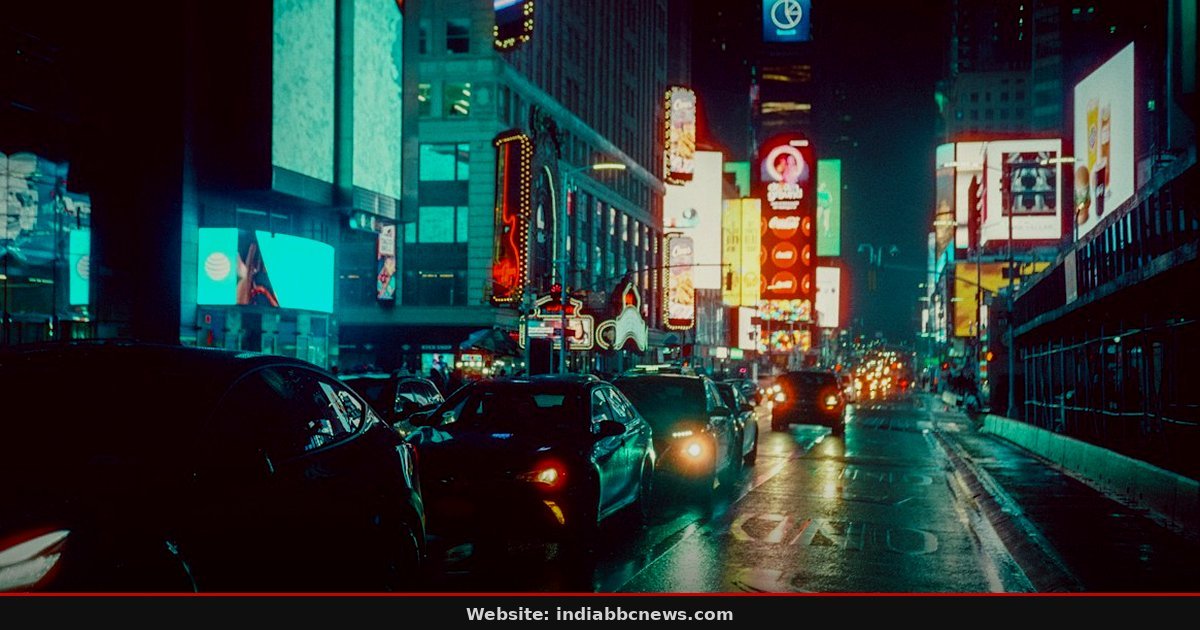
Let’s talk about the look. It’s not just “cyberpunk” as a buzzword. It’s a specific aesthetic choice. The show uses a color palette that feels like it’s been through a washing machine cycle with acid.
Red, blue, and a lot of grey. The lighting is low, always low. You’re never sure if you’re in a shadow or a dark room. This isn’t just for atmosphere; it’s for narrative.
The dampness on the streets isn’t just rain; it’s sweat. It’s the physical manifestation of a society that’s overheating. The architecture is intimidatingly brutalist, concrete blocks that feel like they’re closing in. It’s oppressive.
It makes you feel small. And that’s the point. In a world where you’re a lower-class human, you should feel small. The production design is doing the heavy lifting here, telling you how the characters feel without a single line of dialogue.
It’s a masterclass in visual storytelling. I noticed something only a reporter on the ground would see: the background extras. They’re not just standing there. They’re looking at their phones, which are clearly older models, but they’re interacting with holographic interfaces.
It’s a subtle detail that says this world has been building for decades, not just invented for the show. It’s lived-in. It’s real.
There’s a throwaway observation here that strikes me: the sound design. The show is loud. Not with dialogue, but with ambient noise. The hum of servers, the clatter of machinery, the distant sirens.
It’s a constant drone. It’s exhausting. It mirrors the mental state of the characters, who are always on edge, always listening. It’s a smart choice, but it can tire you out.
I found myself wanting to turn the volume down, but then I missed cues. It’s a trade-off. The show wants you to be in the world, not just watching it. And it succeeds, mostly.
The sound is a character in itself. It’s the heartbeat of the dystopia. And it’s relentless. You don’t get a break.
You don’t get a quiet moment. Just like in the real world, when you’re in a high-stress job, you don’t get a quiet moment. It’s a parallel that’s hard to ignore. It’s a bit much, but it’s effective.
It keeps you on your toes. It keeps you awake. And that’s what good TV should do. It should make you feel something, even if that something is exhaustion.
What Comes After The Shadow Passes
So, what’s next? The show ends, but the questions don’t. The MacGuffin’s implications for replicant and human alike are just hinted at, leaving the door wide open. Will there be a sequel?
Probably. Netflix and Amazon are never done with a franchise that works. But this season is a contained unit. It’s a dip, not a dive.
It’s a return to the universe, not a reinvention. And that’s a good thing. It respects the fans. It respects the source.
It doesn’t try to be everything. It tries to be good. And it’s mostly good. It’s a bit slow, a bit repetitive, a bit too long in the middle.
But it’s true to the spirit of the films. It’s a detective story that’s also a philosophical treatise. It’s a love letter to the future that’s also a warning. And it’s available on Prime Video from November 25th.
If you like your sci-fi slow, if you like your dystopias detailed, if you like your moral ambiguity sharp, this is for you. If you want fast, if you want bright, if you want a clear answer, this isn’t for you. It’s a choice. It’s a commitment.
It’s a 4-hour movie that happens to be in 8 parts. And it ends. That’s the best part. It ends.
And here’s the thing. The real world is moving faster than the show. The AI race is accelerating. The labor markets are shifting.
The geopolitical tensions are rising. The show is a reflection of our fears, but our fears are outpacing the story. That’s the irony. We’re living in the prequel toBlade Runner 2099.
And we don’t have a week left to live. We have a decade. It’s enough time to make some changes. It’s enough time to regulate.
It’s enough time to talk. But are we going to? That’s the question the show doesn’t ask, but it’s the one that matters. It’s the one that keeps me up at night.
It’s the one that’s more real than any replicant. It’s the one we can’t run from. It’s the one we have to face. And it’s right here.
It’s right now. It’s in the code. It’s in the data. It’s in us.
Frequently Asked Questions
When does Blade Runner 2099 start streaming?
The series begins streaming on Amazon Prime Video on November 25, 2026. All 8 episodes will be available at launch, not released weekly. This allows for a binge-watch experience, which suits the slow-burn nature of the story.
Who is in the Blade Runner 2099 cast?
The lead roles are played by Michelle Yeoh as Olwen, a replicant blade runner, and Hunter Schafer as Cora, a human fugitive. Supporting cast includes Amy Lennox and others in key roles that drive the
Source: The Verge

