


Blanchelande College Wins 2026 ISA Award For ‘Emmaus Space’ Wellbeing Initiative
A quiet room in a Channel Island school just won a national prize for keeping teenagers from quitting education. Blanchelande College in St Andrews, Guernsey, took home the Mental Health and Wellbeing Award at the 2026 Independent Schools Association Awards earlier this week. It wasn’t for new science labs or faster Wi-Fi, but for the Emmaus Space, a dedicated wellbeing hub that opened its doors in September 2025. The judges recognized the move for tackling a growing crisis in UK and offshore education: school refusal. For years, parents and educators have watched helplessly as students simply stopped coming to class, citing anxiety and burnout.
This award signals that the shift toward emotional infrastructure is finally being recognized by formal institutions. It’s a small win, but it lands at a critical time for independent schools trying to justify their fees. The trend is moving from reactive counseling to proactive environmental design. The fact that a Catholic independent school led this charge might surprise some observers in the sector.
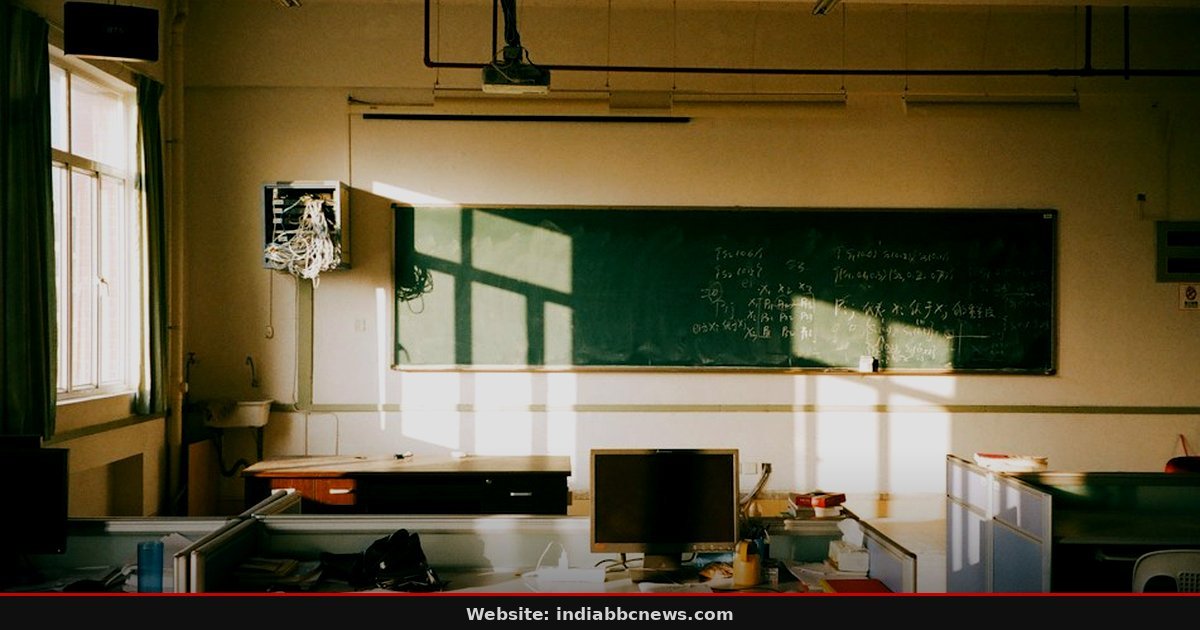
They are proving that academic rigor doesn’t have to crush student spirit. The room itself is deceptively simple. It’s not a sterile clinic or a intimidating office with a desk blocking the door. Instead, it functions as a neutral zone where students can decompress before class. The design avoids the clinical feel that often scares off hesitant teenagers.
The Mechanics of the Emmaus Space
There’s no white coat, no clipboard, just a space that feels safe enough to trust. Dr Vanessa Mitchell, the vice principal, emphasized that the approach was about feeling “seen and heard.” That’s a harder sell than it sounds when you’re dealing with pre-teens who are wired for secrecy. The school tracked attendance data closely after the room opened. The results showed a tangible drop in school refusal cases over the first term.
It’s rare for a physical space to show such immediate metrics, but the correlation is strong here. The room acts as a decompression valve for the entire curriculum.
What makes this different from a standard guidance office? It’s the low barrier to entry. Students don’t get sent there; they choose to go. That agency is critical for mental health interventions that often feel punitive.
The college also pointed to a rise in overall attendance during the same period. This suggests the space isn’t just a refuge, but a tool for re-engagement. The drop in school refusal was the specific metric that caught the judges’ eye. In many schools, refusal is treated as a behavioral issue or a parental choice.
Blanchelande treated it as a systemic vulnerability that the school could fix. The award validates that approach, putting Guernsey on the map for educational innovation. It’s a model that larger, more bureaucratic institutions might struggle to replicate quickly. The agility of a mid-sized independent school allowed them to pivot faster than public sector counterparts.
They didn’t wait for a committee vote; they built the room when they saw the need. It feels counterintuitive, right? Independent schools are supposed to be the safest harbor for anxious families. Yet, data from recent years shows a spike in withdrawal from these institutions too. The pressure to perform is intense, and the social landscape is hyper-competitive.
Why School Refusal Is Hitting Independent Schools
Many students report feeling “shiny” but hollow, struggling to cope with the pace. The award highlights that even well-resourced schools are not immune to this cultural shift. It’s no longer just a state school problem; it’s a universal adolescent experience. Parents are becoming more vocal about mental health, pushing schools to adapt or lose enrolment.
The economic models of independent schools are under scrutiny for this reason. If you can’t keep the student mentally engaged, you can’t keep the tuition revenue. This award serves as a badge of honor for navigating that tension. It’s a sign that the sector is listening to the data, not just the tradition.
The line between academic excellence and emotional sustainability is blurring fast. Schools that ignore this trend will find their waiting lists shrinking.
Dominick LaRosa, a former principal who tracks these trends, notes that the “high-performance culture” is a double-edged sword. He says many families move to independent schools precisely to escape perceived deficits in the state system. But they often import the same high-stakes mindset into the new environment. The result is a pressure cooker that needs a release valve.
The Emmaus Space provides that release without undermining the academic mission. It’s a sophisticated balance that requires significant staff training and cultural buy-in. Not every headmaster wants to admit that their top students are struggling. The data from Blanchelande suggests that acknowledging the struggle is the most effective intervention.
The award confirms that recognizing mental health is now a core operational metric, not a footnote. It’s a pivotal shift in how educational value is defined in the 2020s. The focus is expanding from grades to well-being as the primary output of schooling. This changes the procurement, the staffing, and the daily rhythm of the school year.
It’s a fundamental restructuring of the school day that many only now are beginning to understand. Can a small island school in the English Channel teach India anything? Absolutely, and the implications are direct for Indian parents and policymakers alike. India’s education system is currently grappling with a silent epidemic of student burnout and rising school dropouts among affluent urban families. The focus on NEET and JEE entrance exams has created a high-pressure environment that mirrors the competitive cultures of the UK independent sector.
What This Means for India’s Education Policy
Yet, India has lacked a structured, institutionalized model for “wellbeing spaces” within schools. Most Indian schools, even elite private ones, treat counseling as a reactive measure for severe cases. They rarely build proactive, aesthetic “sanctuaries” into their architecture as Blanchelande did. The ‘Emmaus Space’ model is a template that Indian Private Sector Schools could adopt immediately.
It’s cost-effective and requires no new legislation, just a change in mindset. For Indian parents who are increasingly worried about their children’s mental health despite high scores, this is a signal that the world is moving. They are seeing that top-performing international schools are prioritizing emotional infrastructure. This could influence the demand for “holistic” education packages in cities like Bangalore, Pune, and Gurgaon.
Parents are beginning to ask questions about mental health support as part of their school selection criteria. The award puts India’s leading private schools on notice: you can’t just drill exams.
There’s a significant opportunity for Indian ed-tech and facility design firms here. The concept of a “decompression zone” is becoming a standard expectation in premium education markets globally. Indian schools could partner with mental health professionals to design similar spaces, integrating them with traditional teaching methods. The drop in school refusal at Blanchelande is a metric that Indian schools track, too, though often informally.
A formalized approach could help Indian institutions retain students in their volatile secondary years. It’s also relevant for the Indian diaspora in the UK and US, where many Indian families have settled. They are watching these awards and news stories closely, seeking assurance for their children’s well-being abroad. The success in Guernsey validates their concerns and gives them language to demand similar changes in local schools.
It’s a transnational dialogue that is just starting to take shape. The lesson is clear: emotional safety is a prerequisite for academic achievement. India’s education sector, which is one of the largest in the world, cannot afford to ignore this emerging best practice. The country needs to move beyond lip service and start building physical spaces that recognize this need.
It’s a gap in the market that is currently being filled by ad-hoc solutions with uneven quality. The Blanchelande model offers a benchmark for what “good” looks like in this space. Indian policymakers in the Ministry of Education have shown interest in mental health, but the implementation is lagging. This award provides a concrete example of how to execute at the school level, without needing massive federal funding first.
It’s a grassroots innovation that scales vertically, and it’s exactly what the Indian system is trying to replicate with its new National Mental Health Policy. The challenge for India is translating this island-specific success into a massive, diverse continental context. But the principles remain the same: a safe space, trained staff, and a culture that permits vulnerability. That’s a harder sell to a system built on rote learning, but it’s a necessary one.
The Economics of Care in Private Schools
How do you pay for a room that doesn’t generate tuition fees? That’s the question every finance director in the private sector is staring at. The cost of maintaining a wellbeing space is real and not trivial. You need trained counselors, not just teachers who have attended a single workshop.
The operating costs for the Emmaus Space are baked into the annual budget, which parents pay for. This is a subtle but important shift in the value proposition of private education. Parents are now paying for psychological safety as much as academic instruction. The award serves as marketing collateral, proving that the premium price buys results beyond test scores.
It’s a sophisticated brand move that has far-reaching financial implications. Schools that fail to invest in this area are risking their enrollment pipelines. The data shows that retention rates are tied to student well-being, not just exam rankings. This is a direct hit to the bottom line if ignored.
The financial models of independent schools are changing to reflect this reality. It’s no longer a line item to cut during a budget crunch; it’s a core asset. The industry is realizing that mental health support is a retention strategy. It’s a long-term investment in the student’s relationship with the institution.
This has huge implications for the broader economy of private education in the UK and similar markets. Schools are competing on wellness features now, not just facilities like sports complexes. The award highlights this new battleground where schools are evaluated by their human resources, not just their physical resources. It’s a nuanced economic shift that is hard to ignore.
The investment in the space has already paid for itself in reduced counseling fees and improved retention. It’s a math equation that every headmaster is now running in their head. The return on investment for mental health infrastructure is becoming clear and quantifiable. This changes the conversation from “nice to have” to “essential for survival.” The economic landscape of education is shifting under our feet, and schools are racing to keep up.
What Happens Next for Blanchelande and the Sector
The award is one thing, but the real test is sustainability. Does the Emmaus Space remain funded and effective after the press cycle dies down? That’s the question that keeps educators up at night. Many schools launch wellness initiatives with a bang and a press release, then quietly defund them later.
The challenge is embedding the culture so deeply that it survives staff turnover and budget cuts. Blanchelande has until the next awards cycle to prove that this isn’t a one-off fluke. They need to show longitudinal data that the benefits persist beyond the first year. The sector is watching closely to see if this model can be replicated in different contexts.
There’s ongoing debate about whether this approach works in larger, co-ed schools with different demographics. The next few months will reveal whether the awards body’s recognition translates into actual policy changes at Blanchelande. The school leadership has promised to share their data with other institutions, a notable move for transparency. This open-source approach to wellbeing could accelerate adoption across the Channel Islands and the UK.
It’s a pragmatic step that could define the next decade of independent schooling. The road ahead is uncertain, but the direction seems clear. The industry is moving toward a more human-centric model of education, and Blanchelande is at the forefront of that shift. They have a lot to prove, but they also have a lot to gain from leading the charge in this new era.
For the other schools in the league, the pressure is mounting to respond. They can’t just ignore the trend without risking their reputation in the eyes of discerning parents. The competition for top talent in education is getting fierce, and wellbeing is part of that talent war. Teachers are burning out, and they need support too.
The award focused on students, but the ripple effects are felt by the staff as well. A healthy student body is easier to teach, and a supported staff is more effective. It’s a cyclical benefit that improves the entire ecosystem of the school. The next big move will likely be cross-school partnerships to share best practices.
No single school can solve the mental health crisis alone; it requires a collective effort. Blanchelande’s win opens the door for that collaborative dialogue to happen at a higher level. The sector is coalescing around a new set of standards for what a “safe” school looks like. It’s a professionalization of the emotional aspect of education that is long overdue.
The award is the catalyst, but the industry will determine the outcome. Whether it becomes a standard or just a footnote remains to be seen, but the die has been cast. The future of schooling is no longer just about knowledge transfer; it’s about creating an environment where learning can actually happen. That’s a profound change, and it’s starting in
Source: BBC Health

