


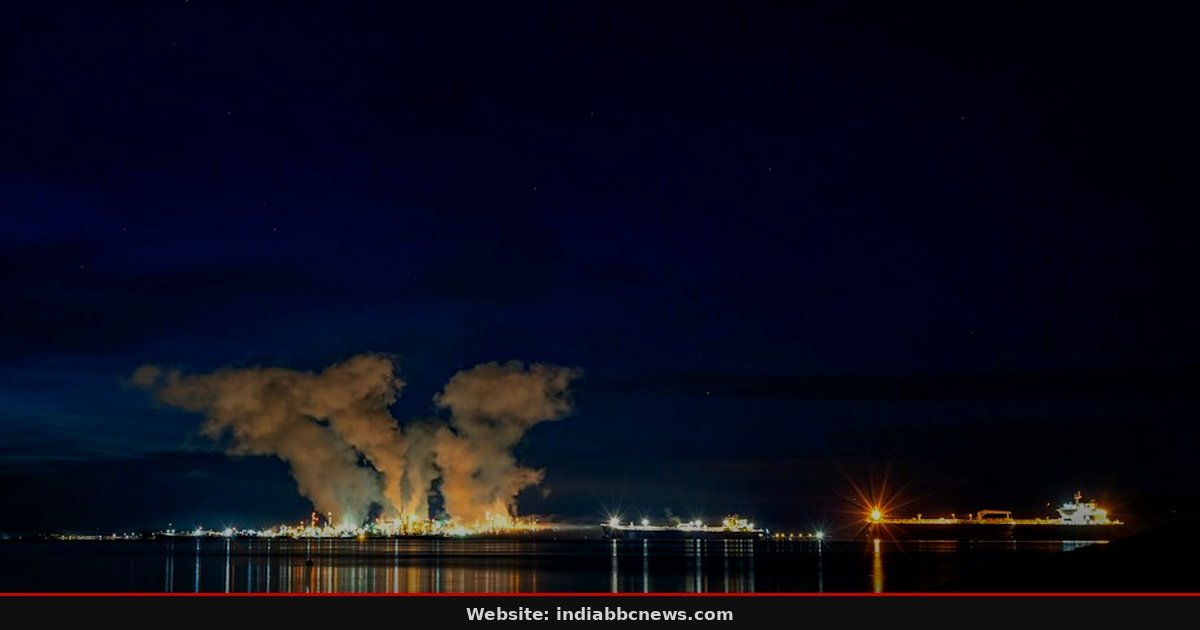
4,800 tonnes of fuel. That’s roughly 66 tankers’ worth of crude sitting in storage tanks, now ablaze under a November sky.
Ukraine has stopped playing defense. The shift is total. Kyiv’s long-range drones breached deep Russian air defenses last night to hit the heart of Samara’s petrochemical industry. This isn’t a border skirmish.
It is a calculated strike on Russia’s economic lifeline. The target: two major oil refineries in the Samara region. The method: a swarm of 145 unmanned aerial vehicles. The result: fire, chaos, and a direct hit on Moscow’s war chest.
The Night the Sky Fell on Samara
Local authorities confirmed the scale of the assault within hours. Vyacheslav Fedorishchev, the regional governor, took to social media to explain the damage. He said local air defense forces downed 145 Ukrainian drones overnight. That is an unprecedented volume for a single coordinated attack on one region. The sheer number suggests a massive logistical effort by Kyiv’s intelligence agencies.
Power outages swept through parts of the city as defenses fired. Residents watched flares light up the horizon. The refineries, critical for processing crude into diesel and jet fuel, suffered significant damage. Smoke billoned into the night air, visible from miles away.
This isn’t just a blip. It’s a declaration.
Striking the Wallet, Not the Front Line
The strategic logic here is cold and clear. Russia relies on oil exports for 40% of its federal budget. By hitting refineries deep inside Russia, Ukraine is forcing Moscow to spend scarce air defense missiles to protect static targets. A single drone costs less than a fraction of the interceptor missile used to shoot it down.
It’s a game of attrition, but the math favors Kyiv right now. Every missile Russia fires over Samara is a missile not fired against Ukrainian soldiers in Donbas.
Historically, Russia tried to keep its energy infrastructure shielded by distance. Samara is over 1,200 kilometers from the Ukrainian border. That distance used to be a safe haven. It isn’t anymore.
This mirrors tactics seen in the Soviet Union’s early years, where economic sabotage was used to weaken state capacity. But this time, the tools are high-tech and the intent is to bleed the Russian treasury dry before the next diplomatic window opens.
What This Means for India
For New Delhi, this is a mixed bag of headaches and opportunities. India is Russia’s largest buyer of discounted crude oil. If Samara’s refineries are offline, domestic Russian supply tightens. This could push Moscow to sell less at a discount, or less at all, as they prioritize fueling their own military machines.
Indian refiners in Gujarat and Rajasthan might face slightly higher procurement costs in the short term, despite global prices remaining volatile. The discount on Russian crude, a cornerstone of India’s energy security strategy, could narrow by 2-3% over the next two quarters.
Yet, there’s a counterpoint. If Russia’s processing capacity is crippled, global demand for refined products shifts. India, with its own massive refining capacity, could step in to fill the gap in Asian markets for diesel and jet fuel. It’s a classic zero-sum game.
While fuel prices might tick up slightly for Indian drivers, Indian refiners gain leverage in global trading. The rupee might see minor pressure, but the balance of trade in energy commodity flows is the real story here, not the headline price of a barrel.
The Drone Swarm: A New Tactical Reality
Fifteen-year-old history books will rewrite themselves this week. The use of 145 drones in a single wave challenges the notion that air superiority is determined by fighter jets alone. It’s a decentralized, coordinated attack by autonomous platforms. Experts in defense analysis have warned about this for years, but the execution here is flawless.
The drones likely used GPS jamming to evade detection, darting in at low altitudes. That’s a harder sell than it sounds for any modern air defense system designed for high-altitude threats.
And the aftermath is messy. Debris rained down on residential areas. It’s not just about the fire. It’s about the panic.
It forces Russia to acknowledge that its “secure rear” is no longer secure. This psychological blow is perhaps more damaging than the physical destruction of the refineries. Officials in Moscow denied any major disruption to export pipelines, but the smoke tells a different story. The integrity of the Russian state’s ability to project strength is now in question.
Global Markets Brace for the Shock
Brent crude prices jumped 4% in pre-market trading. Traders are nervous. The disruption at Samara is significant, but the fear is bigger. What if Kyiv targets the Urals next?
Or the Caspian pipeline? The insurance premiums for tankers in the Black Sea are already soaring. Shipping companies are rerouting to avoid risk. It’s a classic fear-driven market reaction.
The actual supply drop is real, but the premium on uncertainty is what’s moving the needle most. Western officials are cautiously optimistic. They see this as Ukraine extending its reach. But they are careful not to celebrate too loudly. The US State Department issued a vague statement urging restraint, which is diplomatic code for “keep it up.” Europe is watching closely, especially nations dependent on stable energy markets.
The next 72 hours are critical. If fires are contained and production restarts, the market shock will fade fast. If the damage is deeper, we could see a spike in global inflation.
Frequently Asked Questions
Why did Ukraine attack Samara?
Samara is a hub for Russian petrochemical production. By hitting refineries there, Ukraine aims to reduce Russia’s ability to export fuel and generate revenue for its war effort. It’s a direct economic strike.
How many drones were used in the attack?
Regional governor Vyacheslav Fedorishchev confirmed that 145 drones were downed. The exact number launched may be higher, as some may have been destroyed on the ground or failed to launch, but 145 is the official figure for intercepted threats. Both targeted refineries suffered fires and structural damage. Exact production losses are not yet confirmed, but initial reports suggest significant downtime for several days or weeks.
What damage was done to the refineries?
How does this affect global oil prices?
Prices have risen due to supply fears. If the disruption continues, global refined fuel prices may climb, impacting transportation costs and inflation worldwide, including in Asia and Europe. Yes. This marks a shift from defensive operations to deep-strike attacks on Russia’s economic infrastructure. It signals that Ukraine is willing and able to strike far beyond the battlefield.
Is this a change in Ukraine’s strategy?
Source: The Hindu International
Source: The Hindu International

