


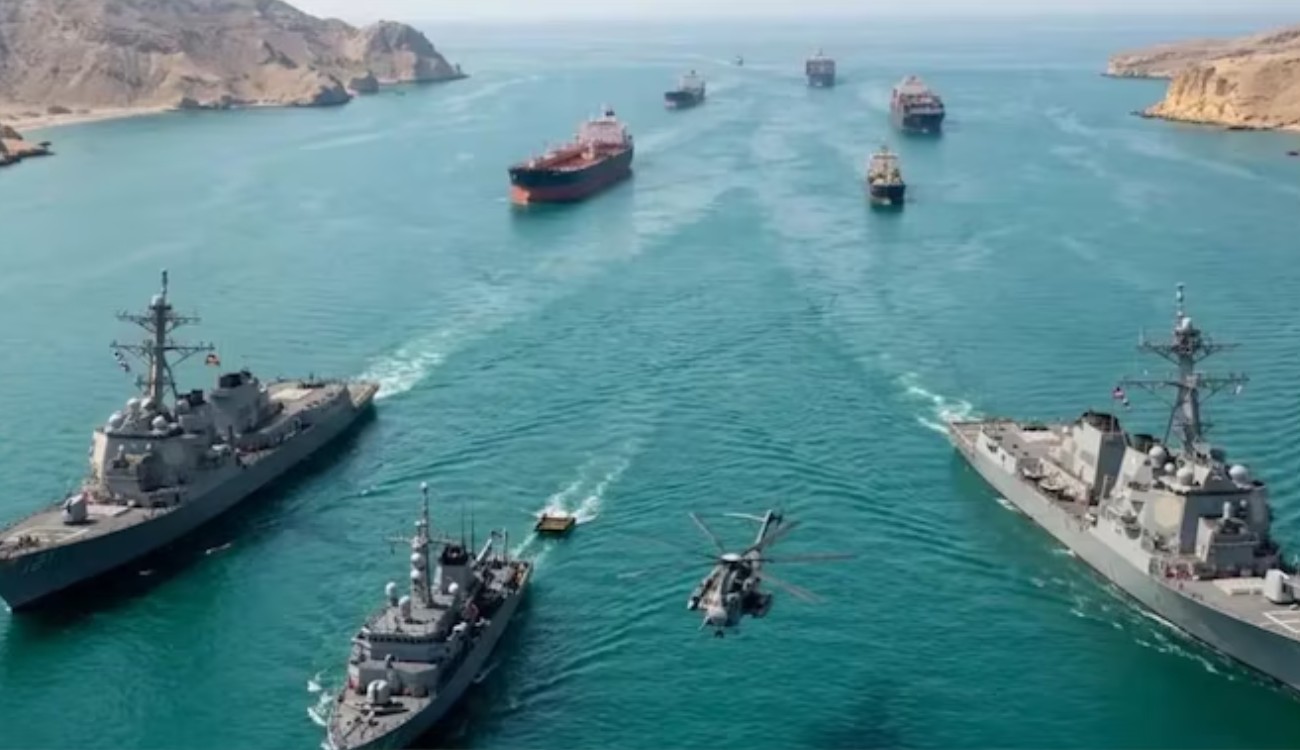
The Indian-crewed tanker at the centre of an incident in the Hormuz region had received clearance from the relevant maritime authorities to proceed through the strait. When the vessel was fired upon — or in some accounts, disabled by a drone strike — the captain’s radio transmission, which has since been recovered and verified, conveyed both a factual report and a pointed grievance: “You gave me clearance to go. Now you’re firing on me.”
The incident raises questions about the maritime safety framework in the Hormuz region that have not been adequately addressed in coverage focused primarily on the geopolitical dimensions.
Clearance and Actual Safety
Maritime traffic through the Hormuz strait is coordinated through multiple frameworks — the International Maritime Organization’s traffic separation scheme, bilateral arrangements between regional coast guards, and the US Navy’s maritime coordination center in Bahrain that has been providing escort advisories during the current conflict period.
“Clearance to proceed” from any of these authorities is an administrative determination about traffic coordination. It is not a guarantee of safety. The frameworks assume that parties to the conflict — in this case, Iran and the US-led coalition — will respect the neutrality of civilian commercial vessels operating under those frameworks. That assumption has been repeatedly tested in the current conflict.
The Crew’s Situation
The tanker’s crew — several of whom are Indian nationals — were evacuated from the vessel after the incident and are in safe custody, according to MEA statements. The evacuation involved cooperation from multiple navies operating in the region, which is a significant logistical achievement given the current environment.
The captain’s reported transmission will form part of the incident report that maritime authorities and the vessel’s flag state file. Whether it forms part of any international accountability mechanism depends on how the broader conflict’s legal frameworks evolve — a question that, historically, tends to get resolved slowly and incompletely.