


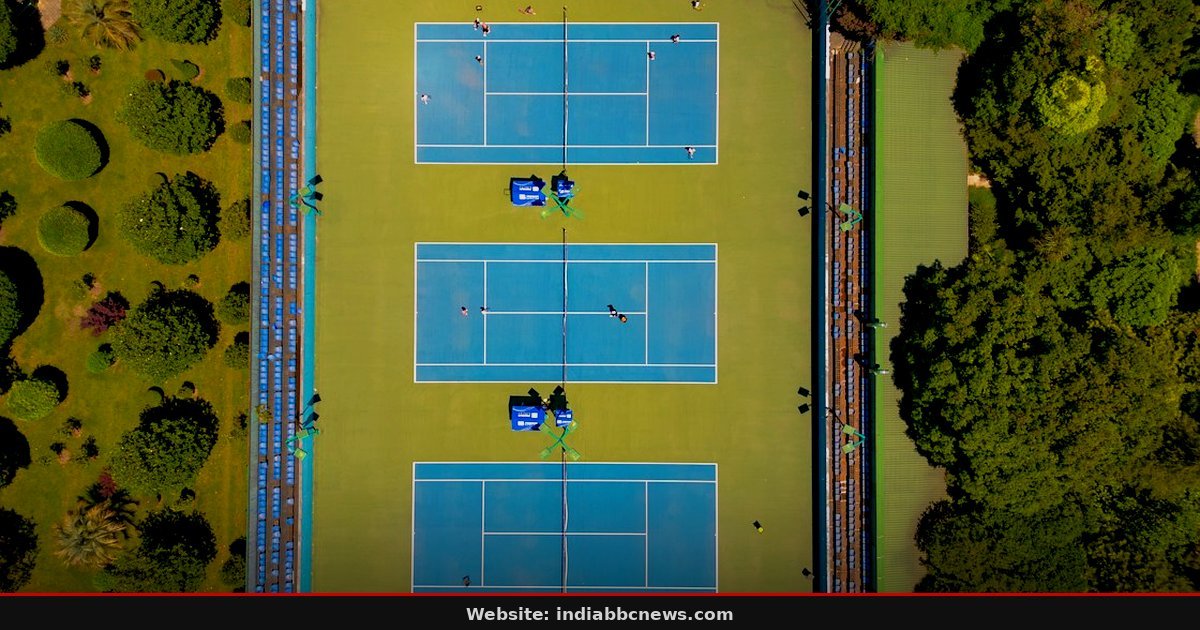
Ben Shelton saved 2 break points in the first set tie-break but it wasn’t enough to save his serve. He went down to the court on his knees, slipped on the baseline while serving for the match, and then stood up to hit 3 aces in a row. That is the kind of chaotic, high-stakes drama that separates the good from the great in tennis. Shelton needed a win to keep his ATP Finals hopes alive, and he got it, beating Rafael Jodar 7-6 (10-8), 7-5 in Turin. The American is now one step away from history.
The Fight for the Last Four Spot
Shelton arrived in Turin with momentum from a Grand Slam final appearance at the US Open. He wasn’t expected to win the tournament, but he was definitely expected to fight for a semi-final berth. The reality on the court was messier than the stats suggested. He had to dig deep against a Spaniard who played with a defensive intensity that made every point feel like a war of attrition. It took over 2 hours to finish a match that should have been easier.
Now the American’s fate rests in the hands of Alexander Zverev and Arthur Fils. If the world number 1 beats the Frenchman, Shelton goes through. If Fils wins two sets, Shelton is eliminated. That is a precarious position for a top-5 player, but it also adds a layer of psychological pressure that can be intoxicating or crushing.
Shelton joked about rooting for his friend, but the calculation is cold. He needs a straight sets win for his rival to survive. It’s a rare scenario in professional sports where you need your opponent’s opponent to stumbles.
Jodar’s Coming Knockout
Rafael Jodar is only in his first professional season on the ATP Tour. He has no Grand Slam titles, no Masters 1000 crowns, and no consistent top-100 ranking yet. But he has something that many veterans lose: the freedom of inexperience. He knows he has nothing to lose, so he plays with a loose, swinging confidence that catches opponents off guard.
His defensive game was a brick wall for much of the second set. He chased down balls that should have been outs and forced Shelton into making two or three shots to put away points that one should have done.
The Spaniard broke back to level at 4-4, showing he could adapt under pressure. But fatigue is a cruel master in the late stages of a group stage event. By the end of the third set, Jodar’s legs looked heavy, and his groundstrokes were floating long. Shelton capitalized on these minor lapses, breaking for 6-5 and holding to close it out.
For Jodar, this was a masterclass in what to expect next. The tour is not kind to juniors who get one hot streak. They need consistency, and Jodar has a long way to go to find it. But for one evening in Turin, he made a top player sweat through his shirt.
What This Means for India
Indian tennis fans have waited a long time for a headline like this. We are used to watching Jannik Sinner and Carlos Alcaraz, but seeing a 24-year-old American push Zverev around on the ATP Finals stage is a different kind of excitement. It signals that the next generation is not just chasing the biggest names but actually dethroning them. For India, the direct market impact is minimal, but the cultural ripple is significant. It reminds us that the sport is widening its net beyond the traditional powerhouses of Europe and the US.
Consider the Indian players currently on the tour, such as Sumit Nagal or Ramkumar Ramanathan. They often struggle to get past the second round of big events because they lack the psychological armor that players like Shelton are building. Shelton’s ability to save break points and then serve 3 aces at the climax is a mental benchmark. If the ITF and BAI can fund more international exposure for Indian juniors, we might see more of this raw, unpolished aggression.
The goal isn’t just to win matches; it’s to win *big* matches. That’s where the money and the visibility are. And right now, the visibility is shifting toward players who play with that chaotic, high-strength energy.
Sherlock Holmes of the Baseline
Shelton’s serve is his weapon, but his mind is his real advantage. He hit 14 aces in this match, which is a high number, but the context matters more. He dropped only 11 points behind his first serve, which is a stunning statistic for a player known for being erratic. It shows a degree of control that wasn’t visible a year ago.
He didn’t just bomb it; he placed it, he varied it, and he used it to reset points. That’s a harder sell than it sounds. Most aces are just luck or physical power. Shelton’s aces are tactical weapons.
He also showed a moment of pure character when he slipped on the baseline. Any other player might have let the momentum die, or fumed at the surface. Shelton just stood up, apologized to the umpire with a shrug, and hit the next three serves for aces. That kind of non-reaction is what separates champions from contenders.
It’s a microcosm of his entire career so far. He makes mistakes, he gets unlucky, and he talks to his coach during points. But he never stops trying to win the next point. That resilience is contagious, and it’s exactly what the current top 10 needs to stay sharp.
What Comes Next in Turin
The next 24 hours will decide if Shelton gets his long-awaited semi-final match. Zverev will take on Fils in a crucial group-stage decider, and the outcome will be binary. If Zverev wins, Shelton advances and faces either Daniil Medvedev or Frances Tiafoe on Saturday. If Fils wins straight sets, Shelton is done for the year.
There is no middle ground. This creates a weird dynamic where Shelton is not playing, but he is more involved in the match than if he were on court. He has to watch every point, hoping for a mistake from Fils or a block from Zverev.
For Zverev, the stakes are also high. He is unbeaten in this group and will take top seed in his half of the draw. But beating Fils, who is playing with house money, is never easy. The Frenchman has shown flashes of magic, and in a one-game scenario, one error can change everything.
Shelton will be in the locker room, probably playing video games, but his eyes will be on the screen. The tension in Turin is palpable. The air conditioning in the Pala Alpitour is cold, but the matches are hot. This is where seasons are made or broken.
And for Shelton, it’s not just a match; it’s a validation of his entire climb to the top. Shelton won because he served better in the clutch moments, hitting 14 aces and saving critical break points. Jodar was strong defensively but ran out of energy in the final moments of the third set.
Frequently Asked Questions
Why did Ben Shelton beat Rafael Jodar?
How does Ben Shelton qualify for the ATP Finals semi-finals?
He qualifies if Alexander Zverev beats Arthur Fils in their upcoming match. If Fils wins in straight sets, Shelton is eliminated from the tournament. Zverev is in first place and guaranteed a top seed. Shelton is currently in second, with his fate tied to the Zverev-Fils match. Jodar has been eliminated after three losses.
What is the current standing of the John McEnroe Group?
Who did Ben Shelton beat in his previous match?
He lost to Alexander Zverev in his second group match but beat Arthur Fils in his opening match of the tournament. Yes, if he wins the group stage, it would be his first time advancing past the group phase of the ATP Finals. Source: BBC Sport
Is this Shelton’s first time reaching the ATP Finals semi-finals?
Source: BBC Sport

