

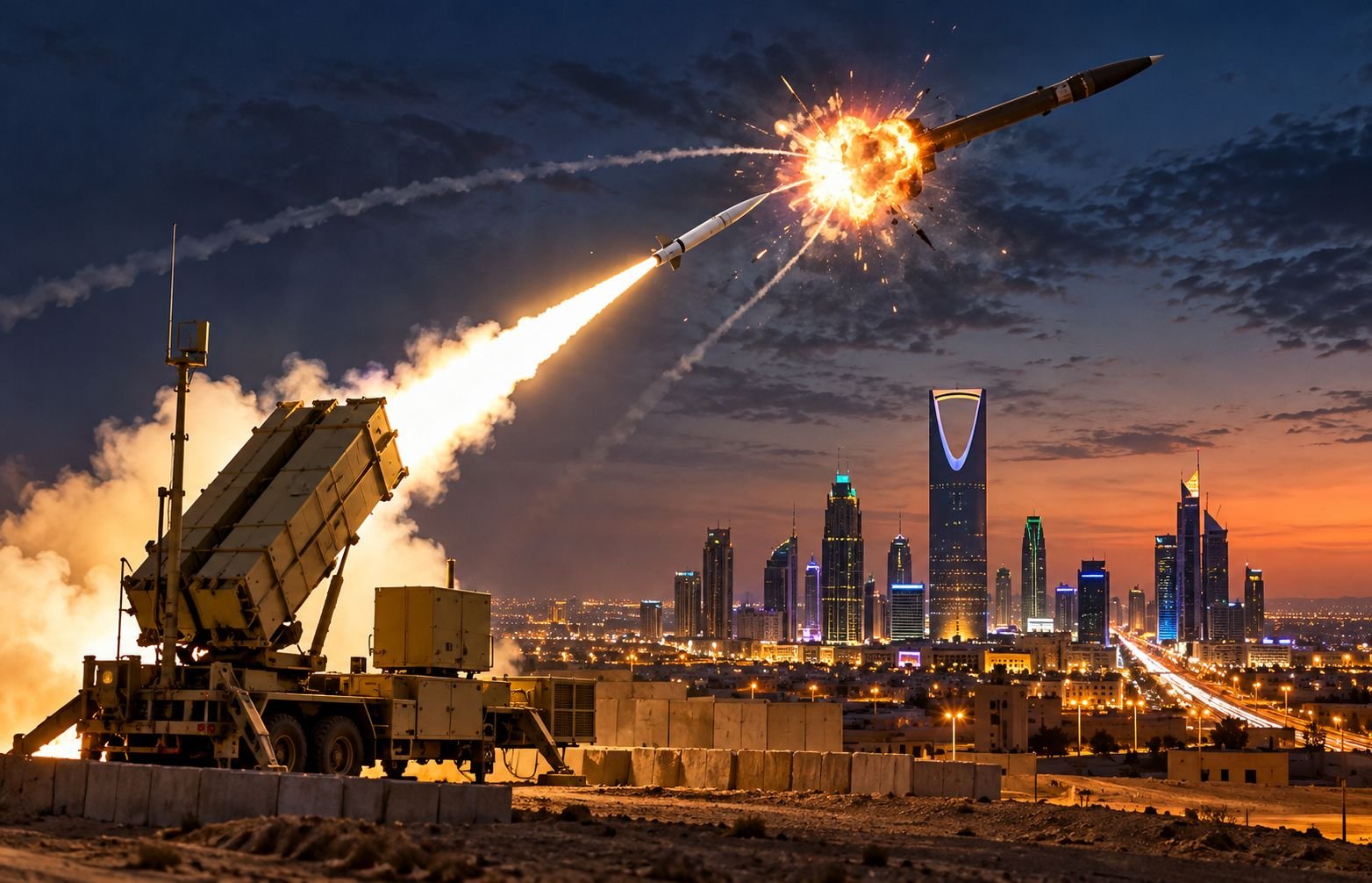
Saudi Arabia’s air defence forces intercepted a ballistic missile fired by Houthi rebels that was headed toward Riyadh on Wednesday, in what officials called one of the most serious attacks on the Saudi capital in recent memory. No casualties were reported, but the strike — or rather, its near-miss — has sharpened fears about the Houthis’ growing ability to threaten targets deep inside Saudi territory.
What Happened
Saudi defence officials confirmed that the missile was detected and intercepted by the country’s air defence systems before it could reach its intended target. The interception was captured on video by residents in outlying areas of the capital, who filmed what appeared to be a Patriot missile battery lighting up the night sky as it tracked and destroyed the incoming projectile.
Debris from the interception fell in open areas outside the city, causing no reported injuries. Saudi authorities urged the public to remain calm and said air defences remain at full readiness.
Who Are the Houthis and Why Are They Firing?
The Houthi movement — formally known as Ansar Allah — controls much of northern Yemen, including the capital Sanaa. They have been engaged in a brutal civil war against a Saudi-led coalition since 2015. The group is backed by Iran, which has supplied them with drones, missiles and technical expertise that has dramatically extended their military reach over the past decade.
Houthi missile attacks on Saudi Arabia have ranged from attacks on border towns to attempted strikes on oil infrastructure and airports. A 2019 attack on Saudi Aramco’s facilities at Abqaiq and Khurais — claimed by the Houthis, though many analysts blamed Iran directly — caused a temporary 5% drop in global oil supply and sent crude prices spiking.
The group has more recently expanded its operations to the Red Sea, attacking commercial shipping in what it describes as a campaign to pressure Israel over the war in Gaza. Those attacks have disrupted global trade and drawn retaliatory strikes from the US and UK.
Saudi Arabia’s Response
The Saudi-led coalition launched retaliatory airstrikes on Houthi positions in Yemen within hours of the Riyadh intercept, according to Arab media reports. The strikes targeted missile launch sites and weapons storage facilities in Saada and Hajjah provinces in northwestern Yemen.
Saudi officials said the attack demonstrated that the Houthi threat has not diminished despite years of coalition military operations. “The rebel militia continues to develop its capabilities with Iranian support, and we will hold them and their backers accountable,” a spokesperson for the Saudi Defence Ministry said.
Diplomatic Complications
The attack comes at a diplomatically awkward moment. Saudi Arabia and Iran signed a normalisation agreement in 2023, brokered by China, that was supposed to reduce tensions across the region. That deal has not stopped Iran from continuing to supply the Houthis with weapons — a contradiction that Riyadh has raised privately but has not yet led to a full rupture in the improved bilateral relationship.
Meanwhile, UN-sponsored peace talks aimed at ending the Yemen war remain stalled. The Houthis have rejected key terms proposed by the UN, and the coalition’s appetite for a long-term ground offensive to retake Houthi-held territory appears limited given the enormous human and financial cost of the past decade of fighting.
For ordinary Saudis in Riyadh, Wednesday’s intercept was a reminder that despite the country’s massive spending on air defence, the threat from across its southern border is far from resolved.

