

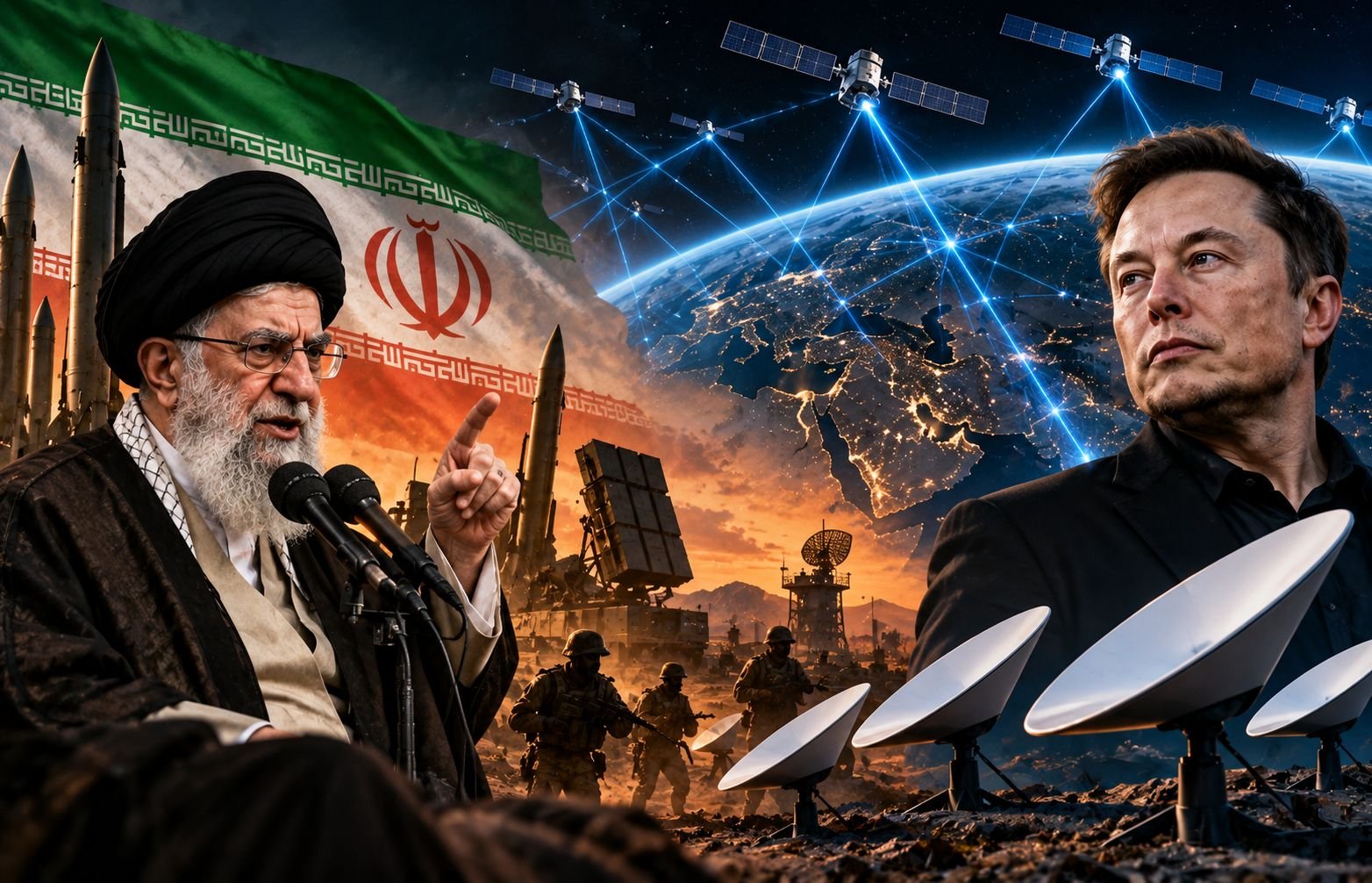
Iran’s government has officially declared Elon Musk’s Starlink satellite internet service a “tool of war” — and says it plans to crack down harder on anyone caught using it inside the country. The announcement, made by a senior official at Iran’s Ministry of Intelligence, marks a sharp escalation in Tehran’s long-running battle to control what its citizens can see and say online.
What Starlink Has Done Inside Iran
Since Musk’s SpaceX company began expanding Starlink’s global coverage, its satellite terminals have become one of the most coveted pieces of technology among Iranians living under strict internet censorship. During the major protests that swept Iran in recent years — most notably the 2022 uprising following the death of Mahsa Amini in morality police custody — Starlink terminals were used by activists and journalists to bypass government blackouts and get footage and information out to the world.
That is precisely what Tehran cannot accept. The government has built its entire information control strategy around its ability to slow down or shut off internet access during moments of social unrest. Starlink, which beams internet directly from satellites, largely bypasses the infrastructure the government uses to enforce those shutdowns.
Tehran’s New Offensive
Iranian authorities say they have already confiscated hundreds of Starlink terminals in recent months and arrested individuals found importing or using the devices. The new declaration appears designed to strengthen the legal basis for those crackdowns and to signal that the government is treating Starlink as a national security threat rather than just an illegal import.
“These terminals are not communication tools — they are instruments of foreign interference and destabilisation,” said one Iranian official quoted in state media. The official accused the US government and unnamed foreign intelligence services of coordinating the distribution of Starlink devices to opposition groups inside Iran.
Musk and Iran’s History
Elon Musk has been openly supportive of providing internet access to people living under authoritarian governments. During the 2022 Iranian protests, he said Starlink terminals were being activated for use in the country. That statement angered Tehran at the time, and relations between Musk’s company and the Iranian government have remained hostile ever since.
SpaceX has not commented on Iran’s latest announcement.
Can Iran Actually Stop It?
The honest answer is: not entirely. Satellite internet is genuinely difficult to block without physically jamming satellite signals — a technically demanding and expensive process that also tends to disrupt other satellite communications, including those used by the military and government. Iran has experimented with signal jamming in the past but has not deployed it at scale.
The more realistic strategy is to make possession of a Starlink terminal so risky — through arrests, fines and imprisonment — that most people are too afraid to use one. That approach has had some success in limiting the technology’s spread, but it has not eliminated it.
For Iran’s government, the fight over Starlink is ultimately a fight over who controls the flow of information. And that is a fight Tehran is determined not to lose — even if, increasingly, it cannot fully win it either.

