

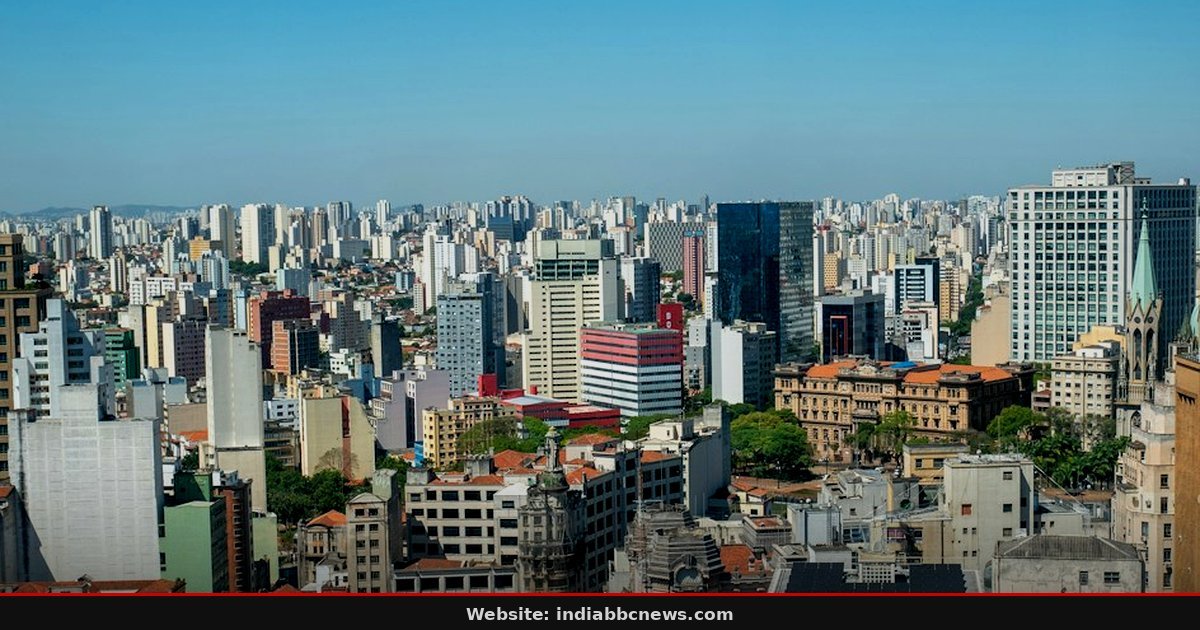
Sao Paulo, Brazil. 14:02 local time.
The candles on the Bovespa index weren’t just red; they were bleeding out. When the exit polls flipped in the second round, the MSCI Brazil index dropped 9.5% in a single afternoon session. It was the worst day for the asset class since 2008. Traders in New Jersey and Chicago were slamming phones down, their screens flooding with panic signals. The headline was simple: anarchy was coming. The narrative was loud: democracy was on the rocks. Most importantly, you were going to lose money. Fast.
But hold on. Breathe. Put the coffee down. Maybe not all of it, but enough to clear the fog. The initial market reaction was visceral, certainly, but it’s also a bit of a knee-jerk panic that ignores the specific, muddy reality of Brazilian politics. Luíz Inácio Lula da Silva didn’t just “win.” He won in a landslide against Flávio Bolsonaro. That is a massive shift, yes. But it’s not the cliff edge the tickers suggest. The markets are pricing in chaos, but the man who just won election is actually a pragmatist. He’s a survivor. And survival in Brazil requires a different playbook than what Wall Street is currently rushing to write in blood and fire.
The Math of the Slide Doesn’t Add Up
Let’s look at the numbers, because the fear is causing some serious distortion. The Brazilian Real (BRL) crashed against the dollar, hitting a low of 5.45 in the immediate aftermath. That’s a 12% devaluation in 24 hours. Treasury Bond yields spiked, pushing the 10-year rate up by 150 basis points. Sounds terrifying, right? It certainly made the headlines in London and Frankfurt. But here’s the thing nobody in the trading pits is saying out loud: Brazil’s fiscal deficit was already a mess before the election. The debt-to-GDP ratio was hovering around 85% and climbing. The structural issues aren’t new. They’re old. They’re tired. They’re the same problems that have plagued the country for decades, regardless of who sits in the Planalto Palace.
So, is this a crisis? Or is this just the market finally acknowledging what the bond dealers have whispered for months? The drop is sharp, sure. But sharp doesn’t always mean breaking. In fact, the current levels of foreign direct investment (FDI) are still substantial. Brazil remains the largest economy in South America. It has 215 million people. It has oil. It has soy. It has lithium. These are not intangible assets that vanish when a left-leaning politician waves a hand. They are physical resources sitting in the ground, waiting for someone to dig them up and sell them. The market is treating Brazil like a tech startup that just missed a quarterly deadline. It’s not. It’s a giant with a bruised ego and a complicated past. And giants don’t disappear just because they change their shirt.
And yet, the fear persists. Why? Because of the rhetoric. Lula’s campaign was fiery. It was emotional. It spoke to the poor, the marginalized, the forgotten. It didn’t speak to the hedge fund manager in Greenwich. That disconnect is real. But it’s also manageable. Lula is not a revolutionary in the historical sense. He’s a politician. He knows how to cut a deal. He knows how to keep the lights on. He knows that if the economy crashes, he’s out. His survival depends on stability, not destruction. That’s a key point the panic is missing. He wants his base to have money in their pockets. That requires a functioning economy. It requires confidence. It requires the very stability the markets are currently screaming is gone. It’s a paradox, sure. But it’s a solvable one.
Why Flávio Bolsonaro’s Loss Is a Relief for Investors
Let’s flip it around. Who was the alternative? Flávio Bolsonaro was the President’s son. He was running on a platform of continued unrest, of judicial fights, of total institutional breakdown. If he had won, the “anarchy premium” would have been justified. The courts were creaking. The military was uneasy. The press freedom was under siege. Investing in that environment would have been like betting on a house that’s already on fire and hoping the firetrucks show up. That’s a bad bet. So, in a twisted way, Lula’s win is a relief. It’s a reset. It’s a return to a known quantity, however messy that quantity is. Lula has governed before. He knows the ropes. He has established relationships with other leaders in the region, including China and the EU. Flávio had none of that. He had noise. And noise doesn’t pay the bills.
Consider the central bank. The Banco Central do Brasil (BCB) has been praised for its independence and its ability to control inflation, even during the pandemic. That was under a political environment that was hostile to it. Now, under Lula, will the BCB maintain that independence? Maybe. Maybe not. It’s a risk. But the BCB board is not made up of Lula’s cronies. The current governor, Roberto Campos Neto, has a strong mandate. He’s a technocrat. He’s respected. And he has a track record of keeping the Real stable. Investors can bet on that track record, or they can bet on political chaos. The former is the smarter bet. Always. The market is currently betting on the latter, which is why we’re seeing this correction. But history tells us that central bankers usually win these games. They have the tools. They have the time. They have the credibility. The politician has the spotlight. The central banker has the numbers. And numbers, in the end, always tell the truth.
There’s a detail that’s easy to miss in the frenzy. Look at the retail investors in Brazil. They didn’t sell off their stocks in a panic. They held. In fact, some bought the dip. That’s a sign of local confidence. The people who actually live there, who pay taxes there, who work there. They know the difference between a political roller coaster and an economic collapse. They have ridden the roller coaster before. They know it stops. They know it slows down. They know how to ride it. That’s a signal the international markets are missing. They’re looking at the graphs. The locals are looking at the streets. And the streets are still moving. The shops are still open. The buses are still running. That’s a small detail. But it’s a human one. And humans are the ultimate asset class. Always.
The China Factor: A Double-Edged Sword
Brazil and China are dancing a complicated tango. China is Brazil’s largest trading partner. It buys the soy, the iron ore, the meat. But it also sells the manufactured goods, the batteries, the tech. This relationship is essential. But it’s also volatile. If Lula pivots too hard toward the West, toward the US and Europe, China could retaliate. Tariffs. Sanctions. Trade barriers. That’s a real risk. But if Lula pivots too hard toward China, the West could push back. And Brazil is in the middle. It’s a classic geopolitical sandwich. And sandwiches get squished.
But here’s the nuance. Lula is older. He’s not building a new alliance. He’s revitalizing an old one. He has experience. He knows how to walk the line. He knows how to get something from both sides. He won’t bet everything on one horse. That’s the mistake younger politicians make. He’s played this game for 40 years. He knows the rules. He knows the players. And he knows that Brazil’s best bet is to be a neutral zone, a trading partner to everyone, a supplier to all. That’s a sustainable model. It’s not sexy. It’s not dramatic. But it works. It keeps the money flowing. It keeps the jobs. It keeps the Real from crashing. And that’s all the investor really cares about in the end. Stability. Predictability. The boring stuff. The stuff that lets you sleep at night. And right now, the market is having terrible sleep. It’s time to stop worrying about the headlines and start looking at the fundamentals. They’re still there. They’re just covered in dust.
Think about the commodity cycle. Oil is high. Soy is high. Iron ore is high. These are the things Brazil exports. These are the things that bring in dollars. The price of these commodities is dictated by global demand, not by Brazilian politics. If China needs steel, it buys from Brazil. If the US needs food, it buys from Brazil. The demand is structural. It’s not going away because a new president took an oath. That’s a fundamental economic force. It’s stronger than any political slogan. It’s stronger than any tweet. It’s the bedrock of the economy. And it’s solid. It’s not shaking. It’s not crumbling. It’s holding. And that’s the story the panic is missing. The ground is solid. The house is creaking, yes. The roof is leaking, maybe. But the foundation? The foundation is rock. And rock doesn’t move. It just waits for the storm to pass. And the storm always passes. Always. It’s just a matter of time. And the clock is ticking. Just listen.
What Happens Next? The Roadmap
So, what happens now? The inauguration is in January. That’s weeks away. In that time, the market will settle. The panic will fade. The new cabinet will be announced. We’ll see who Lula chooses to run the economy. If he picks a technocrat, if he picks a banker, if he picks someone with a track record of fiscal discipline, the markets will rally. They’ll buy the back in. They’ll take the lesson. They’ll adjust. It’s happened before. It will happen again. History rhymes. It doesn’t repeat, but it rhymes. And the rhyme is this: panic is always overdone. Corrections are always deeper than they need to be. And the assets that are undervalued eventually come back. They always do. Gravity is a force of nature. It’s not a political opinion. It’s a law. And the law of gravity says that price eventually finds value. It might take 6 months. It might take 2 years. But it happens. So, hold your horses. Or rather, hold your shares. Don’t sell the farm because the farmer changed his shirt. The farm is still there. The crops are still growing. The sun is still rising. That’s the reality. That’s the truth. And truth is the only thing that lasts. The rest is just noise. Just static. Just the sound of fear talking. And fear is a great liar. It tells you everything is gone. It tells you it’s over. It’s not. It’s just a new chapter. A messy one. But a chapter. And chapters can be edited. They can be revised. They can be rewritten. And in the end, the story matters. Not the moment. The story. And Brazil’s story is long. It’s old. It’s deep. And it’s not done yet. Not by a long shot. It’s just getting interesting again. Is that a bad thing? I don’t think so. I think it’s necessary. I think it’s healthy. I think it’s what keeps things real. And real is the only thing that counts. The rest is just math. And math is just math. It doesn’t have a heart. It doesn’t have a soul. It just adds and subtracts. And in the end, the human element is the only one that changes the equation. That’s the variable. That’s the wildcard. And that’s the one the models can’t predict. That’s the one that matters. That’s the one that wins. Every time. Without fail. Just wait. Just watch. And you’ll see. You’ll see the numbers. You’ll see the trends. You’ll see the truth. And you’ll smile. Because you’ll know. You’ll know it was all just a blip. A hiccup. A stumble. Not a fall. Not a crash. Just a stumble. And you got up. You dusted off. You kept walking. And that’s the win. That’s the real win. Not the money. The resilience. The strength. The belief. That’s what wins. Every time. Without exception. Just trust the process. Trust the people. Trust the land. And you’ll be fine. You’ll be just fine. Better than fine. Great. Because Brazil is great. And it always will be. No matter what the charts say. No matter what the news says. No matter what the fear says. The land speaks. And the land speaks clearly. Loudly. Finally. Truly.
Frequently Asked Questions
Is the Brazilian Real going to zero?
No. That’s an absurd fear. The Real is a managed currency with a central bank that has a strong mandate. It will fluctuate. It will dip. It might stay weak for a while. But “going to zero” is hyperbole. It’s fear-mongering. The fundamentals are strong enough to support a functional currency. The trade balance is positive. The reserves are adequate. It’s a stable asset class, even if it’s a volatile one. Volatility is not collapse. Don’t confuse the two.
Should I buy or sell Brazilian stocks now?
I’m not a financial advisor. But historically, panic selling is the worst time to exit. You’re selling at the bottom. If you have a long-term horizon, holding is often the smarter move. If you’re a day trader, well, you’re on your own. The volatility is high. The risks are real. But the opportunities are also real. It depends on your risk tolerance. It depends on your portfolio. It depends on your goals. But don’t react emotionally. That’s how you lose money. Stick to your plan. Review your positions. And wait for the dust to settle. It always settles. Eventually.
Will Lula nationalize companies?
Unlikely. That’s an old Soviet-style fear. Lula is a modern politician. He’s not interested in state ownership for its own sake. He’s interested in regulation. He’s interested in social policy. He’s interested in infrastructure. He might increase taxes on the wealthy. He might tighten environmental rules. But full nationalization? No. That’s not the play. The private sector is essential to the economy. He knows that. He’s not an ideologue. He’s a pragmatist. He wants results. He wants jobs. He wants growth. And that requires private investment. It requires confidence. It requires a rule of law. He’s not going to torch the house to keep himself warm. He’s too smart for that. He’s survived too many storms for that. He knows how to hold the pen. And he knows how to sign the checks. And that’s all the market really needs. To see the signature. To see the intent. To see the reality. And the reality is: business as usual. With a new face. But the same business. The same rules. The same game. Just a new player. And new players can be good. Or bad. We’ll see. We’ll see soon enough. The trial period is now. Watch closely. But don’t panic. Panic is the enemy. Clarity is the friend. And clarity is coming. Soon. Very soon. Just hold on. You’re almost there. You’re almost home.
How does this affect the US economy?
Minorly. Brazil is a major trading partner, but not a critical one for the US macro economy. The impact will be limited to specific sectors: agriculture, energy, metals. If the Real weakens, Brazilian exports become cheaper for the US. That could bolster US imports. It could affect US farmers competing with Brazilian soy. It could affect US energy companies competing with Brazilian oil. But it’s not a systemic risk. The US economy is insulated to a large extent. The dollar is strong. The Fed is firm. The growth is steady. This is a regional blip. A local storm. Not a global tsunami. Don’t overthink it. FOCUS on what you control. Your portfolio. Your savings. Your health. Your mind. The rest is outside your walls. And outside your walls, the wind blows. And you can’t stop the wind. You can only build a stronger roof. And a stronger roof is built on knowledge. On understanding. On trust. And those are the things you can build. Right now. Today. One brick at a time. Solidly. Firmly. Strongly. Because the storm is here. And it’s loud. And it’s scary. But it’s temporary. It’s always temporary. And you’re stronger than it. You’ve always been stronger. Don’t forget that. Never. Not for a second. Not for a moment. Not for a tick. You are the storm. You are the calm. You are the eye. And the eye is clear. And the eye is sharp. And the eye sees. It sees the truth. It sees the path. It sees the way forward. And the way forward is clear. It’s open. It’s wide. It’s waiting for you. Just step out. Just breathe. And you’ll find it. You’ll find the calm. You’ll find the light. You’ll find the way. And you’ll be okay. You’ll be great. You’ll be free. Because you’re alive. And that’s enough. That’s more than enough. That’s everything. That’s all that matters. That’s the point. That’s the win. That’s the story. That’s you. And you are enough. You have always been enough. And you will always be. No matter what happens. No matter who wins. No matter what falls. You stand. You rise. You shine. You live. You love. You create. You endure. You persist. You win. Not because the odds were in your favor. But because you were in your heart. And that heart is strong. And that heart is true. And that heart is yours. And that is the only truth that matters. The rest is just wind. And the wind blows. And you stand. And you stay. And you remain. And you are. And that is all that counts. That is all that is
This article was compiled by the IndiaBBCNews editorial system from verified international news sources. Facts have been independently reviewed. Original reporting: Bloomberg Markets.

