

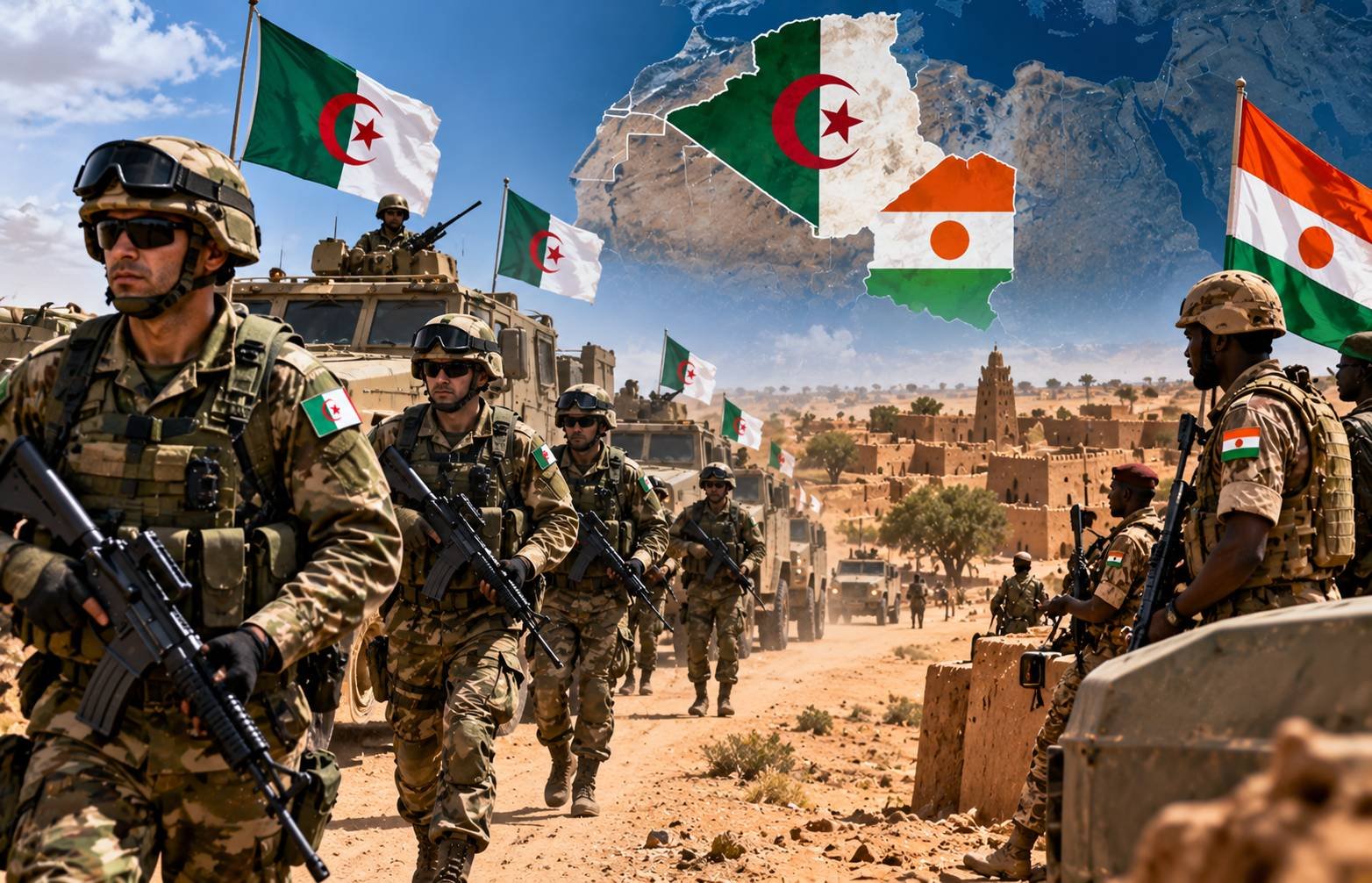
148. That is the number of senators who just put their names next to a decision that rewrites 53 years of national policy in one go. Algiers is sending troops to Niger. For the first time since 1973.
It happened on a Sunday, in an emergency session that felt less like democracy and more like a rubber stamp for a deal already cut in backrooms. The upper house voted 148-26 in favor. The lower house backed it up quickly after. Nobody in the gallery looked surprised. If you’d been standing by the doors of the Parliament building, you’d have seen the security cordons tightened, not relaxed, hinting at how sensitive this actually is. It’s a massive shift from the quiet, insular foreign policy that Algeria has hugged for decades.
The Pipeline That Changed Everything
Why now? Why Niger? The answer sits buried under the desert sand of northern Niger, near the Libyan border. It’s a gas pipeline. A massive, long-planned artery that would carry natural resources across the desert to energy-hungry Algiers. But you can’t run gas through a warzone. You can’t pay for a $30 billion infrastructure project if armed groups are blowing up the compressor stations. So the troops aren’t there to occupy. They’re there to guard the pipes. Or at least, that’s the official story. “We are not sending our soldiers to wage war in Niger, but for a mission to secure economic infrastructure,” senator Belkacem Boulghiti told reporters after the vote. He said it with a straight face, and I believe him about the infrastructure part. The rest is a harder sell than it sounds.
The economic stakes are absurdly high. Algeria’s state-owned giant, Sonatrach, just signed a deal with Niger’s petroleum ministry to explore for oil in the Kafra region. Reuters reported that two exploration wells are estimated to hold 168 million and 100 million barrels, respectively. That’s not just money. That’s leverage. That’s energy security for a country that has spent years trying to break free from the instability that plagues its neighbors to the south and west. The math works out if the ground stays quiet. Right now, it isn’t.
From Shot-Down Drones to Shared Fuel
Relations between these two Sahel giants have been bumpy lately. Very bumpy. Remember 2025? The Malian drone incident? Algeria shot it down. Niger, bound by its close alliance with Mali, recalled its ambassador in solidarity. It was a diplomatic freeze that lasted all winter. Then came the thaw. President Abdourahamane Tchiani, the military ruler of Niger, paid a visit to Algiers in February 2026. He didn’t come empty-handed, and neither did the Algerians. In late August, President Abdelmadjid Tebboune sent fighter jets to help squash a coup attempt that threatened to derail the new administration’s fragile hold on power. He also donated four military helicopters. It was a showing of muscle, wrapped in a gift box. Now, it’s getting to the ground troops. That’s a different level of commitment. It means boots on the ground, in a country where the line between counter-terrorism and occupation is dangerously thin.
And the context of 1973 cannot be ignored. Algerian forces fought alongside Egypt in the Yom Kippur War. It was a defining moment of revolutionary solidarity. Since then, the military doctrine has been: we defend our borders, we do not export our soldiers. By invoking the 2020 constitutional provision for overseas deployments, the ruling class has punted a ball into a field they’ve never played in. What happens when the mission drags on? What happens when a soldier gets killed? These aren’t hypotheticals. This is a region where kinetic solutions often create bigger problems than they solve. But for now, the political will is there. 148 senators signed off on it. That’s a lot of trust in a single decision.
The Risk of the Libyan Border
Northern Niger is a powder keg. It’s close to Libya, a state that has fractured into competing warlord territories. It’s close to Mali, which is under military rule and fighting its own insurgency. The armed groups operating there, some linked to al-Qaeda, others to Islamic State, are not just local nuisances. They are regional players with transnational ambitions. They have drones now. They have IEDs that can stop a convoy. Protecting energy facilities in this zone is not a police action. It’s a combat operation. The “protective” framing is a polite way of saying “combat.” If these troops engage in a firefight, the diplomatic fallout could be severe. Niger is balancing between its African neighbors, Russia, and now, Algeria. Adding Algerian soldiers to the mix complicates the chessboard significantly. If those troops are attacked, how does Algiers respond? Does it escalate? Does it pull back? There are no clean exits in the Sahel. That’s the reality on the ground that the senators in their office likely didn’t fully appreciate when they raised their hands.
What Happens Next
The timing and the number of soldiers haven’t been announced yet. That silence is telling. It suggests the mission plan is still in the draft stage, or perhaps the scale is smaller than the headlines imply. Watch for the arrival of heavy armor, not just infantry. Watch for joint patrol reports. The next 30 days will tell us if this is a token gesture or a full-scale intervention. There is a forward-looking element to this: the stability of the pipeline project depends on it. If the security architecture holds, we see investment. If it doesn’t, we see the next crisis brewing. The deadline isn’t a date on a calendar. It’s the next IED explosion. It’s the next drone sighting. For now, the pipeline remains the primary driver. The troops are the insurance policy. And insurance premiums are rising.
Frequently Asked Questions
Why is Algeria sending troops to Niger?
The primary stated reason is to protect critical energy infrastructure, specifically a planned gas pipeline, from armed groups near the Libyan border.
When was the last time Algeria deployed forces abroad?
The last time was in 1973, during the Arab-Israeli war, when Algerian forces joined the Egyptian army.
How many troops are being sent?
The exact number has not been disclosed by the Algerian government or the Nigerien authorities as of this report.
Did the Algerian parliament agree to this?
Yes, the upper house voted 148-26 in favor on Sunday, followed by approval from the lower house.
What is the status of relations between Algeria and Niger?
Relations have improved significantly following a diplomatic rift in 2025, culminating in recent high-level visits and military aid.
Source: BBC World
This article was compiled by the IndiaBBCNews editorial system from verified international news sources. Facts have been independently reviewed. Original reporting: BBC World.

