

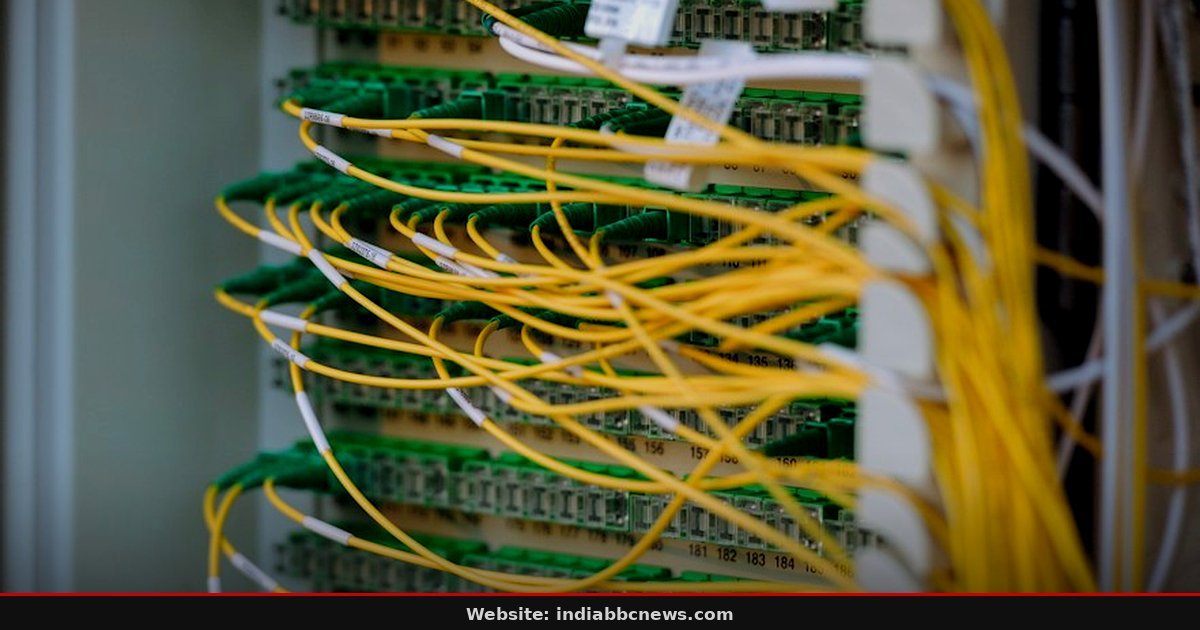
4,767 sites. That is the number of data centres currently operational in the US, a figure that dwarfs the rest of the world combined and sits at the heart of a political firestorm brewing ahead of the 3 November midterms. It’s a number that has turned a silent warehouse industry into a loud, divisive, and increasingly ugly national argument.
The noise is not coming from the server racks. It is coming from town halls in rural western states, where property values are crashing and power bills are spiking, and from the Oval Office, where Donald Trump just called the pushback a “sick conspiracy.” Neither side seems to want to hear the other, which makes the next two months look less like a policy debate and more like a blow-up waiting to happen. The math on this one is messy, and nobody in the room looks convinced they have the right answer.
The growth curve doesn’t lie, but it’s ugly
Go back to 2021. There were roughly 8,000 operational sites globally. Now? The count is around 12,250. That’s a jump that happened in less than 4 years, driven almost entirely by the AI boom. You see it in the clustering: the US dominates with nearly 4,800 sites, followed by a distant second place for Europe, where the UK and Germany are trying to keep up. But capacity tells a different story. The US isn’t just winning on quantity; it’s winning on power. China is second, but Europe is lagging so far behind that some analysts are already warning they’ll miss out on the economic windfall that AI is supposed to bring. It’s a gap that’s only going to widen, and that worries people who think technology should be a shared benefit, not a private monopoly. The speed is the problem, not the location.
Colossus 2 and the methane problem
The scale is hard to wrap your head around. The current world record holder is a China Telecom site in Hohhot, Inner Mongolia. It covers about 1 million square metres. That’s roughly 140 fifa football pitches worth of concrete and cooling fans. But the future is bigger. Much bigger. Take xAI’s Colossus 2. It is being built to house hundreds of thousands of Nvidia chips to train Grok. To power it, Elon Musk’s company is installing 41 methane gas turbines. Activists are up in arms, saying this will “significantly increase” local air pollution. Local regulators, typically buried in permits and paperwork, say the turbines will meet air quality standards. That’s a harder sell than it sounds. You don’t need a degree in environmental science to know that burning methane in a residential area is a recipe for nausea, both literal and political. And yet, the construction continues, day after day, hammer after hammer, pushing the soil down and the costs up for everyone nearby. The air quality data will come out later, but the smell is already bad.
More hungry than France
Here is the stat that makes people stop scrolling. Data centres around the world consume more electricity than the entire nation of France. Just that. They also guzzle water to keep the servers from melting, a concern that has triggered bans or moratoriums in 16 US states. It’s not just about the power bill. It’s about the noise. It’s about the trucks. It’s about the way these facilities suck the life out of a local grid that was never designed to handle them. When the grid stutters, the lights flicker, and the price of electricity goes up for the grandmother next door who just wants to watch TV. She doesn’t care about your AI model. She cares about her bill. That disconnect is what’s fueling the backlash in Mexico, France, Indonesia, and the UK. It’s a human reaction to an inhuman scale. You can’t negotiate with a turbine, but you can vote against the person who signed the permit. And that’s exactly what’s happening.
Jobs, tax revenue, and the long game
Supporters have their pitch, too. They say data centres are critical for national security. They say they bring investment. They say they create jobs. A report from the Brookings Center suggests the jobs are real, but fewer than the industry claims. It depends on the type. Hyperscale facilities, run by giants like Amazon and Microsoft, pump more money into the local economy. “Colocation” centers, where you just rent rack space to a tenant who lives nowhere near you, don’t do as much good for the local community. It’s a nuanced distinction that gets lost in the shouting. The industry is spending a combined $765bn on AI infrastructure in 2026, a figure expected to top $1tn next year. That’s money that has to go somewhere. Some of it is heading to weird places. There are serious proposals to put data centres in space, or even on the Moon, to harness solar energy without dealing with local zoning laws or angry neighbors. It sounds like science fiction, but the pitch deck is real. Eventually, the hope is that we’ll do more processing on our phones, shrinking the need for these massive sites. But that’s a long way away. For now, the trucks are still rolling in. The turbines are still turning. And the vote is still on the table, pending a decision that will shape the next decade of digital life. The deadline is 3 November. The stakes are higher than anyone wants to admit.
Frequently Asked Questions
Why are data centres so thirsty for water?
They use water to cool the servers. Without it, the computers overheat and crash. In some areas, this is pulling too much water out of local supplies, causing shortages for residents and farms.
Can we just build them in space?
It’s a theoretical idea. The sun is always out in space, which provides clean energy. But the cost of launching and maintaining hardware in orbit is currently prohibitive. It’s years away, not weeks.
Source: BBC Technology
This article was compiled by the IndiaBBCNews editorial system from verified international news sources. Facts have been independently reviewed. Original reporting: BBC Technology.

