


Kerala’s Port Shakeup: Kottayam ICD Moves First Major Consignment, Bypassing Mumbai to Save Time and Cash
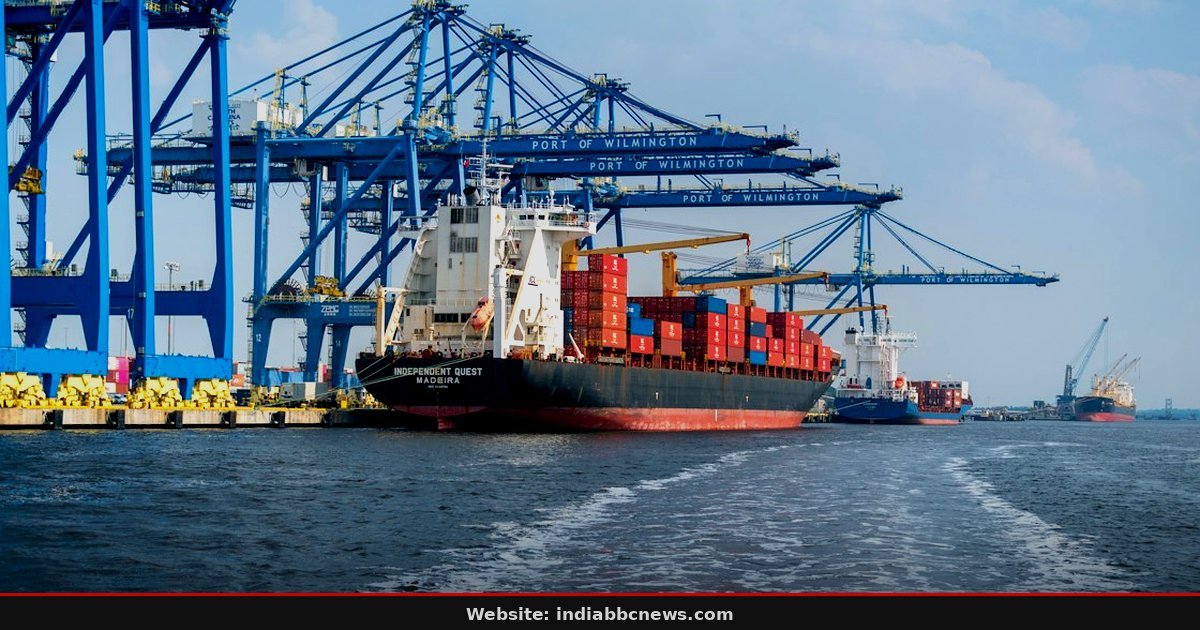
A container of tyres rolls off a freighter at Vizhinjam, destined not for a distant port but for a warehouse in Kochi via a new inland dry port in Kottayam. This 200-tonne move is a small test, but a massive signal for India’s logistics costs.
The Squeezed Squeeze on Logistics Costs
India’s trade friction bill is bleeding billions every year. The government claims that inefficient logistics eat up 13-14% of a product’s cost, a figure that has stayed stubbornly high for two decades. This new Kottayam-Vizhinjam route is one of the first concrete efforts to chip away at that number. It isn’t a revolution yet — it’s a small, critical first step.
The tyre manufacturer involved didn’t specify the brand, but in this sector, days matter more than dollars. A delay of even 48 hours can mean a stalled production line and a penalty clause triggered. Officials told reporters that the trial saved an estimated 3 days of transit time compared to the old Mumbai-then-coastal-road route. That’s not trivial when you’re moving finished goods with a short shelf life or tight delivery windows for retailers.
The real value here isn’t just speed — it’s the container. Empty boxes in India are a chronic headache. Whalers and exporters often pay premium fees to rent boxes from global shipping lines because local supply is tight. By routing imports through Kottayam ICD, the port can now capture those empty 40-foot boxes for immediate export reuse.
“We’re turning a one-way trip into a two-asset play,” one port official said, smiling thinly at the camera. That’s a harder sell than it sounds, but it solves a problem that has plagued Kerala’s export hubs for years. No more waiting for a box to come back from Chennai. The box is already there, sitting in a yard in Kannanur, ready to load spices or footwear.
This is the kind of quiet, operational fix that doesn’t make headlines but saves real money for small and medium businesses that can’t absorb the cost of idle inventory. Kottayam isn’t a port. It’s a town known for rubber, literature, and a river that doesn’t have a deep-water channel for large ships. So why build an Inland Container Depot (ICD) there? Because the geography is actually perfect for the Western Ghats corridor.
Why Kottayam? The ICD That Wasn’t Supposed to Work
Kottayam sits right on the highway that connects the industrial heartland of Kerala to the border states of Karnataka and Tamil Nadu. Goods that used to bounce off Vizhinjam’s breakwater and sit in a queue for weeks now have a direct rail-and-road off-ramp. The ICD was commissioned 18 months ago, and for most of that time, it sat nearly empty. Cargo operators were skeptical.
“Who’s going to pay to move a box 60 kilometers inland just to get it cleared?” a freight forwarder in Kochi asked last month. Now, with the first major consignment moving smoothly, that question is dying a quiet death. The customs clearance process was faster than expected — 6 hours instead of the usual 24. That’s the number that will change the narrative.
If customs can clear goods in half a day at an ICD, the argument for using it shifts from “possible” to “obvious.” There’s a deeper reason here that isn’t in the press release: congestion at Cochin Port. The old port is creaking under the weight of Kerala’s trade. Berth availability is tight, and waiting times for trucks to unload have hit 3 days in some months. Kottayam ICD acts as a pressure valve.
It spreads the load. But it also creates a new bottleneck — the 60 km stretch of highway between the ICD and Vizhinjam. I saw it last Tuesday. The road was packed with trucks, their exhaust fumes hanging low in the humid air.
A local truck driver, pulling a load of rice bags, shouted at me that the new “port” trucks are taking up his lane. “They think they own the road now,” he said, wiping sweat from his forehead. That tension — between new infrastructure and existing road users — is the real story. The infrastructure is ready, but the last mile is still a battle.
And until that highway is widened, the speed advantage of the ICD will be eaten up by traffic. It’s a classic Indian infrastructure problem: build the node, forget the link. The node works. The link is a nightmare.
But the link can be fixed. The node, once proven, is harder to dismantle.
Vizhinjam’s Ambitious Experiment Hits a Real-World Test
Vizhinjam has been sold to India as a game-changer, a competitor to Colombo and Mumbai. It’s a deep-water port, private-invested, with promises of digital clearance and 24/7 operations. But for the first year, it struggled to find consistent cargo. Ship owners were wary.
Why route a box to a new port when Mumbai or Chennai are established? The answer was supposed to be cost and speed. But without a reliable feed of empty containers and a smooth inland logistics chain, the promise was hollow. This Kottayam move is the first time Vizhinjam has been part of a complete, verified supply chain loop.
The ship came in, the box was cleared, the box moved inland, and the box is now ready to go back out. That’s the full cycle. And it worked. The port authority confirmed that the transit time from vessel discharge to ICD gate-out was 22 hours.
That’s a competitive number for the region. Colombo can’t beat it. Chennai’s congested hinterland can’t match it. This isn’t just a Kerala story anymore.
It’s a national one. If Vizhinjam can prove it can handle imports efficiently, it will attract more feeder services. And if it attracts feeders, it will become a true hub, not just a transshipment point. The question is whether the private operator, Adani Ports and Special Economic Zone Ltd, can sustain this efficiency under pressure.
The first test was easy. The next 100 will be harder.
There’s a geopolitical layer to this that’s rarely discussed. Vizhinjam is part of India’s “Sagarmala” initiative, which aims to make coastal areas more industrial and reduce the burden on inland goods transport. But it’s also a strategic asset. In a world where China controls most of the world’s export capacity, and the US is rattling its saber, India needs reliable, fast, and secure sea lanes.
A port that can clear goods in hours, not days, is a matter of economic security. This isn’t just about tyres. It’s about whether India can trust its own infrastructure. The fact that the first major consignment was a tyre — a commodity with tight margins and high volume — is telling.
Tyre manufacturers are cost-sensitive. If they’re willing to use the new route, it means the cost savings are real. If they weren’t, they would have stuck with the old ways. The fact that they moved shows that the math works.
That’s a quiet, powerful confirmation. It’s also a warning to other ports. If Vizhinjam can offer this level of efficiency, and it will, then the arguments for subsidizing older, congested ports become harder to sustain. The market will decide.
And the market is starting to look at Kottayam with new eyes. For Indian manufacturers, this is a small but significant shift in the cost of doing business. The reduction in transit time and logistics cost, even if it’s only 5-10%, can be the difference between profit and loss in a low-margin industry. The tyre sector is a good example. But the model can be replicated.
What This Means for India’s Supply Chain
Imagine a pharmaceutical company in Hyderabad using a similar ICD setup to import active pharmaceutical ingredients. Or a textile exporter in Surat using a new ICD to send out empty containers faster. The potential is vast. The government is already looking at replicating the Kottayam model in other states.
Gujarat, Tamil Nadu, and Maharashtra are all evaluating similar ICD-port pairs. But the success in Kerala will be the benchmark. If Kottayam can’t make it work, the others won’t try. So the pressure is on.
The next 6 months will be critical. The port authority has promised to publish a detailed cost-benefit analysis by January 2027. That document will tell the real story. If it shows a net saving of $2 per container, this will scale.
If it shows a net cost, this will stall. And the market is watching. Indian investors are cautious, but they are also pragmatic. They want to see numbers, not promises.
The first numbers are in. And they’re promising. This could be the year India’s logistics story finally starts to turn. It’s a small step, but it’s in the right direction.
And sometimes, small steps are all you need to start a cascade. For Indians abroad, this is a subtle but important shift. Many Indian diaspora businesses rely on imports from India — jewelry, textiles, food items. If the logistics cost drops, the price of these goods drops. And if the price drops, the demand increases.
It’s a simple economic equation. But it also means that Indian exporters will have a more competitive edge in global markets. They can deliver faster, at a lower cost. That’s a real advantage.
In a world where speed is money, India is starting to find its rhythm. It’s not a overnight change. It’s a gradual shift. But it’s a shift that’s worth watching.
The next time you buy a pair of Indian-made sneakers in London or New York, there’s a chance they came via Vizhinjam. And that’s a small, quiet victory. It’s not a headline. It’s a nuance.
But it’s a nuance that matters. It’s the sound of a country starting to fix its broken supply chain, one container at a time. And that’s a story worth telling.
FAQ
What is Kottayam ICD and why is it important?
Kottayam ICD is an inland container depot in Kerala, 60 km from Vizhinjam Port. It allows goods to be cleared and stored away from the congested seaport, reducing turnaround time and logistics costs. This is important because it creates a more efficient supply chain for imports and exports in the region.
How does this affect shipping costs for Indian businesses?
By cutting transit time and reducing the need for long-distance road transport, the Kottayam-Vizhinjam route can lower logistics costs by 5-10% for certain goods. This can improve profit margins for businesses, especially in low-margin sectors like tires, textiles, and food items. It also helps secure a steady supply of empty containers for exports.
Is Vizhinjam Port replacing Cochin Port?
No, Vizhinjam and Cochin Port are complementary, not competitors. Cochin handles a wide range of cargo, including passenger ships and smaller vessels. Vizhinjam is designed for large, deep-water vessels and bulk cargo. The Kottayam ICD helps distribute the load, reducing congestion at both ports and improving overall efficiency.
When will this service be available to other businesses?
The service is already available to businesses that want to use it. However, the port authority is working to expand the capacity and improve the last-mile connectivity. More businesses are expected to start using the route in the next 6-12 months, especially as the cost-benefit analysis is published and more feeder services are established.
Source: The Hindu
Source: The Hindu

