


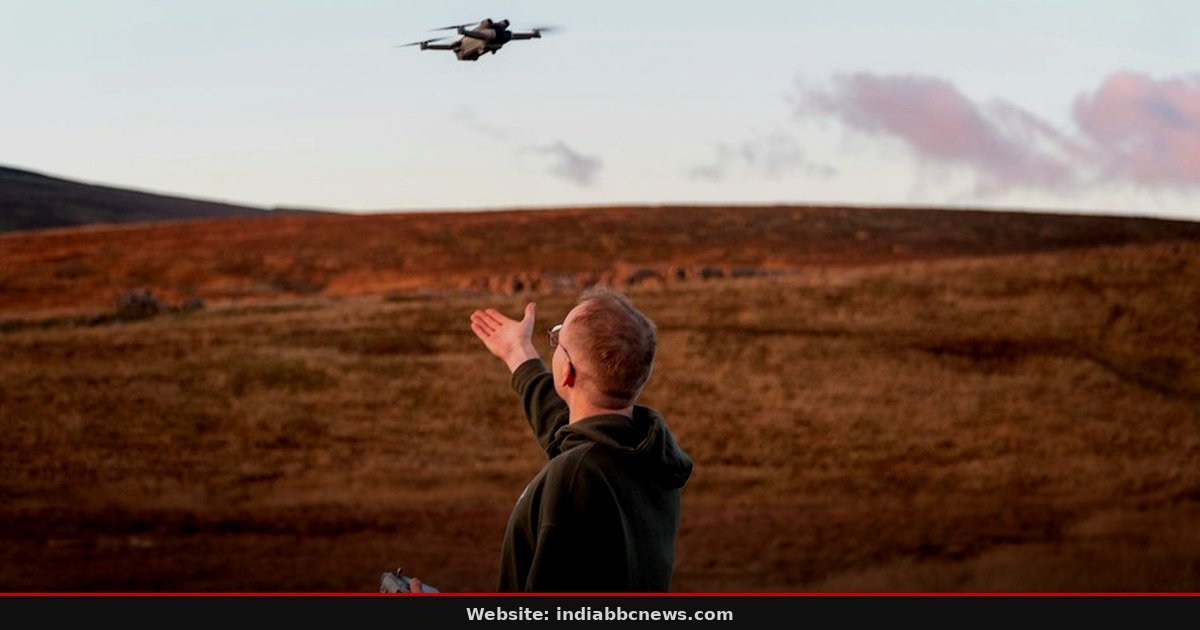
UK Pledges 1,000 Long-Range Drones to Ukraine in Major Escalation
Andy Burnham stood in Berlin and dropped the number like a hammer on glass. 1,000 long-range strike drones. It wasn’t a symbolic gesture or a slow drip of aid. It was a sudden, sharp jump in capability that changes the geometry of the war on the Eastern Front.
The Prime Minister made the announcement during the Coalition of the Willing summit, a gathering of 36 nations where the air was thick with the scent of polished wood and nervous energy. This is part of a new £260m package designed to keep Ukraine’s lights on and its defenses sharp as winter sets in. The government says these drones can fly up to 625 miles. That is deeper into Russian territory than almost anything Ukraine has fielded recently.
The 625-Mile Threat: Hitting the Industrial Heart
The range is the big story here. 1,000 kilometers is not just a number; it is a direct line to military production facilities deep inside Russia. These are not the small, consumer-grade quadcopters that snap photos of trenches. They are heavier, deadlier platforms designed to sit on a target and deliver a kinetic punch. Ukraine has been struggling with a shortage of precision munitions for years. The US has been hesitant to provide Tomahawk cruise missiles, leaving a gap that only long-range, low-cost drones can fill.
Defense analysts have long argued that the war has shifted from a battle of steel to a battle of air. If Ukraine can reliably hit refineries and factories 600 miles away, the economic pressure on Moscow increases exponentially. The UK government stated that 80% of this £260m package will actually be spent in Britain. That means the drones are likely being built, or at least fully assembled, on British soil before they cross the border.
It is a strategic choice. It keeps the supply chain secure from Russian electronic warfare and harassment attempts. For a country that lost its own drone manufacturing base during the pandemic, this is a high-stakes gamble on industrial capacity.
Burnham’s Gamble on Peace and Pressure
Burnham’s tone in Berlin was careful. He spoke of being “more determined than ever to stay the course.” But he also talked about moving towards peace. This is a delicate line to walk. On one hand, you are handing an overwhelmed ally the tools to strike deeper.
On the other, you are signaling to Washington that Europe is serious about a negotiated end. The presence of US envoys Jared Kushner and Steve Witkoff at the table was no accident. They are there to listen. They are there to measure the weight of European resolve.
Nobody in the room looked convinced that a ceasefire is imminent. Not really. The talks are happening while Russian shelling continues to degrade Ukraine’s power grid. The “peace” talk is a diplomatic shield.
It buys time for weapons to arrive. It allows leaders to claim they are engaged in diplomacy while they are actually escalating the arms race. It’s a harder sell than it sounds. You cannot offer a peace deal to a country whose cities are freezing if you haven’t given them the means to stop the aggression.
The drones are the lever. The peace talk is the rope. And the tension between the two is where the next six months will be decided.
The India Angle: A Shifting Security Equilibrium
For India, this announcement is a loud alarm bell. New Delhi has historically sat in a careful, awkward middle ground. It is a close friend to both Western powers and the Global South. It has kept purchasing Russian oil at a discount, sustaining Moscow’s war chest even as it criticizes the invasion.
But the UK sending drones that can strike 625 miles deep changes the calculus. It suggests that the Western world is moving beyond defensive aid to offensive capability. India cannot ignore the precedent. If Europe is willing to supply deep-strike assets, it signals that the red lines are moving.
For Indian policymakers, this raises the question of their own defense posture. The region is becoming more volatile. The flow of advanced drone technology is no longer just a military issue; it is a diplomatic one. India’s strategy of balancing acts is getting harder to maintain.
There is also a direct economic angle. Indian markets have shown resilience, but they are sensitive to global energy shocks. If this package succeeds in disrupting Russian oil infrastructure, global energy prices could spike. India is one of the largest importers of crude oil.
A surge in布伦 prices hurts Indian consumers directly. Furthermore, the UK’s insistence on spending 80% of the package domestically highlights a trend: the West is reshoring defense manufacturing. India, with its massive “Make in India” initiative, watches this closely. The message from Washington and London is clear: security is now economic.
Supply chains are weapons. India needs to align its domestic industrial strategy with this new reality. It is not just about buying missiles anymore. It is about building the capacity to sustain a high-intensity conflict without looking over the shoulder for spare parts.
The Winter War: Infrastructure as a Target
Winter is coming. This is not a metaphor. It is a military season. Russian forces have focused on knocking out power in Ukraine before the cold sets in.
They know that a freezing population loses the will to fight. The UK’s drone package is a counter to this. It is a way to keep the lights on by keeping the enemy off balance. The drones can target the grids that power Russian logistics.
It is a classic game of whack-a-mole, but with higher stakes. The UK also pledged further air defense support this week. They sanctioned Russia’s 10 major oil producers. The goal is to make the winter as unpleasant for Moscow as it is for Kyiv.
The Crimean Bridge has been attacked again and again. It is a symbol of Russian control. Hitting it is a psychological blow. The UK’s contribution to this effort, through better targeting data and long-range assets, is significant.
The strike rate for Ukraine is now close to 70%, according to Downing Street. That is more than double what it was just a couple of months ago. This efficiency matters. It means every dollar of aid is doing more work.
The drones are the force multiplier. They allow fewer operators to cover more ground. It is a cost-effective way to deny Russia the feeling of safety. But it is also a dangerous signal.
It tells Moscow that its rear areas are exposed. And exposed rear areas invite retaliation. The cycle of violence is tightening. The question is not if it will escalate.
The question is how fast. And who can afford to escalate faster.
What Happens Next: The Brussels Deal
The next major step for Burnham is Brussels. He heads there on Friday for a UK-EU summit. The agenda is not just Ukraine. It includes food, youth visas, and re-linking British industry to the EU’s carbon trading regime.
This is smart politics. You do not just send drones. You build alliances. The drone deal locks Ukraine into a security partnership with London.
The Brussels deal locks London into a deeper economic tie with Europe. Together, they form a web of dependencies that makes it harder for any one actor to walk away. The US is in the room. The EU is at the table.
The UK is the glue. But the glue is fragile. Public opinion in Britain is shifting. There is fatigue. There is anger about the cost of living.
Every pound spent on a drone is a pound not spent on the NHS. The government knows this. That is why they emphasize that 80% of the spend stays in the UK. It is a PR move.
It tells voters that this is not a gift; it is an investment. It is a job creator. It is a security dividend. The next vote will be on whether the public accepts this trade-off.
Will they accept higher defense spending in exchange for a safer world? Or will they demand a return to isolationism? The Berlin announcement is a bet. It is a bet that the next generation of leaders will view the war as a permanent condition, not a temporary crisis.
And that is a very hard bet to win over a single election cycle. Yes. The new package includes drones with a range of up to 625 miles (1,000km). This allows Ukraine to target military production facilities and logistics hubs far behind the front lines, which were previously out of reach for shorter-range assets.
Frequently Asked Questions
Can UK-supplied drones hit deep inside Russia?
How does this affect Indian oil imports?
It introduces volatility. If Ukrainian strikes disrupt Russian oil refineries and export infrastructure, global crude prices may rise. As a major oil importer, India could see its import bills increase, impacting inflation and the rupee’s stability in the coming months.
Why is the UK spending 80% of the package domestically?
The UK government states that keeping production within Britain protects the supply chain from disruption. It also creates jobs and strengthens the domestic defense industry, ensuring that the country is not reliant on foreign manufacturers for critical wartime assets. Not directly. Analysts view it as an escalation of pressure to force Russia to the negotiating table. The UK has signaled readiness for peace talks, but only after strengthening Ukraine’s defensive and offensive capabilities to ensure a favorable outcome.
Is this a step toward ending the war?
What is the UK’s next major diplomatic move?
PM Burnham heads to Brussels on Friday for a summit with the EU. The focus will be on deepening economic and regulatory ties, including on food standards, youth mobility, and carbon trading, to consolidate the European alliance supporting Ukraine. Source: BBC Politics
Source: BBC Politics

