


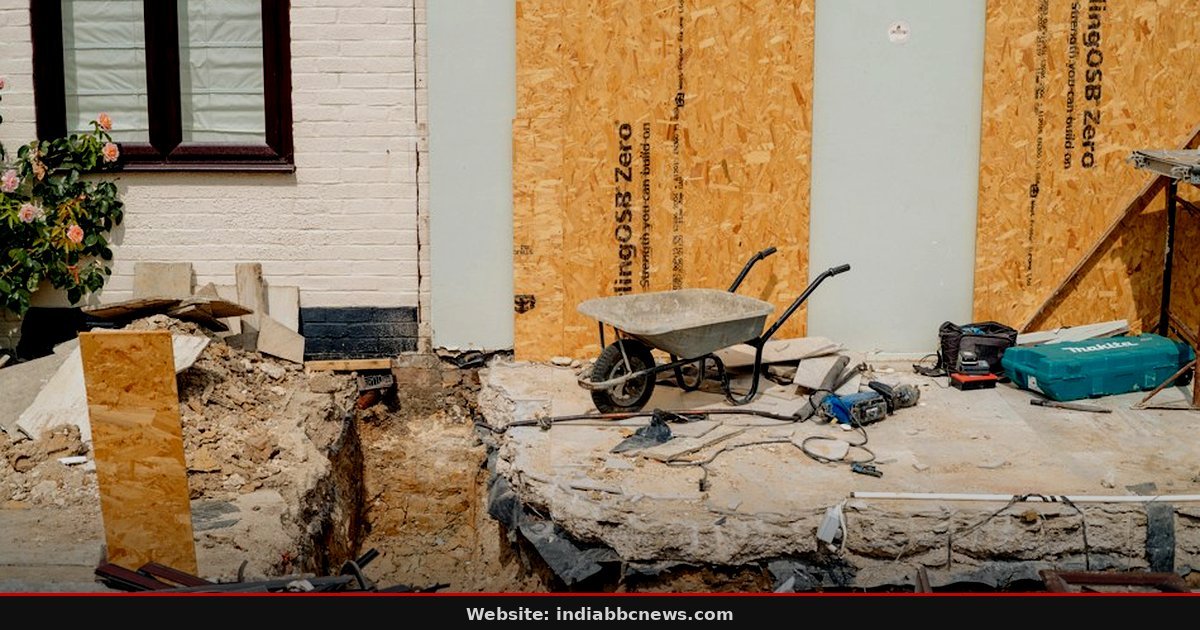
90% of Homes Still Rotting: The UK Insulation Scandal That No One Wants to Fix
24,600 homes are broken. That is the official tally from the UK government, a number that sits heavy in the air of Parliament Hill. It is not a projection or a estimate. It is a concrete, brutal fact that Energy Minister Martin McClusky confirmed to MPs on Wednesday. The external wall insulation installed under state schemes has failed, and for most of these families, the rain is still getting in.
The Number That Busted the Myth
The math is ugly. Only 2,227 repairs have been finished. If you do the division at a kitchen table at 2 am, the conclusion is stark: 90% of the defective jobs are still sitting there, unaddressed, rotting the walls from the inside out. McClusky said he was shocked by the scale, a word that does little to comfort a homeowner staring at black mould on their bedroom ceiling. But shock is not a repair strategy, and these families are running out of patience.
This is not a minor delay. It is a systemic collapse of oversight that has left thousands of people living in damp, cold, and fear. The Energy Minister admitted the schemes “didn’t have correct oversight,” a phrase that sanitizes a disaster that destroyed the trust of vulnerable households. They didn’t just fail to insulate; they failed to protect the people who trusted the state to do it right. That is a harder sell than it sounds when you are explaining it to a mortgage lender who wants to pull the loan.
Ken Palfrey’s Two-Year War
Ken Palfrey, 66, used to build houses for a living. Now he is stuck inside one that is falling apart because of work done in 2024. He calls the process a “merry-go-round,” a term that captures the dizzying, hopeless loop of emails and complaints that has consumed his life. He has spent “hundreds and hundreds of hours” chasing answers that never arrive. For a retired builder, the sheer incompetence of the installation feels like a personal insult.
The damage to his home is visible and visceral. Window sills are warped, and damp has crept into the fabric of the walls, creating a breeding ground for mould that threatens his health. He was told the insulation had to be removed immediately, but the removal never happened. Instead, he got a referral to the National Energy Foundation, a charity relying on energy supplier funding to pick up the pieces.
It is a patchwork solution for a structural failure, and Palfrey is not convinced it will hold. He just wants someone to fix the window frame before winter hits again.
Blame Game: Regulator vs. Government
When Bill Esterson, the chair of the Energy Security and Net Zero Committee, asked if McClusky had confidence in Ofgem, the minister did not answer directly. He talked about “failures in the system” and how they are now “designing a system,” a circular logic that rings hollow in a committee room. Ofgem, the regulator, quickly issued a statement saying it was “unacceptable” but insisted it was not responsible for assuring the quality of the actual installations. They claim their role is to hold suppliers to account, not to check the plumbing or the plastering. That’s a distinction that feels like splitting hairs when the roof is leaking.
The Department of Energy Security and Net Zero (DESNZ) said they inherited the failing ECO4 scheme and ended it because it “clearly let families down.” They are now pushing a new “Warm Homes Plan” to overhaul the approach. But saying you stopped a bad program because it failed doesn’t fix the 24,000 homes currently failing in the dark. The regulator says they only administer the scheme; the government says they only inherited it. Meanwhile, the homeowners are left holding the bag, quite literally, as water pools on their floors. Nobody in the room looked convinced that this new plan will be any different from the old one.
What This Means for India
The shockwaves of this UK failure hit close to home for Indian policymakers and market watchers. India is currently rolling out its own massive energy efficiency and home retrofitting drives, aiming to reduce carbon footprints and cut energy bill burdens for the middle class. The UK’s blunder serves as a grim cautionary tale: without rigorous, independent quality assurance, good intentions can create bad housing. If a developed economy with strong regulatory bodies can’t police 300,000 installations, how can a developing nation manage the scale of its own green transition? It’s a question that keeps Indian housing experts up at night.
For Indian investors and NRI homebuyers, the risk is tangible. The sector is growing, and the promise of energy-efficient homes is a major selling point. But the UK case shows that the “green” label can become a liability if the installation is botched. It also highlights the vulnerability of small contractors who go out of business, leaving the consumer stranded with a broken warranty and no one to call.
India must build its consumer protection frameworks around this specific risk. The lesson is clear: if you can’t inspect the work, don’t promise the outcome. That is a harder sell than it sounds when you are trying to attract foreign investment into Indian real estate.
The Ticking Time Bomb
Fuel Poverty Action argues the problem is bigger than the official 24,600 figure. They claim up to 100,000 homes are affected by defective measures across various schemes. Jonathan Bean, their policy lead, called the neglect “shockingly negligent,” noting that defective internal wall insulation is a “ticking time bomb.” The government estimates 29% of internal insulation is defective but chose to leave it out of the current “Find and Fix” process. That is a deliberate choice that leaves thousands of homes with a hidden, dangerous problem that simply sits there, getting worse every season. It is a decision that prioritizes optics over safety.
The ECO4 scheme, which spent £4bn, is closing in December. GBIS, its cheaper sibling, is already shut. The money is gone, the contracts are signed, and the defects are exposed. The next step is the real test: can the government actually force accountability from parties that may no longer exist?
The deadline for the new Warm Homes Plan is looming, but the deadline for safety is today. We are running out of time to fix what was broken, and the cost of delay is measured in health and wealth. This is not just a housing issue; it is a test of integrity for the entire energy transition project.
Frequently Asked Questions
Why is the UK insulation scheme failing?
Lack of oversight allowed poor quality work to pass audits. The regulatory bodies failed to catch defects until they became major structural problems. The cost is not publicly disclosed per home, but the total scheme cost was £4bn. Homeowners are promised they will not pay for the repairs.
How much does it cost to fix the insulation?
What is the ECO4 scheme?
It is a UK government program that installs heat pumps, solar panels, and insulation. It has fitted over 300,000 homes since 2022. It serves as a warning for India’s own green housing initiatives. It highlights the critical need for strict quality control in large-scale retrofitting projects.
How does this affect India?
Source: BBC Politics
Source: BBC Politics

