


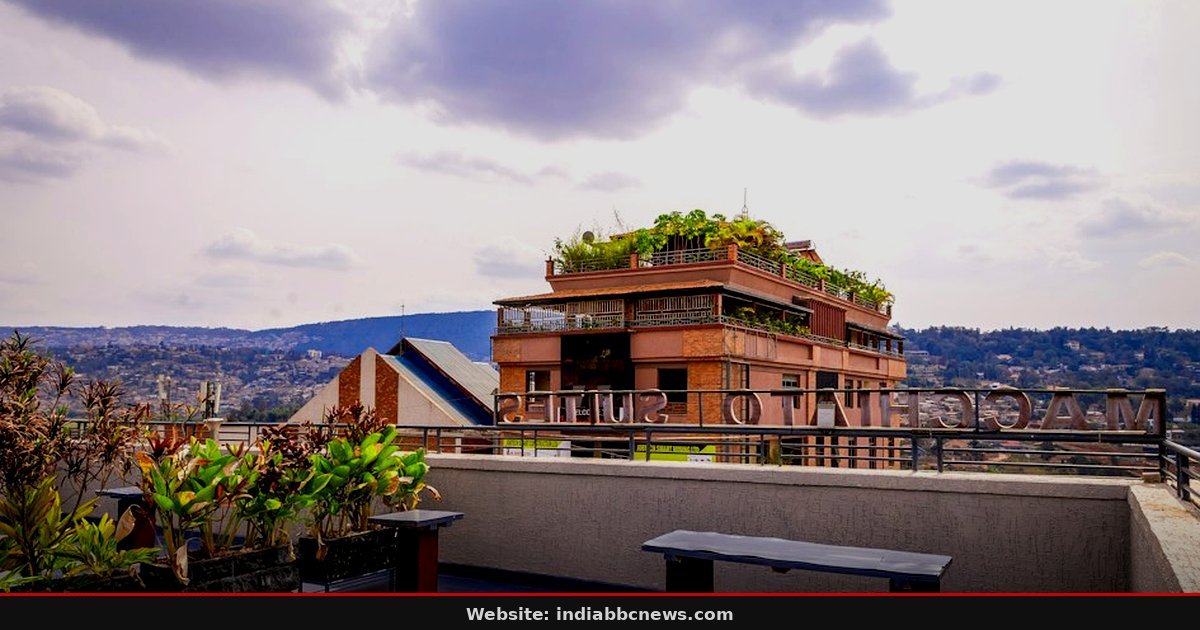
95,000 dollars. That’s how much one American homeowner is planning to spend on a rooftop deck. The house itself? 500,000 dollars. The math makes my head spin, but the man says he’s not crazy — he’s just tired of staring at the ceiling.
A Deck That Costs More Than Most Cars
The number is genuinely absurd when you look at it in isolation. He has a net worth of 2.3 million dollars, which puts him firmly in the upper-middle class, but that doesn’t mean his money is liquid or his wallet is bottomless. His only debt is a 15-year mortgage, a detail he stressed because it shows he isn’t drowning in installments. But throwing 95,000 at a roof deck is a different animal entirely.
It’s a discretionary expense, plain and simple, and it dwarfs the price of a mid-range sedan. Most people don’t even scratch their heads when they buy a car for that amount, yet this feels like a luxury item.
He told reporters that the structure is not just for show. It’s a living space, a place to breathe when the ground floor gets too crowded with family or work. He’s 63, a age where you start prioritizing comfort over accumulating more stuff. There’s a psychological shift that happens in your sixties, one that often leads to spending on experiences or home upgrades that boost daily quality of life.
He didn’t ask for financial advice, he asked for perspective. And honestly, nobody in the room looked convinced it was a bad move, only that it was a bold one.
The Psychology of the “Big Ticket” Late-Life Purchase
Behavioral economists have long noted that money loses its numbing effect as we age. When you’re 30, 10,000 is a scary number that could cover six months of rent or a down payment chunk. When you’re 63, with a paid-down mortgage and likely decades of savings, that same number feels smaller, or at least less terrifying. It’s not about being irresponsible, it’s about the shifting baseline of what “comfortable” means.
This isn’t the first time we’ve seen retirees dip into their war chests for home projects. Remember the boom in home theaters and wine cellars in the 2010s? It was the same impulse, just in a different room.
But there’s a catch that doesn’t feel good to hear. Inflation has changed the game for everyone, not just the rich. A 95,000 roof deck used to cost maybe 75,000 in 2015. Labor costs for carpenters and steelworkers have skyrocketed, and material prices for high-grade teak or composite decking have followed suit.
He’s paying a premium not just for the luxury, but for the current economic climate. That’s a harder sell than it sounds, especially when the broader market is so volatile. Why pour concrete into a roof that might not even add proportional resale value? The answer, he insists, is that he plans to live here for another 20 years.
He’s voting for his own happiness, not the next buyer’s curiosity. This story hits close to home for a growing segment of Indian elites, particularly in cities like Mumbai, Bangalore, and Delhi. The rise of the “nRI-wealth” class has created a specific spending pattern that mirrors this American deck-builder. It’s not about the house being grand, it’s about the amenities being scarce in a dense urban environment. In Mumbai, where space is at a premium and vertical living is the norm, a rooftop terrace is the closest thing to a backyard.
The India Angle: A Mirror for the New Indian Wealth
Spending 75 lakhs or more on a premium outdoor kitchen, a jacuzzi, or a custom pergola is becoming a status symbol that rivals owning a sports car. The Indian context adds a layer of social signaling that is absent in the US story. Here, the “visible” luxury is king, even if the asset is technically a utilitarian structure.
For the Indian real estate market, this kind of spending has implications that go beyond individual wallets. Developers are starting to price in these “lifestyle premiums” for top-floor flats, knowing that buyers are willing to pay for the square footage above the ceiling. It’s a subtle shift in how luxury is defined in India, moving from marble floors and brass gates to functional outdoor spaces that offer relief from the smog and heat. But the comparison is imperfect.
A 500,000 dollar home in the US is a solid middle-class property, whereas in India, that sum buys you a modest 3-bedroom in a mid-tier locality. The psychological weight of the 95,000 spend is different because the baseline asset value is different. Yet, the impulse is identical: the refusal to accept that a home is just a box to sleep in when you can afford to make it a sanctuary.
Will It Resale? The Hard Truth About ROI
Let’s talk about the money, because that’s what the internet wants to chew on. A 95,000 upgrade on a 500,000 home is a 19% increase in property value, at best. Most appraisers will tell you that you will never recover that full amount. You might get back 60,000, maybe 70,000, if the next buyer is also obsessed with outdoor space.
That leaves a 25,000 to 30,000 loss on paper. Is that a loss, or is it the price of admission for the next 10 years of sitting under the stars? That’s a question only he can answer. But historically, highly specialized home features tend to be the first things buyers discount.
A standard deck adds value; a custom, multi-level roof structure with integrated lighting and plumbing is a niche product. There’s also the maintenance factor that people forget until the first bill arrives. Roof decks require constant upkeep. The wood rots, the screws loosen, the plumbing leaks. Over 10 years, the maintenance cost could easily eat up another 15,000 to 20,000 dollars.
So the total cost of ownership isn’t 95,000, it’s closer to 115,000. And if he sells in 5 years, he might recoup half of what he spent on the initial build. The math is bleak, but the utility is immediate. He’s buying time, not an asset.
That’s a risky trade, but it’s a human one. We don’t always buy things for their potential resale value; we buy them for the joy they provide right now. The market doesn’t care about his joy, but he does.
What Experts Are Actually Saying
Financial advisors usually flinch when they hear about large discretionary spends in this range. They know that at 63, healthcare costs are the real wildcard, not the price of teak wood. A single major medical event can wipe out the value of an entire roof deck. But they also know that depression and dissatisfaction with one’s living environment have tangible costs.
Stress management is a real financial strategy, albeit an unglamorous one. One advisor told me that the key is whether this spend is coming from liquid savings that won’t be needed for the next 10 years. If it is, then it’s a reasonable allocation to his “well-being portfolio.” If it’s touching his retirement corpus, it’s a red flag. He says it’s the former, and I’d believe him, given the low debt load.
Architects have a different take. They argue that modern homes in denser urban areas are becoming more inward-looking, and the rooftop is the only escape valve. Without it, the house feels like a container. With it, the house feels like a home.
The rise of WFH (work from home) has exacerbated this, making the need for distinct spaces in the home more acute. Before 2020, a living room could serve multiple functions. Now, you need a place to work, a place to relax, and a place to be away from the family. The roof deck is the ultimate “away.” It’s a physical separation from the daily grind, and for people working from home, that separation is worth more than any tax break.
It’s not a frivolous expense; it’s a functional one that addresses a modern pain point. It depends on your liquidity and timeline. If you have 10 years of rent-free living and no other major planned expenses, it’s a lifestyle choice, not a financial one. If that money was earmarked for your children’s education or medical emergencies, then yes, it’s risky.
Frequently Asked Questions
Is spending 95,000 on a roof deck bad financial advice?
Does a roof deck increase home value?
It increases perceived value, but rarely the appraised value. Appraisers look at comparable sales of standard homes. A unique feature like a high-end deck is hard to standardize, so most of the investment is considered a personal comfort, not a capital gain.
How does this compare to Indian home upgrade trends?
Indians are increasingly investing in “experience spaces” like home gyms, theaters, and luxury balconies. The trend mirrors the US but is driven more by social status and limited urban space, whereas the US trend is often about maximizing personal well-being in a house they plan to keep forever. Structural integrity is the primary risk. Adding thousands of pounds of decking, furniture, and water features to a roof not designed for it can lead to catastrophic failure if the underlying beams aren’t reinforced. Always get a structural engineer’s sign-off before you pick up a hammer.
What is the biggest risk of building a roof deck?
Source: MarketWatch
Source: MarketWatch