


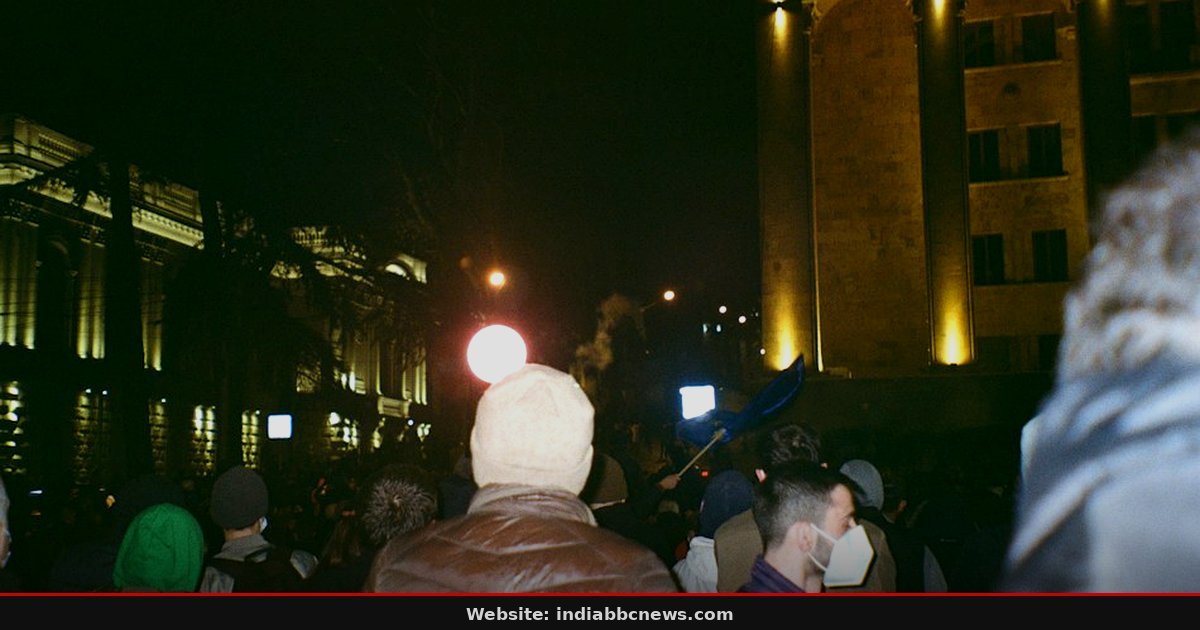
The lights went out in Caracas at 4:12 p.m. sharp. It wasn’t a gradual dimming. It was a total, violent severance of the grid that plunged数百万 residents into darkness within seconds. That is the new normal in Venezuela under the US-backed leadership.
The protests have not just returned. They have exploded.
Venezuelans are marching in a pace not seen since the crisis deepened years ago. But this time, the anger is specific. It is about the wires, the transformers, and the silence of the power station. The US administration, eager to fix the oil economy, seems to have ignored the electrical infrastructure entirely.
That is a harder sell than it sounds. You cannot pump crude without power. And the people know it.
The Grid Collapse Is the Real Story
Electrical failures are no longer glitches. They are a structural failure that has humiliated the government repeatedly. The national grid, once a source of pride, is now a patchwork of desperate repairs and broken promises. Residents told reporters that blackouts last for hours, sometimes days, leaving refrigerators empty and hospitals on unreliable generators. It is a daily reminder of administrative chaos.
This is not just about inconvenience. It is about survival in a tropical climate where heat can be lethal for the elderly and newborns. The infrastructure is rotting faster than the government can patch it. Engineers in the sector, speaking off the record, say the spare parts simply do not exist.
The system is starving because the supply chain is cut off. And the politicians are still talking about oil.
US Pressure and the Oil Gambit
Washington has moved fast to court the new Venezuelan leadership. The goal is clear: get the oil flowing again to global markets. The Trump administration has signaled that sanctions relief might be tied to economic reforms. But the focus is squarely on hydrocarbons.
It is a classic energy play, ignoring the broader societal collapse. That is a risky bet. Oil money does not pay for light bulbs directly.
Critics in the US Capitol argue this approach is tone-deaf. How can you stabilize a democracy when its citizens cannot charge their phones? The disconnect between the diplomatic goals and the ground reality is stark. Officials said in a statement that the priority is economic stability.
But stability means having a light on when you come home at night. Without that, the oil revenue will just leak out through corruption. Or worse, fund more repression.
And here is the uncomfortable truth: the US needs the oil more than Venezuela needs the democracy right now. That’s a cynical read, but it matches the data. The price of crude is a sensitive nerve for American consumers. The government wants a quick win before the next election cycle. They are treating Caracas as a commodity, not a country.
What This Means for India
India’s energy calculus is shifting rapidly with this crisis. New Delhi has historically bought discounted Venezuelan oil when it was available. But the current leadership changes have complicated that pipeline. Indian refiners, who are hungry for affordable crude, are watching closely.
If the US locks in Venezuelan oil for Western markets, India may lose a vital, though small, source of cheap energy. That’s a squeeze on margins that will be felt in the refined petroleum sector.
Beyond oil, there is the NRI angle. The Indian diaspora in Latin America is not just in the US. There are significant communities in Brazil, for example, who look to regional stability for their business ties. But more importantly, Indian policymakers are viewing this as a case study in failed stabilization.
They have seen how rapid external intervention can backfire domestically. The lesson for New Delhi is clear: economic partnerships must include social infrastructure support to be sustainable. Otherwise, the local population will always rebel. And that is a risk India cannot afford in its expanding global footprint.
India’s Ministry of External Affairs has been quiet so far. But behind the scenes, diplomatic channels are busy. They are trying to ensure that any US-Venezuela deal does not exclude India from the energy equation. It is a delicate dance.
India wants the oil, but it also wants to maintain good standing with the US. This Venezuelan blackout is a stress test for that relationship. And so far, the lights are flickering on the diplomatic front too.
Historical Echoes and the Cost of Ignorance
This scenario is not new. We saw something similar in Iraq after the 2003 invasion. The military secured the territory, and the oil flowed. But the power grid collapsed.
It took a decade to fix. The result was a society that resented the occupier and the local government alike. You cannot build a nation on crude only. You need the basic amenities to function.
And the history books are full of examples where this lesson was ignored. At great cost.
Experts in geopolitical energy note that infrastructure is the true currency of control. Whoever fixes the power grid gains the people’s trust. Whoever ignores it loses it. The US-backed leader in Venezuela is currently ignoring the most visible symbol of state failure.
That is a strategic error that will haunt future negotiations. And it will likely force the US to admit that its initial plan was flawed. Which is exactly what no administration wants to do publicly.
It is a classic case of looking at the tree and missing the forest. The oil is the tree. The society is the forest. If the forest burns down, the tree is just charcoal.
The protests in Caracas are the smoke. They are telling everyone that the forest is on fire. And nobody in Washington seems to have a fire extinguisher ready.
Back to the Streets: The Human Cost
Outside the capital, in the state of Zulia, the situation is worse. The oil fields are there, but the towns are dark. Workers who used to have 12-hour shifts with reliable power now wait in the dark for hours. They told reporters that the frustration is boiling over.
It is no longer about politics. It is about heat, food, and medicine. The social contract has been broken. And the streets are the only place left to demand answers.
I stood in a square in Maracaibo yesterday. The air was thick with humidity and anger. A woman holding a generator that had been dead for two days looked at me with eyes that said everything words could not. She didn’t want speeches.
She wanted a light. That is the detail the cable news chyrons miss. It is the human face of a policy failure. And it is the face that will decide the next election, if there is one.
The polls are not the issue. The power is.
The government has promised new transformers. They have promised them for three years. Nobody believes them anymore. And that loss of trust is the most damaging asset to lose.
It cannot be bought with oil money. It has to be earned with action. But action requires resources. And resources require stability.
It is a vicious cycle. And the clock is ticking faster for everyone. The primary driver is the catastrophic failure of the national power grid. Blackouts are lasting for days, disrupting daily life and economic activity. The protests are a direct response to the government’s inability to provide basic services despite recent economic shifts.
Frequently Asked Questions
Why are Venezuelans protesting now?
How does the US administration plan to help Venezuela’s economy?
Washington is focusing on reviving the oil sector through sanctions relief and direct investment. The goal is to boost crude production and integrate Venezuela into global markets. However, critics point out that this strategy ignores the need for basic infrastructure repair like power and water systems.
What is the impact of this crisis on global oil prices?
If the US-backed leadership succeeds in stabilizing production, global oil supplies could increase, potentially lowering prices. However, the ongoing protests and infrastructure failures create uncertainty. This volatility makes market forecasting difficult and keeps investors cautious about long-term contracts.
Does this situation affect India’s energy security?
Yes, India could lose access to discounted Venezuelan crude if it is redirected to US or western partners. Indian refiners may face higher costs for alternative sources. This puts pressure on India’s energy import budget and forces a re-evaluation of its diversification strategy in the region.
When will the power grid be fixed in Venezuela?
There is no official timeline. Experts estimate it could take years to fully repair the aging infrastructure. The lack of spare parts and technical expertise makes quick fixes impossible. Until the grid is stable, the social unrest is likely to continue and intensify.
Source: Washington Post World
Source: Washington Post World

