


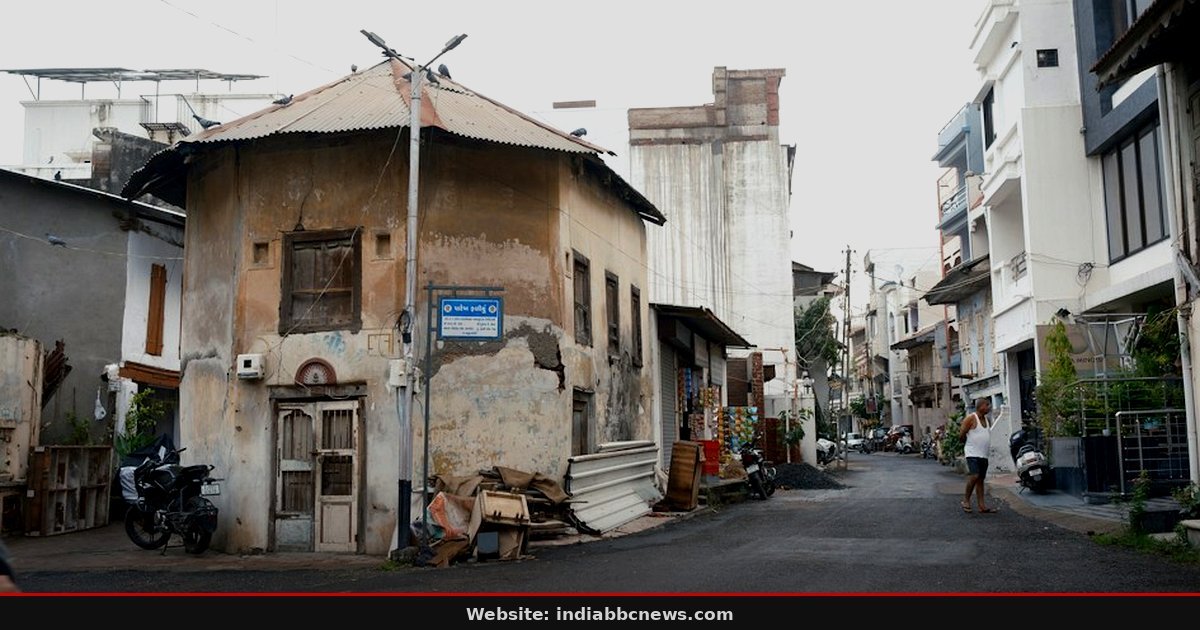
Demolition of ‘illegal’ mosque in U.P.’s Sambhal village under way amid heavy police deployment
Exhibitors of JCBs and bulldozers. That’s all you saw from the road. The machinery sat idle for hours, engines off, waiting for a signal that had been pending for over a month. In Qutubpur Satta, a village in the dusty plains of Sambhal, the air was thick not with dust, but with silence.
Nobody in the area looked convinced this would be a quick job. It wasn’t. The order to demolish the structure, declared illegal last month, finally moved from paper to ground on a grey, overcast morning. The police cordon was tight.
Too tight for a routine civic enforcement action, if you ask me. Locals kept their heads down. They had seen enough over the decades to know that “public use” land rarely stays public for long once the politicians start talking about it.
The mechanics of a forced closure
The operation began with a flurry of activity from revenue officials who had been documenting the site since early October. They claimed the mosque was built on municipal land meant for a public park or community center, a designation that had existed on government records since the 1990s. No building permit was issued. No land title deed was produced by the community.
The legal basis was clear, blunt, and backed by a court order. But execution is where things usually go sideways in Uttar Pradesh. The district collector’s office confirmed to journalists that the demolition was necessary to restore public utility to the space. It’s a standard line, one I’ve heard in Delhi courtrooms, in Lucknow’s administrative offices, and in crumbling municipal buildings across the state.
The officers said they acted on information received from local residents who complained that the structure was obstructing footpaths and encroaching on green space. They’ve been filing these complaints for years, according to neighbors who have lived there since before the mosque was even a pile of bricks. The friction here isn’t about architecture; it’s about space. Who gets to claim it, and who gets to lose it.
Heavy police deployment wasn’t just for show. Sambhal is a district with a volatile history, and the authorities knew that a single stone could turn a demolition into a riot. Batches of paramilitary forces were on standby in nearby towns, ready to roll in if the situation deteriorated. I spoke to a junior police officer who was part of the cordon; he didn’t want his name in print.
He told me they had been instructed to treat any gathering of more than 5 people as a potential threat. That’s a hard line to hold in a village where everyone knows everyone. The tension was palpable even before the first crane moved. People watched from behind iron gates, from rooftops, from the shadows of adjacent houses.
They weren’t cheering. They weren’t protesting. They were just watching, waiting to see if their own homes would be next on the list of “illegal” constructions. That’s the fear that keeps people quiet in these cases.
It’s not just about a mosque. It’s about the message the hammer sends to the rest of the neighborhood.
Legal grey zones and political flashpoints
The legal argument is straightforward on the surface: the land is public, the building is unauthorized, therefore it must go. But in practice, this is where the story gets murky. How much “public use” land has actually been used for public purposes in Sambhal? The answer, for most locals, is very little.
Many of these designated spaces are covered in rubble, overgrown with weeds, or used as dumping grounds. To declare a religious structure illegal on such a site is to prioritize one form of occupation over another. It’s a political calculation disguised as legal enforcement. Critics argue that the timing is suspicious, coming just as the state government prepares for a new round of infrastructure projects in the region.
If the land is truly meant for a park, why hasn’t the park been built in the 20 years since the designation? Why wait until a mosque is up to remove the barrier? That’s a harder sell than it sounds. The authorities say the delay was due to legal challenges from the community, which is plausible but also convenient.
Every delay allows the political mood to shift, and in Uttar Pradesh, political moods shift faster than the weather. This isn’t the first time a religious site has been at the center of a land dispute in the state. I remember covering similar tensions in Ayodhya, where the legal battles went on for decades before any physical action was taken. The difference here is speed. The demolition started within weeks of the final order, not years.
This rapid execution suggests a different approach to governance, one that favors quick wins over long-term reconciliation. Experts in urban planning often point out that forced demolitions rarely solve the underlying land-use problems. They just clear the stage for new conflicts. Who will use the “public space” when it’s finally open?
The answer is usually the wealthy or the connected, not the average resident who complained about the footprint. The irony is thick. The people who lobbied for the mosque to be removed are now watching to see if their own backyard will be next. There’s a cynical joke circulating on social media about how “public property” in U.P. is really just “politicians’ property” with a coat of paint.
It’s not a new joke, but it’s gaining traction again. For Indian readers, this story is not just a local incident in a distant district; it’s a microcosm of a national debate that has simmered for years. The question of religious architecture on disputed or public land is no longer just a legal technicality. It has become a proxy for identity politics, a battleground where communal sentiments collide with state authority. The implications reach far beyond Sambhal.
What This Means for India
If the central government’s new land laws, which streamline the process for converting public land, are applied with this level of aggressiveness in other states, we could see a wave of similar actions in places like Gujarat, Rajasthan, and even in the culturally sensitive North-East. The economic angle is also significant. Construction and real estate are key sectors in the Indian economy, yet uncertainty in land titling and usage rights creates a chilling effect on investment. Developers don’t like ambiguity.
When the rules change overnight, or are applied selectively, capital flees to less risky assets. This isn’t just about bricks and mortar. It’s about the stability of the social contract that holds a diverse nation together. When the state uses demolition as a tool of social engineering, it erodes the trust that is necessary for any economic growth.
The ripple effects are felt in bank balances, in job security, and in the daily interactions between neighbors who no longer feel safe speaking to each other across religious lines. The diaspora reaction is telling, too. Groups of the Indian diaspora in the US and UK have recently lobbied their respective governments to scrutinize India’s human rights record, citing incidents like this one. They argue that the rapidity of the demolition, without due process for the defenders of the site, signals a broader crackdown on religious minorities. This narrative is now being used in international forums to question India’s claim of being a stable, democratic partner.
For businesses looking to invest in India, this adds a layer of reputational risk. It’s not just about the laws; it’s about the perception of the rule of law. If the courts can be bypassed or their orders executed with such little notice, how can a foreign investor trust that their own contracts will be honored? The India angle here is not abstract.
It’s about capital flows, about diplomatic ties, and about the psychological safety of being an Indian citizen in a shrinking sense of belonging. The message is clear: the state will remove what it deems “illegal” without hesitation. That’s a powerful signal, and it’s not one that brings comfort to everyone.
On the ground in Sambhal
Standing near the cordon, you could hear the hum of generators from police tents. The smell of diesel mixed with the dry, dusty wind of late autumn. I noticed a single pile of broken tiles left at the edge of the demolition site, uncollected. It was a small detail, but it’s the kind of thing you only see if you stand there long enough.
The workers who actually swung the hammers were paid daily, most of them from neighboring villages. They didn’t ask why they were pulling down the minaret. They just wanted their wages. One of them, an older man with calloused hands, told me he had built three mosques in his life.
He didn’t say it with pride, just with a tired acceptance. He said the work is the work. You do what you’re told. That’s a survival mechanism, not a political stance.
But it tells you something about the atomization of society. When your neighbor becomes a stranger, and your neighbor’s livelihood depends on destroying your neighbor’s faith, the community has already broken down before the first brick falls. The silence from the crowd was louder than any protest. It was a silence of resignation.
Of learning that fighting back has costs, and those costs are often paid by the people who can least afford them. That’s a harder truth than the political rhetoric ever admits.
As the day wore on, the police began to pull back, leaving a perimeter of sandbags and armed men. The site was secure, but the tension wasn’t resolved. It was just frozen. The local administration announced that the land would be cleared for “development” in the next 90 days.
No specifics were given. No architects were named. No community consultation was mentioned. Just a promise of something better, wrapped in the ambiguity of government planning.
I’ve seen this movie before. The “development” usually comes years later, if it comes at all. Or it comes in the form of a road that serves no one, or a plaza that stays empty. The promise is the point, not the fulfillment.
The people of Qutubpur Satta will have to live with the debris of this decision, both physical and social. They will have to figure out who they are now, after the structure that defined their community space is gone. That’s a question no bulldozer can answer. It’s a question that will haunt them for years.
And the answer will shape the next generation’s understanding of what it means to live in this state, in this country, in this time. The legal next steps are clear. The court order is final, but appeals are possible in higher courts. However, with the structure already demolished, the appeal becomes moot regarding the building itself. It shifts to compensation and the use of the land.
The road ahead: deadlines and decisions
The state government has 30 days to submit a plan for the new use of the site to the district court. If they fail to do so, the land could revert to its previous status, creating a new legal mess. This deadline is critical. It’s a test of administrative efficiency and political will.
If they delay, it suggests they are buying time for political maneuvering. If they act quickly, it confirms the narrative of decisive governance. Either way, the community of Qutubpur Satta is left waiting. They are waiting for a park that may never be built.
They are waiting for justice that may never come. They are waiting for a normal life that feels further away with each passing day. The clock is ticking, and it’s not in their favor. The next 30 days will determine the trajectory of this specific dispute, but the impact will be felt for much longer.
It’s a small piece of a large puzzle, but it’s a piece that fits the pattern we’re seeing across the country. Look ahead to the next municipal elections, which are expected to be held in 2027. How will this incident play out? Will the ruling party use it as a symbol of their strength, their ability to enforce the law? Or will the opposition use it as a symbol of oppression, of the state turning against its own people?
The rhetoric is already forming. I’ve seen the social media posts, the angry comments, the shared videos. The digital arena is just as volatile as the physical one. The outcome of this demolition will be a campaign issue, a talking point, a weapon in the political arsenal.
The people of Sambhal will be pawns in a game they didn’t start and can’t control. That’s the reality of modern politics. The local becomes the national. The personal becomes the political.
And the truth becomes a casualty. The only constant is the change, and the change is always in favor of those with the power to make it happen. The rest of us just watch. We just wait.
We just hope that the next story we read won’t be about us. Authorities declared the structure illegal because it was built on municipal land designated for public use without a permit. The demolition was ordered by the court
Frequently Asked Questions
Why was the mosque in Sambhal demolished?
Source: The Hindu

