

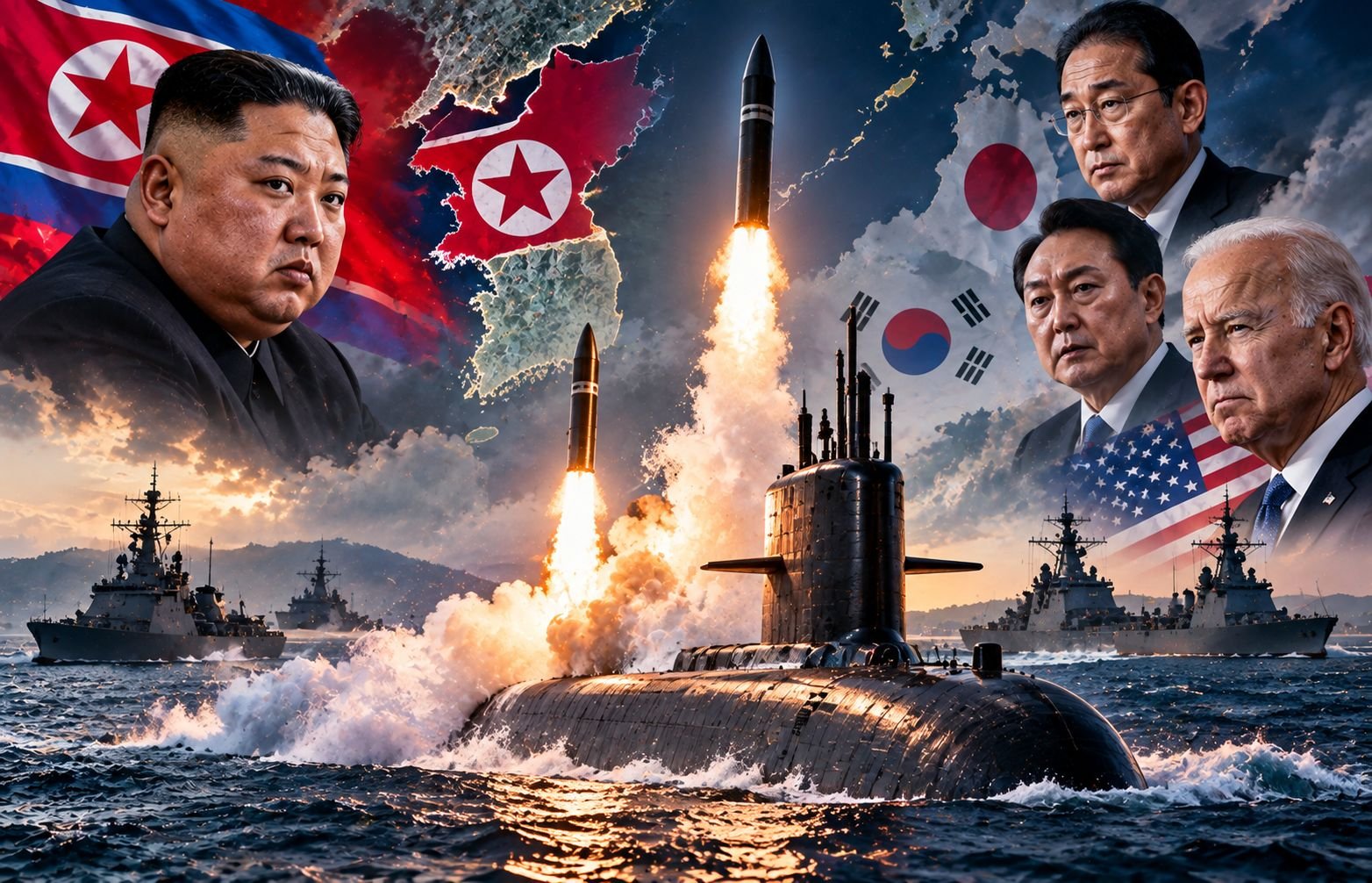
North Korea test-fired a salvo of submarine-launched ballistic missiles this week — a move timed, analysts say, to send a pointed message to the United States and South Korea ahead of an anticipated visit by President Trump to Asia. The launches are among the most technically sophisticated Pyongyang has demonstrated in recent months and signal that Kim Jong Un’s weapons programme continues to advance at pace, regardless of international pressure or sanctions.
What Was Tested and Why It Matters
North Korea’s state media confirmed the launches the following morning, describing them as a successful test of the country’s “underwater nuclear strike capability.” Submarine-launched ballistic missiles — known as SLBMs — are considered particularly destabilising because they are far harder to detect and target before launch than ground-based missiles. A submarine can lurk undetected near a country’s coast and launch with little warning time.
South Korea’s Joint Chiefs of Staff said the missiles were fired from a location in the waters off North Korea’s east coast, consistent with a submarine launch. Japan’s defence ministry also tracked the missiles and lodged an official protest with Pyongyang through diplomatic channels.
The Timing Is Deliberate
North Korea rarely does anything accidentally when it comes to missile tests. The timing here — just before Trump is expected to announce an Asia trip that may include a stop in South Korea and potentially a meeting with Kim Jong Un — looks carefully calculated.
Pyongyang has used weapons tests in the past to strengthen its hand before negotiations. The message, delivered in the language North Korea speaks most fluently, is essentially: we are serious, our capabilities are real, and any deal you want to make with us will be made on our terms.
Trump has previously expressed interest in meeting Kim, calling their earlier summits some of the most significant diplomatic encounters of his presidency. Whether a new meeting happens remains unclear — the White House said only that no formal meeting has been scheduled.
Seoul and Tokyo React
South Korea’s government called the test a “grave provocation” and convened an emergency national security meeting. President Han Duck-soo spoke with Japanese Prime Minister Fumio Kishida by phone, and the two countries agreed to coordinate their response with Washington.
The US Indo-Pacific Command condemned the launches and said they “highlight the destabilising impact of North Korea’s unlawful weapons of mass destruction and ballistic missile programmes.” American officials said they would review the situation but did not announce any new sanctions or military measures.
Russia and China Factor
North Korea’s confidence in testing has grown significantly over the past two years, partly because its relationship with Russia has strengthened dramatically. Pyongyang has supplied Moscow with artillery shells and ammunition for use in Ukraine, and in return has reportedly received advanced military technology and political cover at the UN Security Council — where Russia and China have repeatedly blocked efforts to impose new sanctions on the Kim regime.
That dynamic has made the traditional pressure toolkit against North Korea substantially less effective, leaving Washington and its allies with fewer good options and a Pyongyang that feels increasingly insulated from consequences.
For now, the missiles have splashed down in the sea and the world has moved on to its next crisis. But in Pyongyang, the generals are almost certainly studying the data from the test — and planning the next one.

