


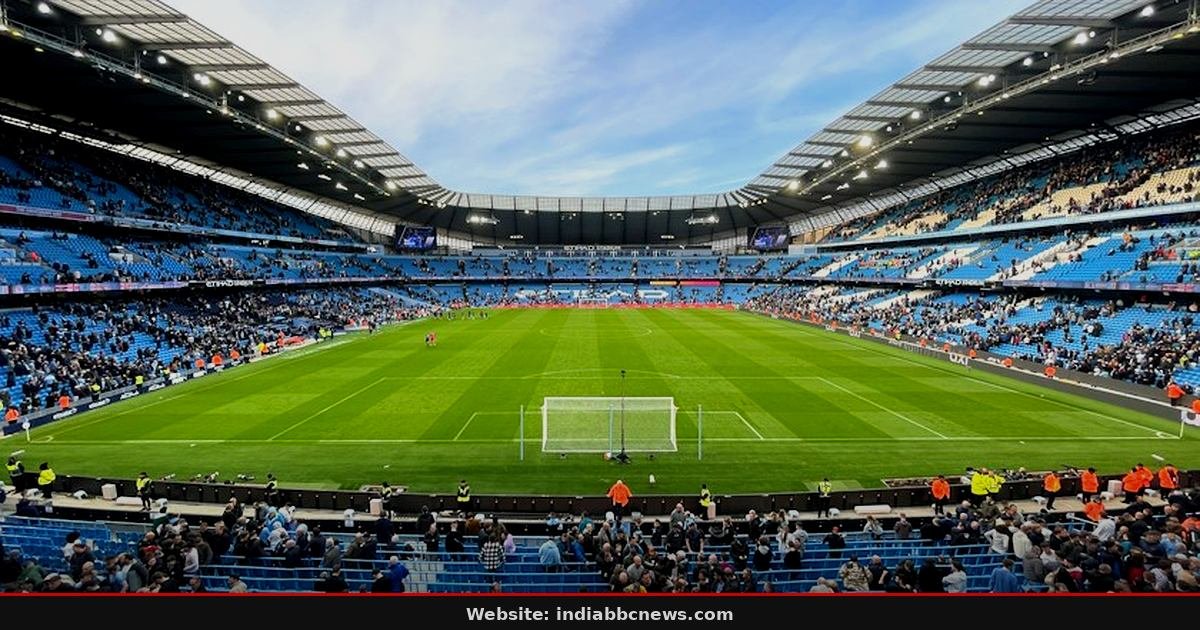
12,000 people. That is the number of souls trapped inside the Co-op Live arena when the air turned toxic at 10pm on Sunday. The US rapper Don Toliver was mid-set, the bass still thumping through the concrete floor, when an unknown substance hit the crowd. One second it was a concert.
The next, it was a panic. Videos from the concourse show fans coughing, eyes streaming, faces buried in jackets as they sprinted for the exits. The show was cut short. The building emptied.
It happened fast, and it happened without warning.
The Substance That Turned a Party Into a Panic
Police arrived to find a scene of controlled chaos. Sirens wailed outside Britain’s largest indoor venue, their blue and red lights flashing against the wet Manchester rain. Ambulances lined up in a stark row, waiting for patients who were still trying to process what had just occurred. The initial belief was tear gas, a common tool in crowd control but a nightmare in an enclosed space. By the time the dust cleared, officials downplayed that specific term, preferring the vague phrase “unknown substance.” It is a distinction that matters for the investigation, if not for the stinging eyes of the 50 fans who needed medical assessment.
Assistant Chief Constable Steph Parker, the Gold Commander for the incident, confirmed that a major incident declaration was triggered. This designation allows emergency services to bypass normal bureaucratic hurdles and coordinate a rapid response. “Our priority was to ensure the safety of every person that was attending the concert,” she told reporters. The declaration wasn’t just a formality; it mobilized a hazardous area response team and sent paramedics from the North West Ambulance Service swarming the site.
They treated more than 50 people on the spot, most suffering from eye and respiratory distress. One individual was taken to hospital, leaving families and fans outside to wait for news that might never come.
Security Gaps Spark Immediate Backlash
The most disturbing details are not about the gas itself, but how it got there. Fans are speaking out, and their stories paint a picture of lax security that should be alarming anyone who has attended a major UK venue recently. A concertgoer named Darius, speaking to BBC Radio 4, revealed that bags were not being checked properly. “They weren’t checking bags,” he said, his voice still shaky from the trauma.
He described the security process as a token effort, with staff standing on the far side of scanners looking at iPads while people walked through. It felt like a formality, not a protocol. That’s a harder sell than it sounds when you consider what actually happened.
Another fan, Jessica, told the Manchester Evening News that her friend had managed to sneak a flare into the standing section. She claimed not a single person in her group had their bag opened or searched. “I was told they now have special scanners that you just walk through,” she said. But if the scanners couldn’t catch a flare, what else slipped through?
The venue’s response so far has been to call it an isolated incident, but the evidence suggests a systemic failure in crowd screening. This is not a new problem; it is an old one that venues seem to forget until the moment it bites them. The question is not whether these systems work, but whether anyone is actually watching them work.
Confusion in the Dark: The First 45 Minutes
For the first 45 minutes after the release, there was no official announcement. The lights stayed on, but the music stopped. People waited, hoping the coughing fit in the air would pass, assuming it was everything from faulty pyrotechnics to a prank. Darius described the atmosphere as “traumatising,” noting that stewards looked just as lost as the fans.
“None of the stewards knew what was going on,” he told reporters. The warning lights were blinking, a silent alarm that no one seemed to understand. Fans were wandering to the toilets, grabbing drinks, trying to hydrate their burning throats while the confusion festered in the dark. It is a terrifying uncertainty that sets in when you realize the people supposed to protect you have no idea what is happening.
The evacuation did not happen until the situation became undeniable. At 10pm, the decision was made to cancel the show entirely. The message was simple: leave. Thousands poured out of the arena, a human tide moving in one direction toward the exits.
There was no crowd surge, no trampling, which is a testament to the training of the staff, albeit late in the game. But the delay in communication was a critical error. Why did it take 45 minutes to tell 12,000 people to get out? That is a gap that will be scrutinized by every safety board in the country.
In a world where safety is marketed as a premium feature, this level of confusion is a disservice to the consumer. The fans paid for the show; they should have paid for the certainty of their safety, too.
India’s Spotlight on Global Event Safety
This incident lands in a particularly sensitive moment for Indian fans and event organizers. India’s live music and sports sectors are booming, with venues in Delhi, Mumbai, and Bengaluru attracting global acts at a record pace. The scale of these events is growing, often pushing infrastructure to its breaking point. For Indian readers, this Manchester event is not just foreign news; it is a cautionary tale about the gap between ticket sales and safety protocols.
When a venue the size of Co-op Live struggles with an “unknown substance,” what does that say about venues in other parts of the world? The Indian government has recently issued new guidelines for large gatherings, but enforcement remains patchy. This incident will likely be cited by Indian safety experts as a global benchmark for what not to do.
Furthermore, the diaspora connection is strong. Thousands of Indians reside in the UK, and many were likely in the crowd or following the event closely. Social media in India quickly filled with concerns for fans abroad, highlighting the emotional link between the homeland and the community. This is not just about Manchester; it is about the global standard of care for audiences.
If a major Western venue with advanced security can make such a basic mistake, the pressure is on emerging markets to learn from it. The lesson is clear: technology is useless if the human element is compromised. For Indian policy-makers, this is a reminder that as the industry scales, so must the rigor of safety checks. It is a lesson that costs little to learn now and everything to learn later.
The Aftermath: Monitoring and Medical Advice
The immediate danger has passed, but the aftermath is just beginning. Emergency services have issued a stark warning: if you were at the gig and now feel unwell, you need to go to the hospital. The substance’s long-term effects are unknown, which is why the “unknown” label is so dangerous. Paramedics from the North West Ambulance Service are urging fans to monitor their breathing and eyes for the next few days.
It is a proactive step that acknowledges the uncertainty of the situation. One person is already hospitalized, and the 50 who received on-site treatment are part of a growing list of those affected. The psychological impact will linger long after the physical symptoms fade.
Police are not releasing the identity of the substance yet, which feels like a deliberate choice to manage public fear. “We will now begin to fully understand what this substance was and how this incident came about,” Parker confirmed to journalists. This silence is standard procedure, but in the age of social media, it rarely lasts long. Rumors will spread faster than the official report.
Fans on the ground heard screams of “it burns” and “what the f*** was that?” These are raw, human reactions that no press release can sanitize. The investigation will be long, and the public will want answers before the next show starts. Trust is a two-way street, and right now, the venue has lost it.
Frequently Asked Questions
Was Don Toliver hurt in the Manchester incident?
There are no reports of the artist being injured. He was removed from the stage as the evacuation began, but the focus of the medical response was entirely on the fans. His tour continues, with shows scheduled in London for the remainder of the week.
What kind of substance was released at Co-op Live?
Authorities have identified it as an “unknown substance,” though initial suspicions pointed to tear gas. The hazardous area response team is currently analyzing samples to determine its exact composition and origin. North West Ambulance Service treated more than 50 people on site for eye and respiratory symptoms. One person required hospitalization, while others received minor treatment before leaving the scene.
How many people were treated after the concert?
Will the Manchester concert be rescheduled?
Toliver is due to perform at the O2 Arena in London on Monday and Wembley Arena on November 24. There has been no official statement yet regarding a rescheduling date for the cancelled Manchester show. Source: Daily Mirror UK
Source: Daily Mirror UK

