

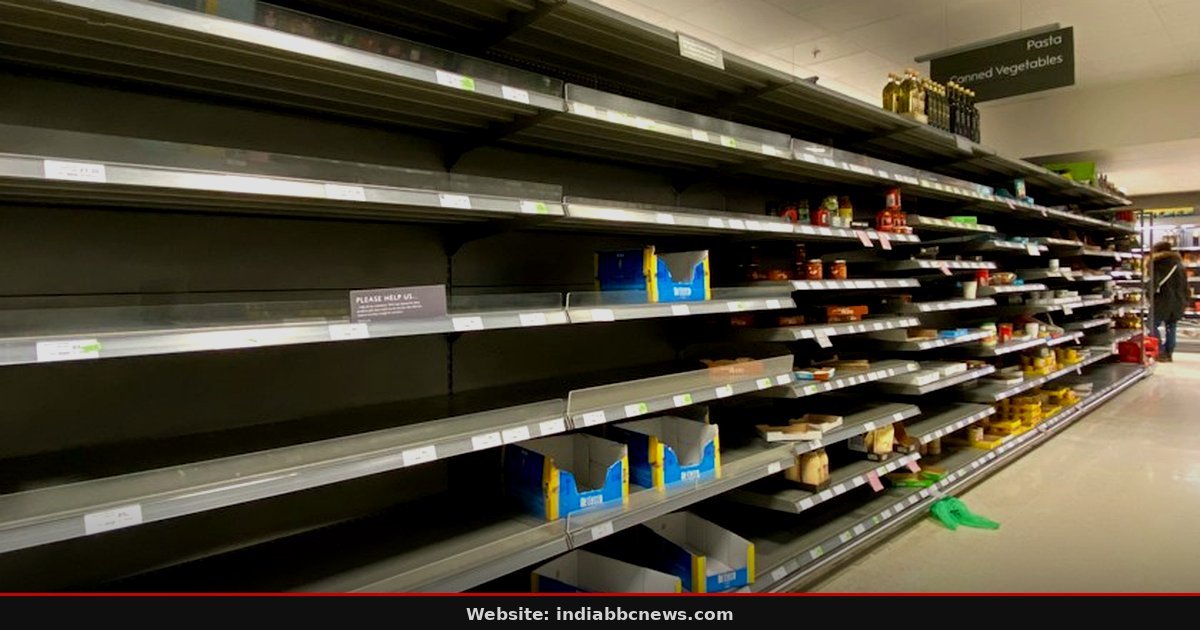
Baked beans and bottled water sell out after government stockpiling advice
Heinz Baked Beans vanished from shelves in Westminster by 9 a.m. Monday. The government then told everyone to buy them.
The Empty Aisles in Kensington and Dulwich
Shoppers in South London found bare shelves where the tinned goods used to be. It wasn’t a subtle absence, but a stark void. One woman in her sixties stood in front of an empty rack, hands on hips, looking confused. “Where did they go?” she asked, not expecting an answer. The panic started quietly over the weekend and exploded by the time the sun came up.
Ocado confirmed the spike in demand hit hard on Monday morning. “We’ve seen an increase in demand for some products over the weekend,” a spokesperson said. They are now working with partners to restock, which is a polite way of saying it takes time. Highland Spring and Volvic were also gone from many online carts. You could almost hear the click of a mouse as people added items to their baskets in a frenzy.
Wes Streeting’s Unintended Signal
Defence Secretary Wes Streeting urged the public to prepare on Newsnight last week. He mentioned hostile state actors and the need for resilience. His tone was calm, but the message was clear: get ready to fend for yourself. That’s a harder sell than it sounds when you live in a country that prides itself on public services.
“It’s encouraging that people are taking practical steps to be ready,” Streeting told viewers. He listed tinned food, torches, and blankets as essential items. But did he realize how literally people would take the advice? The math doesn’t quite work out if every household in London buys the same thing at once.
The Radio Boom and Torch Rush
Maplin reported a 92% jump in radio sales in the last month. Torches saw a massive 284% increase, and power banks spiked 106%. Nobody argued with the need for light when the grid might fail. And why would anyone risk being in the dark without a backup? It’s a simple, primal fear that cuts through the political noise.
Iceland saw tinned food sales rise by over 40% over the weekend. Bottled water followed the same trend, climbing sharply. A spokesperson for the chain insisted their supplies remain healthy. “Our stores are fully stocked,” they noted, though the internet suggested otherwise. The discrepancy between corporate reassurance and shelf reality is a classic modern dilemma.
The Real Fear Behind the Frenzy
Ministers claim no single immediate threat triggered this advice. But the timing is odd, right after Russian warnings and brutal heatwaves. Recent research shows only 13% of Brits feel prepared for such an emergency. That’s a huge number of people who didn’t know what to do until they saw the headlines.
Ed Woodall, chief executive of the Association of Convenience Stores, says the sector is ready. “We are well stocked to keep products available for customers,” he said. But preparation doesn’t account for herd mentality. When one person buys ten cans of soup, the next person buys twenty. It’s a cascade effect that no amount of supply chain efficiency can easily break.
What Comes Next for the Public
The government will likely monitor consumption data closely in the coming days. Expect more guidance, perhaps even a revised checklist for households. The next step is for retailers to stabilize their inventory levels before another surge. This cycle usually repeats until the news cycle shifts to something else.
Citizens should check local council websites for specific advice on water and power. Stockpiling is a temporary measure, not a long-term solution for resilience. But until the infrastructure is fortified, the cupboard will remain the first line of defense. It’s a strange new normal, one where preparedness is both a virtue and a suspect behavior.
Frequently Asked Questions
Why did the government tell us to stockpile?
Officials cited the risk of cyber attacks and extreme weather events. They want households to be self-reliant for at least 3 days. It is a precautionary measure, not a response to a specific, known attack.
Are supplies truly running out nationwide?
While online retailers are seeing stockouts, physical stores report healthy supplies. The issue is concentrated demand in specific areas or online channels. Distribution networks are working to balance this out quickly.
What exactly should I buy for an emergency kit?
Focus on water, non-perishable food, batteries, a radio, and first aid supplies. You don’t need enough for a year, just 3 to 5 days. Quality over quantity is generally the better advice here.
Is this related to the recent cyber threats?
Ministers say no single threat triggered the advice, but the context matters. Ongoing tensions and climate volatility are real background factors. The advice is general, not a direct response to a specific alert.
Source: Evening Standard UK
This article was compiled by the IndiaBBCNews editorial system from verified international news sources. Facts have been independently reviewed. Original reporting: Evening Standard UK.

