


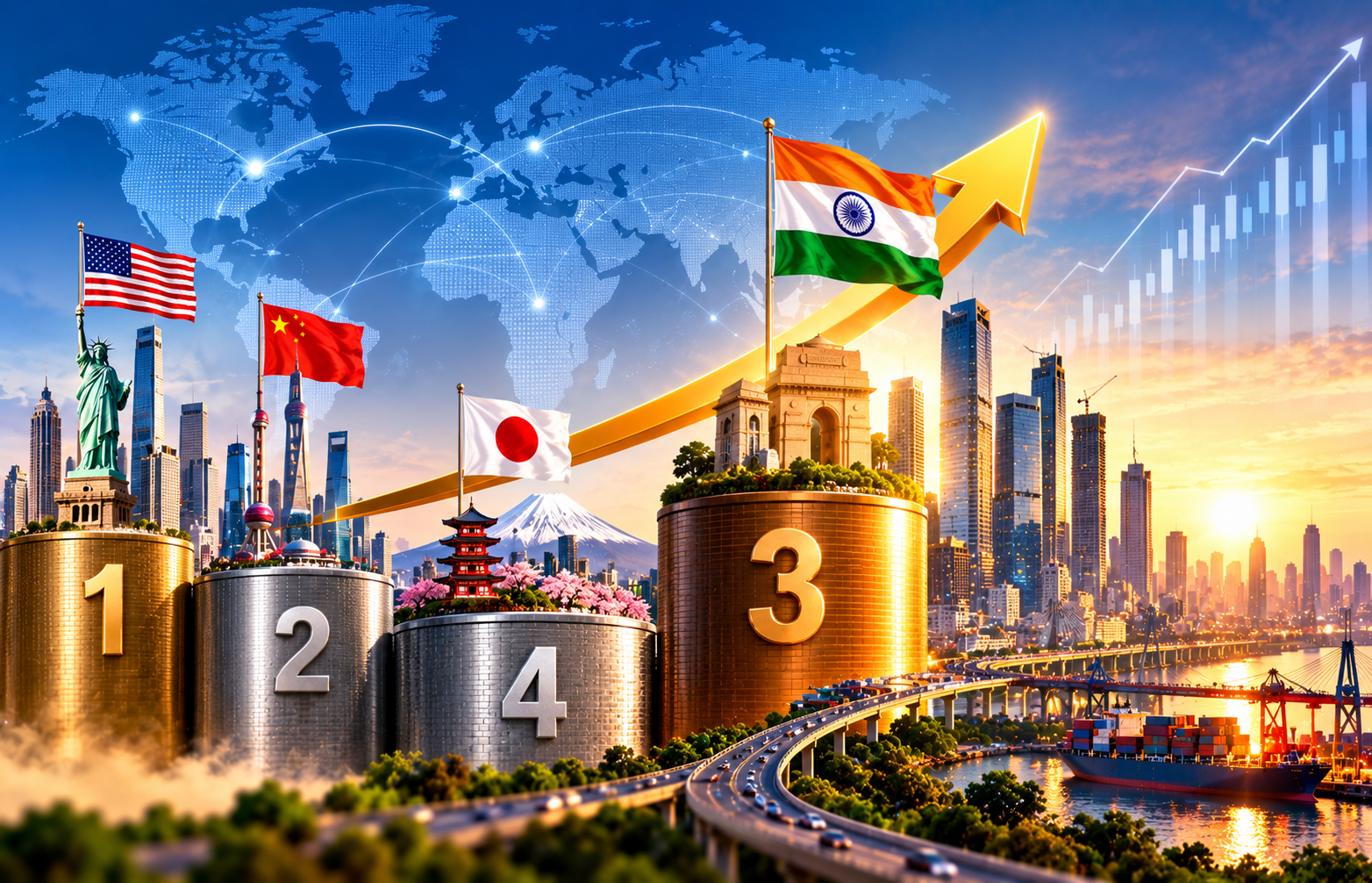
India has achieved a historic economic milestone, officially overtaking Japan to become the world’s third largest economy by GDP. With a GDP of $4.9 trillion in 2026, India now trails only the United States ($27 trillion) and China ($19 trillion). The achievement, long predicted by economists, reflects India’s remarkable economic transformation over the past decade.
What Is Driving India’s Growth?
- Manufacturing Boom – India’s Make in India initiative has attracted record foreign investment, particularly in electronics, semiconductors, and renewable energy
- Digital Economy – India’s digital payments, e-commerce, and tech startup ecosystem is one of the fastest-growing in the world
- Young Demographics – With a median age of 29, India has the world’s largest working-age population
- Infrastructure Investment – Record public investment in roads, railways, ports, and airports is boosting productivity
- Service Sector – Indian IT, financial services, and business process outsourcing continue to expand globally
The Road to Viksit Bharat 2047
India’s government has set an ambitious target of becoming a developed nation by 2047 — the centenary of independence. At current growth rates of 7-8% annually, India is on track to become a $10 trillion economy by 2035 and could challenge China for the number two position by the 2040s.
The achievement is particularly significant given that India was the world’s 11th largest economy just 10 years ago. This extraordinary rise has come through economic reforms, digital transformation, and the entrepreneurial energy of 1.4 billion people.
India BBC News celebrates India’s economic achievement. Follow us for the latest news on India’s economic rise and business developments.

