

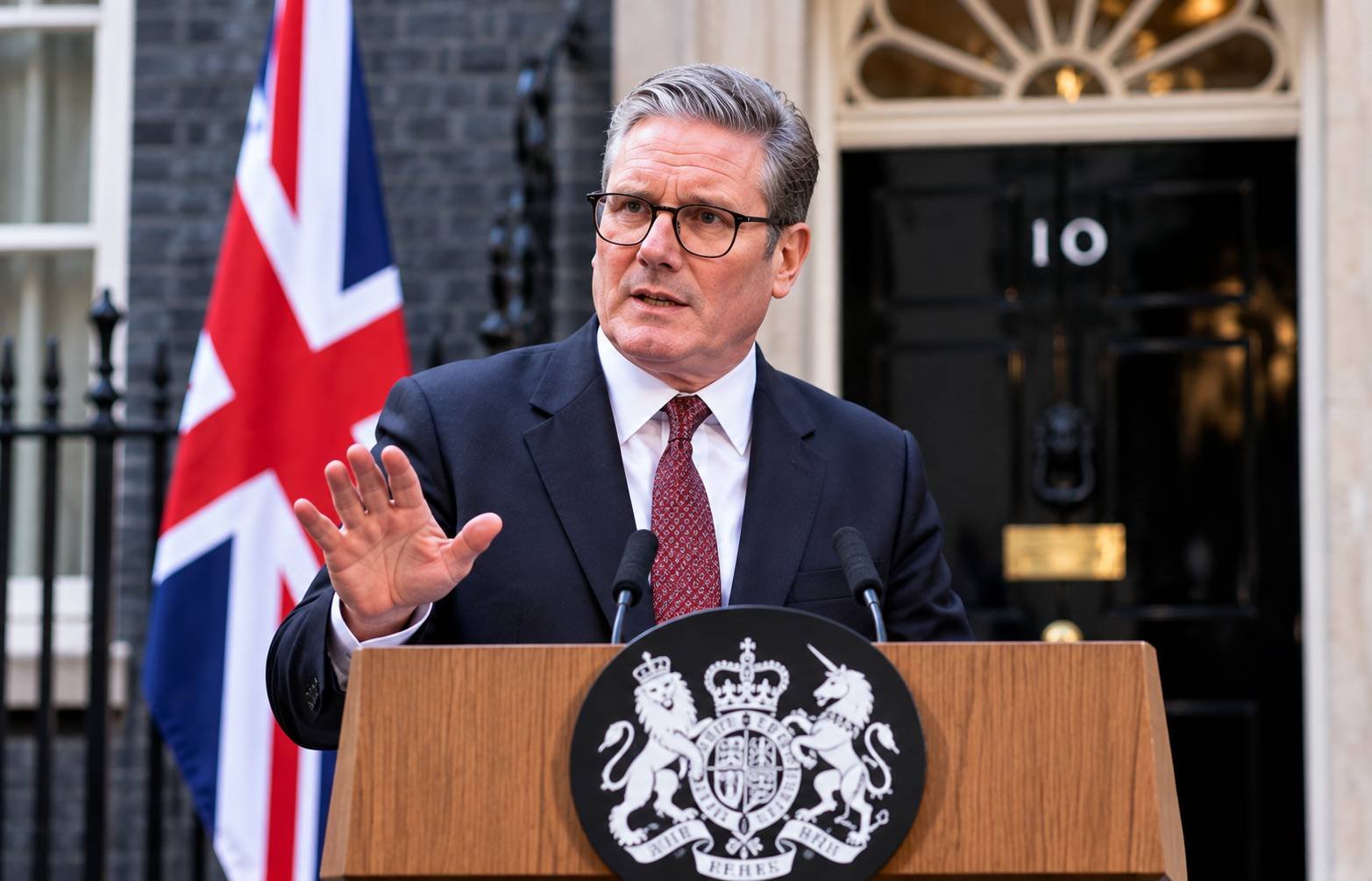
Burnham’s face looked tired. He had just finished a press gig that lasted 40 minutes, and the weight of 14 years of political speculation seemed to sit heavy on his shoulders, a burden most leaders avoid until the market crashes or a scandal breaks the surface in a way nobody predicted. The prime minister, Andy Burnham, has officially ruled out an early general election in the next 12 months.
Burnham rules out early general election in next 12 months The prime minister denied speculation from some opposition parties that he will go to the country in spring 2027. He was direct, staring into the camera lens with a fatigue that only people who stay up until 3 am debating policy can truly replicate, and he said, “I don’t know how many times I’ve done this now but yes, I can rule out calling a general election in the next 12 months.”He claimed he was focusing on people over the Labour Party. “I’m not thinking about myself,” he told broadcasters, adding, “I’m not thinking about my own party and its prospects.” It’s a standard line, the kind of thing politicians have said since the time of Alfred the Great, but his delivery lacked the usual rehearsed smoothness he had before the by-election. The hallway outside the briefing room was crowded with phones, and the hum of voices was deafening, a constant low-level drone that never seems to stop in Westminster corridors.
Nobody looked convinced, though. The political class hates a vacuum, and Burnham just handed them one.
The Conservative bet on volatilityKemi Badenoch did not wait long to push back. Earlier this month, she suggested Burnham may go to the country early because the winds of change are blowing in the wrong direction for Labour. She told BBC South East that her party was “coming back” after it slumped in popularity at the end of 14 years in government, a period that saw multiple care scandals and housing shortfalls pile up like autumn leaves on a pavement. She described the current climate as an “era of political volatility and multi-party politics.” That phrase has become her catchphrase, worn out from overuse in coffee shops and committee meetings.
It sounds good on the radio, but does it actually reflect what voters are feeling in their kitchen tables? The data says otherwise, but she doesn’t care about the data. She cares about the narrative, and right now, she thinks the narrative is slipping away from Burnham.Badenoch went further, claiming she believed there would be an election sooner than Burnham admits. She said, “I do think Andy Burnham is going to call an election sooner than he is saying… all the policies he announced are for after an election.” It’s a classic tactic: frame the incumbent as weak, then wait for them to fall.
The math doesn’t quite work out, however, given the current polling numbers. Burnham is ahead in the majorities, but the gap is narrowing in key swing seats. The Conservatives are betting that time is their friend, that the economy will slow down, and that public patience will run out. They’ve lost this bet before, though, in 2017 and 2019, when they called elections too early and got caught off guard.
History has a way of repeating itself, especially when leaders are tired and the press is aggressive. The question is whether Badenoch will make the same mistake again, or if she has learned from her predecessors’ failures in the age of snap polls.
Farage’s messiah theoryNigel Farage has his own view, and he shares it loudly. In September, he said he believed there would be an election “next spring.” He called Burnham “the messiah without a mandate,” a phrase that has stuck in the media cycle like gum on a shoe. He told reporters, “I believe there must be a general election because Andy Burnham has no mandate – we deserve a general election on who continues to govern this country.” It’s hyperbolic, of course. Burnham won a by-election and the leadership ballot.
Technically, he has a mandate from the party and the voters in Makerfield. But Farage doesn’t care about technicalities. He cares about energy, and right now, he has plenty of it. His rallies are full, and his social media following grows by the day.
He sees a weakness in Burnham’s position that others might miss, a gap between the party machine and the street, and he is trying to exploit it. The Reform UK leader has never been shy about questioning democratic legitimacy, and this is no different. He wants a fight, and he will create one if it’s not there.The irony is thick enough to cut with a knife. Burnham won a by-election, not a general one.
He secured the Labour Party leadership through an internal vote, not a national plebiscite. And yet, he governs with the authority of a prime minister. That’s a harder sell than it sounds, especially when opposition parties are constantly asking for a vote. Farage is betting that Burnham will crumble under the pressure, that the weight of the office will crush him before the end of the year.
It’s a risky bet. Burnham is a survivalist. He has been in politics for decades, surviving leadership bids that went sideways and local government crises that threatened to end his career. He knows how to stay on top.
The question is whether he can stay there long enough to satisfy his base and his critics. The answer may lie in the next few months, when the first real test of his government comes. Until then, the speculation will continue, fueled by people who want a change and those who need a fight to keep their relevance.
Background: How Burnham got thereThe path to Downing Street was not smooth. Burnham was elected MP in June after the Makerfield by-election, a seat he had held for years before stepping down to run for mayor. The by-election was tight, and he won by a narrow margin, showing that his popularity was real but not invincibility. After Sir Keir Starmer lost the support of Labour MPs and quit Downing Street, the party was in chaos.
There was no clear successor, and the leadership race was a mess of backroom deals and public promises. Burnham emerged as the compromise candidate, the one who could unite the factions. He promised stability, a strong economy, and a focus on working-class issues. It was a simple message, and it worked.
He became prime minister with a mandate of sorts, but one that was fragile, built on the backs of a depleted party and a tired electorate. He knew he had to act fast, or the cracks would show.His ambitions have been clear since day one. He wants to fix the NHS, boost housing, and reindustrialize Britain. These are big promises, the kind that require time and money.
He promised a spending review next year, which will determine how much he can actually spend. The current Parliamentary term runs until the next general election, which must be held by August 2029. That gives Burnham four years to deliver, more than enough time to make a difference if he stays on course. The problem is that politics rarely moves in straight lines.
There are always surprises, always scandals, always twists and turns that derail the plan. Burnham knows this. He has seen governments fall for less. He is preparing for the worst, hoping for the best.
The next 12 months will be the real test, and he needs to get through them without a single major crisis. It’s a tall order, but he is up to the challenge, or so he believes. The evidence so far suggests he might be right, but the road ahead is long and uncertain.
The Brexit elephant in the roomBrexit remains the biggest issue, the one that divides the country the most. Burnham has said he wants an “honest conversation” about the UK’s future relationship with the EU. It is a dangerous phrase, one that has been said by many leaders with disastrous results. He promised on Wednesday to stick to the red lines in his party’s 2024 manifesto on EU freedom of movement, the single market, and customs union “for the whole of this Parliament.” That’s a clear line in the sand, and it should satisfy the hardline Brexiteers in his party.
But will it satisfy the public? Hard to say. The issue is complicated, and the feelings are strong. People are angry about prices, about visas, about the lack of workers in key sectors.
Burnham needs to address these concerns without reopening the debate on leaving the single market. It’s a fine line to walk, and one slip could cost him the election. He needs to be careful, to speak to both sides, to find a middle ground that works for everyone. It’s easier said than done, but he has to try.
The alternative is chaos, and no one wants that, least of all the voters.The “honest conversation” remark has been interpreted in many ways. Some see it as an opening for rejoining the single market, others as a distraction from domestic issues. Burnham denies both. He says it’s about dealing with reality, about looking at the facts and making hard choices.
That’s a reasonable position, but it’s not a popular one. The public wants simple answers, not nuanced discussions. They want to know why their groceries are expensive, why they can’t find a plumber, why the trains are late. Burnham has to connect his foreign policy to their daily lives, or he will lose the argument.
He has to show that his decisions matter to them, that they affect their pockets and their families. It’s a difficult task, but it’s necessary. The next year will be crucial in this regard, and Burnham needs to get it right. He cannot afford to be perceived as out of touch, or as someone who prioritizes abstract principles over practical needs.
The stakes are high, and the margin for error is slim. He will need all his skill and luck to navigate this minefield. The outcome is far from certain, but the next few months will provide the first real clues.
Frequently Asked Questions
Why did Burnham rule out a snap election?
He says he wants to focus on delivering his 10-year plan rather than seeking a fresh mandate. The current term runs until 2029, which gives him time to implement his policies without the distraction of a campaign. He believes he has the support of Parliament to get things done, and he does not see the need to put that on the line. It’s a strategic decision, designed to stabilize his position and focus on governance. The opposition may disagree, but for now, the government is in control of the timeline.
When is the next general election?The next UK general election must be held by August 2029. This is the standard maximum term for a Parliament, set in law. Unless the prime minister calls for an early vote, which he has now ruled out for the next 12 months, the election will take place at that time. The exact date will be determined later, but it will likely be in the summer of 2029.
Voters should mark their calendars, though they may have a long wait. The political landscape could change in the meantime, but the legal deadline remains firm.
What did Kemi Badenoch say about the election?She claimed that Burnham will call an election sooner than he says. She argued that his policies are designed for after a new vote, implying he is weak. She sees an opportunity for the Conservatives to capitalize on political volatility. Her belief is that Burnham’s mandate is not strong enough to sustain his government, and that a new election would be in the country’s interest.
It’s a calculated risk, but one that could pay off if the polls shift. The Conservatives are looking for an opening, and this is their best chance. They need to act quickly, before Burnham solidifies his grip on power.
What is Burnham’s stance on Brexit?He wants an “honest conversation” but promises to stick to 2024 manifesto red lines. He will not rejoin the single market or customs union during this Parliament. This is a compromise, trying to appease both sides. It acknowledges the issues with the current deal while avoiding a major policy reversal.
It’s a safe position, but it may not satisfy the hardliners. The debate will continue, but the boundaries are clear. Burnham is trying to manage expectations, and he is unlikely to make any dramatic moves on this front. The focus remains on domestic policy for now.Source: BBC Politics
This article was compiled by the IndiaBBCNews editorial system from verified international news sources. Facts have been independently reviewed. Original reporting: BBC Politics.

