

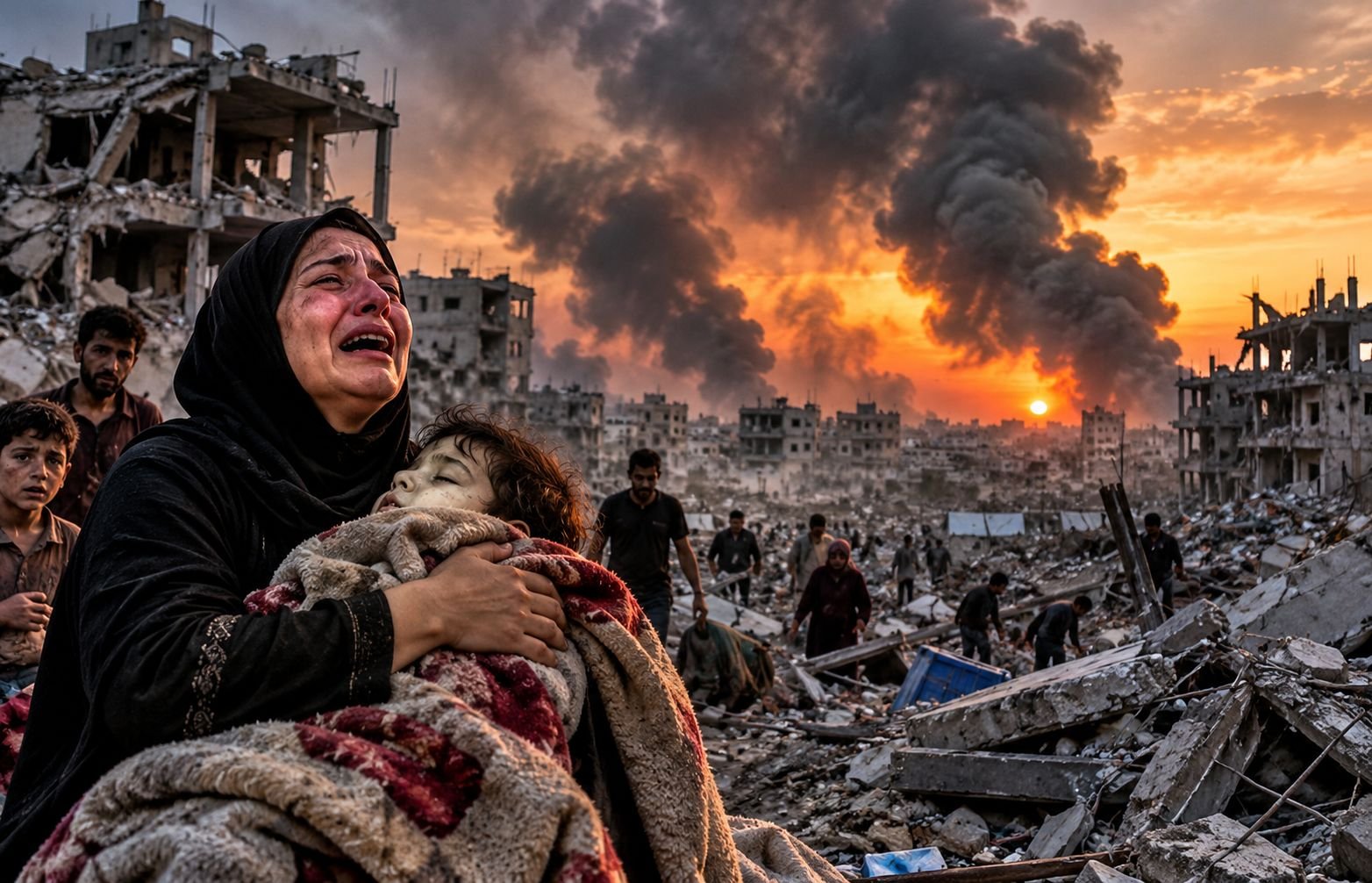
When the ceasefire agreement for Gaza was announced in October 2025, there was cautious hope that the killing would finally stop. Twelve months on, more than 1,500 people have been killed since that deal was signed — a number compiled by both Al Jazeera journalists on the ground and UN monitoring teams. Whatever the ceasefire was supposed to achieve, it has not ended the violence.
A Ceasefire in Name Only?
The agreement brokered last year involved Qatar, Egypt and the United States as mediators. It called for a phased withdrawal of Israeli forces, the release of hostages held in Gaza, and the entry of large-scale humanitarian aid. Some of those things happened, partially. Most did not.
Israeli military operations continued in parts of northern and southern Gaza throughout the ceasefire period, with the Israeli government saying it was targeting remaining Hamas infrastructure. Palestinian factions, meanwhile, continued firing rockets sporadically — enough to give Israel justification, its officials said, for ongoing operations.
The result is a situation that technically has a ceasefire on paper but looks and feels like a slow-burning war to everyone living through it.
The Human Cost
Of the 1,500-plus deaths counted since October 2025, UN figures suggest the majority have been civilians — including a significant proportion of women and children. Aid organisations operating in Gaza describe a humanitarian situation that remains catastrophic despite some improvement in aid access.
Hospitals across Gaza are still severely overwhelmed. Fuel shortages have forced some medical facilities to run on reduced power, limiting surgeries and intensive care. Clean water access remains a daily struggle for much of the population, and the destruction of housing from earlier phases of the conflict means hundreds of thousands are still displaced.
“The ceasefire has not translated into safety for civilians,” said one senior UN official, speaking on the condition of anonymity. “People are still dying. The infrastructure is still being destroyed. Calling it a ceasefire is increasingly hard to justify.”
International Pressure Going Nowhere
Multiple attempts at the UN Security Council to strengthen the ceasefire or impose accountability for violations have been blocked or diluted. Protests demanding a permanent end to the conflict have been held in London, Washington, Paris and dozens of other cities, but have not shifted the political calculus in Israel or among Western governments that continue to support it.
The United States remains Israel’s most important backer, though the Biden-era unconditional support has given way to something more transactional under the Trump administration. Washington has at times pushed back on specific Israeli operations, but has not fundamentally altered its position.
What Happens Next?
Diplomats say a new round of talks aimed at reinforcing the ceasefire is being discussed, but no firm timeline has been set. Hamas’s leadership — largely operating from Qatar and Lebanon — says it will not enter new talks without a guarantee of a permanent ceasefire. Israel says any permanent arrangement must ensure Hamas can never threaten it again.
Those two positions remain as far apart as they were before October 2025. And in the meantime, the death toll climbs.

