

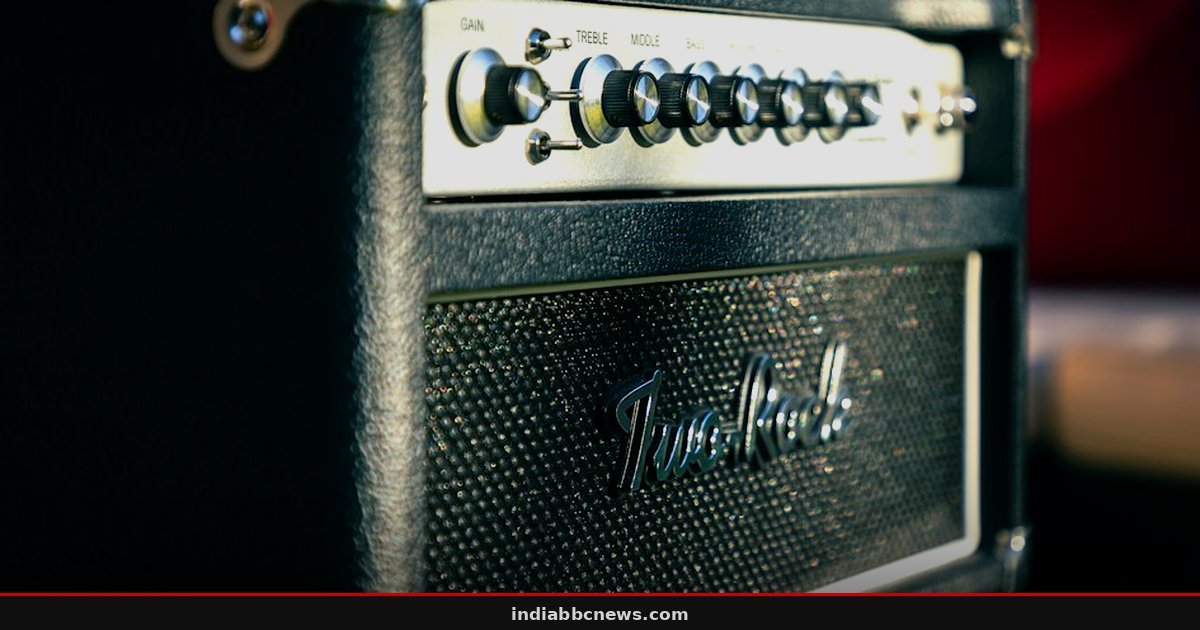
Teenage Engineering has officially dropped the EP-35, a battery-powered instrument amp that merges the roles of a guitar head, a vocal processor, and a Bluetooth speaker into one matte-gray block.
The device arrived on the market on October 22, 2026, priced at $399. It’s not just a speaker; it’s a multi-input hub designed for musicians who refuse to build a rack of pedals. You can plug in a synthesizer via line-in, a guitar via a standard 1/4-inch jack, or a microphone via XLR. The XLR input even supports phantom power, meaning condenser mics work right out of the box. For those who prioritize portability, the unit runs entirely on battery, eliminating the need for wall power during a session in a park or a rehearsal room without outlets.
Style-Based Presets Replace the Mixing Desk
The control philosophy here is distinctively anti-technical. Instead of offering a grid of knobs for delay time, reverb decay, or modulation rate, the EP-35 uses style-based presets. You pick a vibe—“blues,” “indie,” or “twang”—and a single knob controls the amount of effect applied. It’s a drastic simplification. You don’t dial in a specific echo; you choose the sonic texture of a genre. For vocalists, the logic holds, with options like “radio” and the oddly specific “robo choir.” The limitation is real: if you want to stack a specific chorus into a specific delay, you can’t. You’re choosing a palette, not painting individual brushstrokes.
Bluetooth, Auracast, and the Tilt Trick
Connectivity is where the unit gets surprisingly modern. It accepts standard Bluetooth audio, but it also supports Auracast, allowing multiple EP-35 units to pair together. The standout feature is the stereo pairing mechanism. When two units are linked in stereo mode, tilting a unit to the left or right physically assigns it to the corresponding stereo channel. It’s a tactile, mechanical solution to a digital problem. One engineer told reporters that the tilt sensor was designed to feel like a physical switch, removing the need for a menu dive in the middle of a performance. It’s a small detail, but it creates a workflow that feels integrated rather than tacked on.
The Amptenna and the KO Pedal
Teenage Engineering isn’t selling the amp alone. The accessory kit includes the “amptenna,” a small attachment that turns the EP-35 into an FM radio. Yes, a radio. In 2026. But the real utility lies in the EP-127 KO Pedal. This wireless MIDI controller unlocks deeper features, including a looper and a metronome. It also features an expression pedal jack, letting you control volume for a selected channel. Because the pedal also functions as an HID controller and has a 3.5mm MIDI output, it doubles as a controller for your computer or other synths. It’s a versatile brick that bridges the gap between the amp and the rest of your digital setup.
Who Is This For?
This isn’t for the pedalboard obsessionist. If you need precise, surgical control over your signal chain, the EP-35 will feel restrictive. But for the synth player who wants to busk, or the guitarist who wants to practice without hauling a cabinet, it’s a compelling all-in-one. The design language is unmistakable—clean, industrial, and devoid of unnecessary flair. It fits on a shelf. It fits in a bag. And it looks like it belongs in the same ecosystem as the OB-4 or the TX-6.
What Happens Next
The EP-35 is available now for $399. No major firmware updates were announced at launch, but the company’s history suggests that future updates may refine the preset engine. The next step for users will be deciding whether the convenience of the battery-powered, multi-input design outweighs the loss of granular control. For many, the answer is already yes. The bar for a portable, multi-instrument amp has just moved.
Frequently Asked Questions
Does the EP-35 support phantom power for microphones?
Yes. The XLR input on the back of the unit provides phantom power, allowing you to connect condenser microphones directly without an external interface.
Can I use the EP-127 KO Pedal with other devices?
Yes. The pedal has a 3.5mm MIDI output and works as an HID controller, meaning it can interact with other synths, pedals, or even control software on your computer.
Source: The Verge
This article was compiled by the IndiaBBCNews editorial system from verified international news sources. Facts have been independently reviewed. Original reporting: The Verge.

