


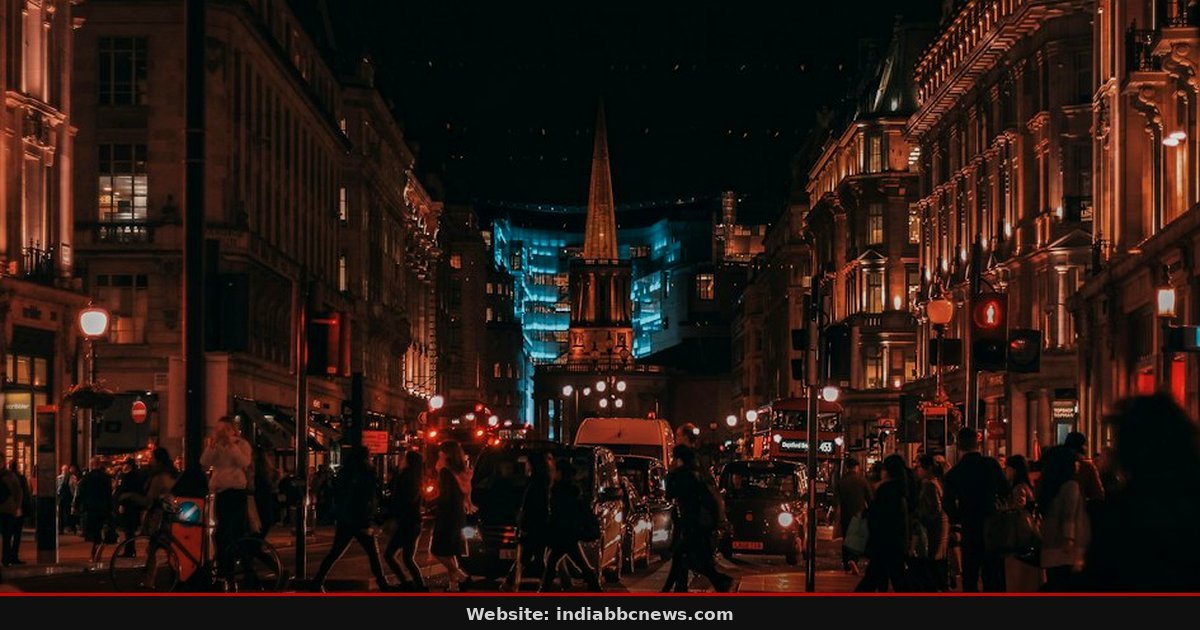
30 Feet of Spruce in the Rain: Oxford Street’s Pedestrian Gamble Goes Live for Christmas
3,000 fairy lights flickered to life on a wet Thursday evening, transforming the crowded junction at Old Cavendish Street into the capital’s new primary photo op. It isn’t just a tree; it’s the first public stress test for a street that officially banned cars two months ago, and the reaction from the crush of onlookers suggests the bet is paying off.
The Lights Come On at the Nation’s High Street
Sadiq Khan didn’t wait for the crowds to thin out. He stepped onto the dais, bypassed the usual bureaucratic pleasantries, and hit the switch. The 30ft Nordmann Fir, designed by John Lewis, erupted in color against the grey London sky. It is a stark visual break from the grey asphalt and exhaust fumes that used to dominate this specific stretch of the city’s most famous retail artery.
The tree stands exactly where traffic used to bottleneck during peak hours. It features decorations modeled after Big Ben, Buckingham Palace, and St Paul’s Cathedral. The design is loud, unapologetic, and aimed squarely at the tourist. You can see the intention from a mile away.
It is a beacon. It tells you the rules have changed. The street is no longer a transit route; it is now a destination in itself.
The atmosphere was thick with that specific pre-Christmas electricity. People weren’t rushing to bus stops. They were stopping. They were taking photos.
They were lingering. A throwaway detail caught my eye: a group of teenagers sat on the curb, legs crossed, eating pastries while watching the elders dance. They looked comfortable. That’s a rarity on Oxford Street.
Usually, nobody has the time to sit down. The pedestrianisation has slowed the pulse of the street. It has forced a pause. And in retail, that pause is where the money lives.
16% More Footfall: The Numbers Behind the Magic
City Hall isn’t just riding the festive sentiment; they are leaning hard on data. According to figures released by the Mayor’s office, footfall on the newly pedestrianised stretch rose by 16% in the first week compared with the October half-term period last year. That’s a significant jump for a street that has seen flat or declining numbers for years. The data suggests that removing the barriers actually opened up the space for people to move differently.
They meander. They look in windows. They stay longer.
The spend figures tell an even sharper story. Spending in shops on the traffic-free section was up by 28% compared with the equivalent period last year. Evening visits to the wider Oxford Street area rose by 19%. International visitor numbers increased by 42% year-on-year.
It’s a small sample size, but the trend is undeniable. The “car-free” label is no longer a radical experiment. It’s a commercial strategy that is working. The numbers don’t lie, and for once, they align with the aesthetic plea.
The street feels better, and the wallets are open wider. Khan described the transformation as a “phenomenal success.” He didn’t mince words. He said the pedestrianisation was bringing a “surge in footfall and spend.” There is a political calculation here, of course. The Conservative candidate, James Cleverly, has recently declared himself for mayor, and this is a visible win for the incumbent. But the data is hard to argue with.
If the spending is up, the argument for pedestrianisation moves from ideological to economic. That’s a harder sell to oppose. The opposition can’t easily argue against higher revenues and busier shops. The ground has shifted, and it has shifted in the Mayor’s favor.
The next election will be fought on this terrain of data, not just ideology. Oxford Street’s ambition is no longer just to be a place where you buy presents. The Oxford Street Development Corporation (OSDC) is pushing for a full regeneration that mirrors the Champs-Élysées in Paris or Times Square in New York. They want it to be a destination you travel to, not just a street you pass through. This year’s celebrations are a proof of concept.
The Long Game: Competing with Paris and New York
The angel stilt walkers, the carol performances, the giant present-shaped photo boxes—these are attempts to create an experience. It’s a move away from pure transaction and toward tourism. The street wants to be alive.
Katie Morrison, deputy chief executive of the OSDC, called this Christmas a “milestone moment.” She said the ambition is to create a destination that is “vibrant, welcoming and full of reasons to return throughout the year.” That’s a tall order. London has plenty of vibrant spots. But Oxford Street has the brand power. It has the history.
Now it has the space. The challenge is consistency. Can they keep the energy high through January? Can they make the return visit attractive?
The tree is a start. It’s a hook. But the hook only works if the line is strong. The retailers are ready.
The infrastructure is there. The question is whether the culture of the street can adapt to be a place of leisure as well as commerce.
John Lewis, which decorated the tree, says it is “absolutely thrilled” to be part of the inaugural event. Paul Marsden, head of branch, noted the store’s role in the festivities. But it’s not just about the department stores. Independent shops on the side streets are also rolling out their own attractions.
There’s a sense of collective effort. The street is trying to shed its reputation for being sterile and hurried. It’s trying to be human. And for the first time in decades, it feels like it might actually succeed.
The cars are gone, and in their place, there is conversation. That’s a subtle shift. But it’s a real one. And it’s visible to anyone walking down the pavement.
What This Means for India
For Indian readers, the Oxford Street story is more than a holiday gimmick; it is a direct blueprint for the retail regeneration currently underway in Delhi’s Central Avenue and Mumbai’s Colaba Causeway. India’s urban centers are grappling with the same tension: how to reclaim public space from traffic without killing commerce. The London experiment offers a data-driven answer. If 16% more footfall and 28% higher spend can be achieved by banning cars, the argument for pedestrianising major Indian retail corridors becomes significantly harder to ignore.
The Indian government’s Smart City Mission often focuses on infrastructure, but this story highlights that soft infrastructure—space, atmosphere, light—can be just as critical to economic vitality. It’s a case study that Indian urban planners and retail executives should be studying closely.
The demographic angle is equally potent. India has a massive diaspora in the UK, and Oxford Street remains a primary shopping destination for Indian consumers looking for specific brands and festive aesthetics. The 42% rise in international visitors suggests that the street is becoming more attractive to non-UK tourists, likely including Indian shoppers who prefer a car-free, walkable environment for leisure. As Indian cities struggle with aggressive traffic management and noise pollution, the success of a pedestrianised Oxford Street could influence policy decisions back home.
It suggests that opening up real estate for pedestrians isn’t a loss of capacity, but a gain in yield. For Indian markets, it’s a signal that experiential retail is the future. The tree isn’t just in London. It’s a trend that is coming to New Delhi.
And it’s coming fast. The festive season kicks off with Black Friday, which will be the first major retail event on the fully pedestrianised stretch. Retailers are preparing for promotions that will test the logistics of a car-free street. Crowd management will be a key issue. The street is wider now, but the people numbers are up.
The Next Move: Black Friday and Beyond
The challenge is keeping the flow smooth while maintaining the festive vibe. If they can navigate Black Friday without major bottlenecks or safety concerns, the pedestrianisation will be cemented as a success. The next few weeks are critical. They will define the narrative for the year.
The tree is up. The lights are on. The real test starts now.
There are also questions about long-term maintenance. Who pays for the decorations? Who cleans the streets when the snow melts, or in this case, when the rain stops? The OSDC and retailers are working together, but the cost will be substantial.
The figures show a return on investment, but the upfront cost is high. The sustainability of this model will depend on whether the spending continues after the holidays. If footfall dips in January, the argument for year-round pedestrianisation will weaken. But for now, the momentum is strong.
The street is buzzing. The lights are bright. And the people are staying. That’s all a mayor needs to hear.
The rest is detail. The rest is history being written in real-time. The City of London pedestrianised the stretch between Orchard Street and Great Portland Street to boost tourism, increase retail spending, and improve air quality. It was a strategic move to transform the street from a transit hub into a leisure destination.
Frequently Asked Questions
Why was Oxford Street pedestrianised?
When did the car ban start on Oxford Street?
The pedestrianisation officially began on October 26. This removed through-traffic and buses from the central section, allowing the area to be repurposed for public events, dining, and leisure activities. According to the Mayor’s office, footfall rose by 16% in the first week of pedestrianisation compared to the same period last year. International visitor numbers saw an even sharper increase of 42% year-on-year.
How much has footfall increased on Oxford Street?
Who decorated the new Oxford Street Christmas tree?
The 30ft Nordmann Fir was designed and decorated by John Lewis. It features more than 3,000 fairy lights and ornaments inspired by London landmarks like Big Ben and St Paul’s Cathedral. Yes, the increased international visitor numbers suggest a more welcoming environment for non-UK shoppers. Indian tourists, who are a significant demographic for high-end retail, will find the street more accessible and comfortable for extended shopping trips without traffic congestion.
Does this affect Indian tourists shopping in London?
Source: Evening Standard UK
Source: Evening Standard UK

