

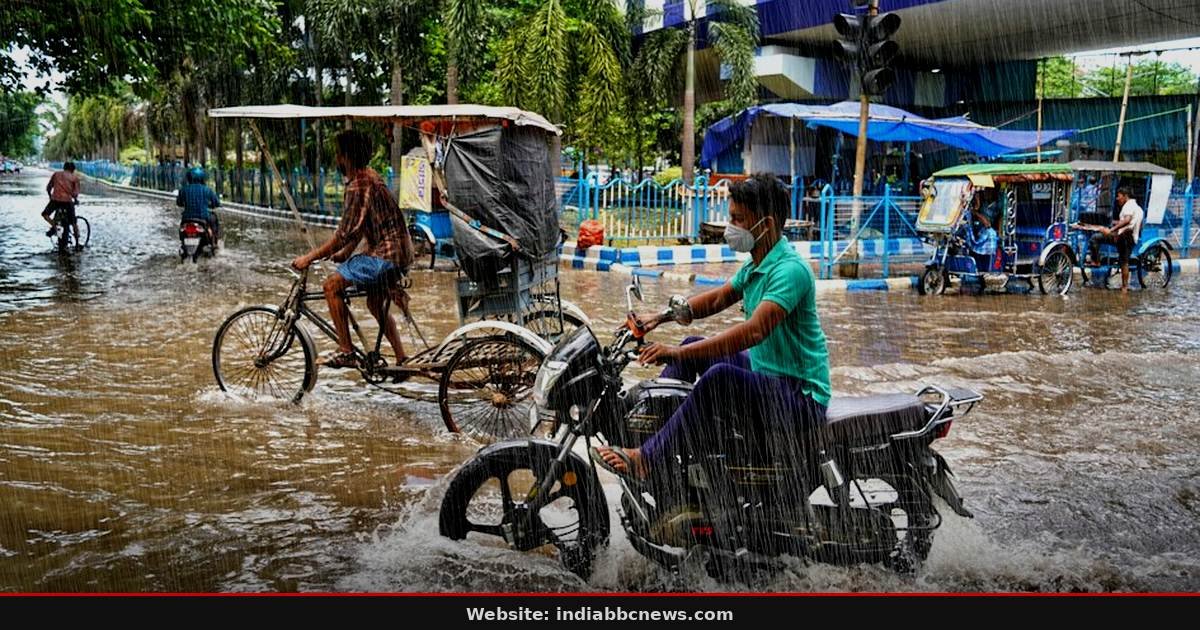
Chilika Lake turned a muddy brown by mid-morning. 300 villages in Ganjam district are currently cut off from the main road network as the remnants of Cyclone Arnab stalled over the western Bay of Bengal, leaving the Andhra Pradesh coast exposed to heavy squalls and waterlogging that officials say will continue through at least Wednesday morning. The system, once categorized as a severe cyclonic storm, has weakened significantly into a depression but retains enough moisture to batter coastal districts and push water levels dangerously high in river basins that are already swollen from monsoon runoff later in the month. It’s a messy, lingering kind of distress that doesn’t make for clean headlines but causes just as much damage to daily life for people who just want to go to work or send their kids to school. The India Meteorological Department (IMD) confirmed that while the system is moving away from the delta region, its outflow will bring persistent rain to West Bengal, Jharkhand, and Madhya Pradesh, forcing authorities in those states to keep disaster response teams on high alert even after the immediate threat to the coast has faded.
Chaos in the Delta as Roads Flood and Villages Isolate
The heaviest impact hit the lower Ganjam and the coastal belts of North Andhra Pradesh where standing water reached depths of over 2 meters in low-lying paddy fields and residential areas. Local administrators told reporters that 300 villages are now completely marooned, with the only access being via boats or in some cases, walking through knee-deep water if the flow hasn’t turned violent. It’s not just the water; it’s the darkness. Power lines downed by falling trees have severed connectivity in 15 blocks, meaning many residents are relying on emergency cell towers that are already struggling with the volume of calls. The smell of wet mud and diesel from generators is thick in the air, a sensory detail that photos don’t capture but which locals describe as the true measure of the disruption.
Rescue operations are ongoing but slow, hampered by the very rain that is still falling in bursts throughout the day. The Andhra Pradesh State Disaster Management Authority (APSDMA) said in a statement that they have deployed 45 rescue units to the most isolated pockets, prioritizing the transport of medical supplies to patients with chronic conditions who have lost access to hospitals. But the logistics are a nightmare. Roads that were already in poor shape before the storm have effectively been turned into canals, and vehicles are getting stuck in soft mud with increasing frequency which is frustrating the relief workers who are trying to move quickly. That’s a harder sell than it sounds, convincing a family that help is coming when the rain hasn’t stopped for 6 hours straight.
IMD Downgrades Cautiously but Keeps West and Central India on Notice
As of 8:00 AM on October 29, the IMD downgraded Arnab from a severe cyclonic storm to a depression, a technical shift that signifies the core has lost its circular intensity but not its chaotic energy. The center of the system is now over the east central Bay of Bengal, moving in a northwest direction at a slower speed of 12 to 15 kmph, which means the duration of heavy rain in the affected regions will be longer than a fast-moving system would deliver. Forecaster Arima T. told journalists that the moisture feeder bands are still active and will merge with the local monsoon circulation, creating a “rainband effect” that will persist for 48 to 72 hours. This isn’t about another storm hitting; it’s about the slow, grinding extraction of water from the atmosphere that saturates the ground and overwhelms drainage systems.
The broader implication is that states further north are now the primary concern for the coming 24 hours. West Bengal and Jharkhand are under specific warnings for very heavy to extremely heavy rainfall, with the possibility of landslides in the hilly districts of Jharkhand and the forested areas of West Bengal. The math doesn’t quite work out for some localities that have already faced flash floods in recent weeks, leading to a buildup of floodwater that has nowhere to go. And let’s be clear: this is not a drill for the emergency services in Patna or Kolkata, who are now repurposing their operational plans to manage waterlogging rather than wind. The transition from coastal cyclone to inland monsoon rain is a subtle but critical phase that catches many administrative systems off guard.
Why the New Bay System Is Behaving Differently This Year
Meteorologists have noted that the atmospheric conditions over the Bay of Bengal this season have been unusually complex, with multiple systems developing in quick succession that often feed into each other before dissipating. Arnold’s formation was fueled by a low-pressure area that failed to organize into a full cyclone initially, picking up speed and strength only as it moved away from the land, which is an atypical trajectory for a system meant to hit the coast. This “errant” behavior means that its decay is also slower and more geographically spread out, dumping rain over a wider area rather than a concentrated strike zone. It’s a meteorological puzzle that keeps forecasters up at night, adjusting models every 6 hours as the data changes on the ground.
There’s also the element of El Niño’s fading influence, which has left the Indian Ocean with anomalous warmth that continues to fuel late-season cyclones. The sea surface temperatures in the Bay have remained above 28 degrees Celsius, providing ample fuel for any system that dares to organize itself. Consequently, the intensity of the rainfall associated with Arnab’s remnants is higher than average for this time of year. Nobody in the room looked convinced that the season is truly over, despite the official downgrading of the system. The atmosphere is still tight, still full of potential, and a single change in wind shear could have turned this depression back into a storm within 24 hours, forcing a complete reversal of the evacuation plans that are currently being unwound.
Economic Hit: Agriculture and Infrastructure Take the Brunt
The immediate economic fallout is visible in the destruction of standing paddy crops and the damage to rural infrastructure that is essential for the harvest season. In North Andhra Pradesh alone, an estimated 50,000 hectares of crop have been submerged, a loss that agricultural experts estimate will set back farmers’ incomes by at least 40% for this season. It’s not just the crop; it’s the market access. Roads that usually connect villages to local mandis (markets) are now impassable, forcing farmers to store perishable goods in their homes where they are vulnerable to mold and spoilage. The central government has announced an immediate relief fund of ₹500 crore for the affected states, but local leaders argue that this is barely a token gesture compared to the scale of the destruction.
Infrastructure damage is extensive, with bridges washed away and culverts blocked by debris in several districts. This isn’t just an inconvenience; it’s a barrier to trade and movement that can last for weeks if the water doesn’t recede quickly. The Ministry of Road Transport and Highways confirmed to journalists that they are allocating additional resources for quick repairs, prioritizing national highways that are currently rerouting traffic and causing delays in logistics. But the local roads, which are the lifeblood of rural economies, are often overlooked in these initial assessments.
Who pays for the small bridge in a village that wasn’t on the national radar? That’s a question that doesn’t have a simple answer in the budget documents.
Human Cost: Evacuation Centers and the Strain on Healthcare
Over 50,000 people were evacuated to relief centers in the 48 hours before the system made its final approach to the coast. These centers, many of which are schools and community halls, are now facing resource constraints as the population has stayed longer than anticipated due to the slow receding of waters. There’s a quiet desperation in these places, as families wait for the water to level out, their lives in pause mode. Healthcare workers have reported a rise in waterborne diseases, particularly in children and the elderly, as the open defecation sites near evacuation centers are becoming contaminated. The psychological toll is also significant, with reports of anxiety and sleep deprivation becoming common among evacuees who are unsure of when their homes will be safe to re-enter.
The strain on the healthcare system is not just about treating the obvious injuries but managing the underlying conditions that flare up in stressful, unsanitary conditions. Hospitals in the affected districts are operating at full capacity, with some turning away non-critical patients to make room for emergency cases. The state health department said in a statement that they are deploying mobile medical units to the remote villages that are hard to reach by regular ambulance. But the gap between demand and supply is widening.
It’s a test of resilience that few communities are equipped to handle without significant external support. And if the rain continues as predicted, this test will go on for days longer.
What Comes Next: The Final Days of the Season
The IMD has forecast that the system will fully dissipate over inland central India by Thursday evening, but the rainfall will linger in parts of Chhattisgarh and Madhya Pradesh. Authorities in New Delhi are coordinating with state governments to ensure that any stray showers are monitored closely, as even scattered rain can trigger secondary landslides in saturated soil. The next big weather event on the radar is a remnant of a tropical low that may form in the Arabian Sea, though it is too early to say if it will make landfall. For now, the focus remains on cleanup and recovery, a tedious but necessary process that defines the aftermath of such events.
As the system fades, the attention of the nation will turn to the recovery efforts, which will be a months-long process involving assessment, compensation, and rebuilding. The government has set a deadline of 2 weeks for the initial assessment of damage, after which compensation packages will be released. But the reality on the ground is often slower, with bureaucracy and logistics slowing down the process of restoring normalcy. The question remains: has this year’s cyclone season been the worst in a decade?
The data will tell that story in the coming weeks, but for the people in those 300 marooned villages, the answer is already clear. They have lost weeks, and perhaps their livelihoods, to a storm that now looks like a smudge on the weather map. While the system has weakened to a depression, the heavy rainfall and high seas remain a hazard. Coastal areas should not presume safety until the official all-clear is issued, which is expected within 24 hours but could be delayed by unexpected wind shifts.
Frequently Asked Questions
Is Cyclone Arnab still dangerous for the Andhra coast right now?
Why are villages in Ganjam still cut off if the storm has moved away?
The issue is not the storm’s wind but the water it displaced. Infrastructure is damaged, and the water level is receding slowly due to the saturated ground and blocked drainage, which takes days to clear naturally or mechanically. Forecasts indicate the heavy rain will persist for the next 48 to 72 hours. The intensity is expected to taper off as the system moves further north and weakens, but the total rainfall accumulation will remain high.
How long will the rain last in West Bengal and Jharkhand?
When will the compensation funds be released for farmers?
The central government has announced an immediate relief package, but the actual disbursement to individual farmers depends on the completion of the damage assessment, which is targeted for completion within 14 days. It is advised to wait for local authorities to declare areas safe. There is a risk of structural damage to homes, electrical hazards, and waterborne diseases, so returning too early can pose serious health and safety risks.
Can people return to their homes safely?
Source: The Hindu
This article was compiled by the IndiaBBCNews editorial system from verified international news sources. Facts have been independently reviewed. Original reporting: The Hindu.

