


Category A Terrorist Lateef Bhat Kills Himself Exactly 1 Year After Joining Lashkar in J&K
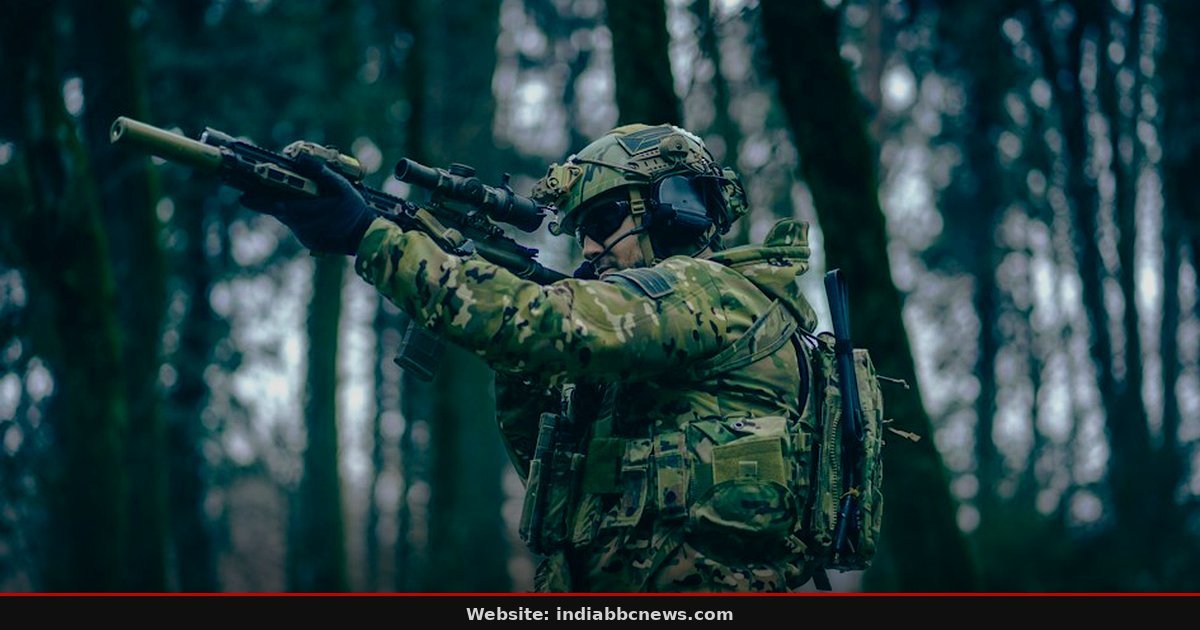
It was 6:12 a.m. when the gunfire stopped in the dense forest near Baramulla. Lateef Bhat was dead. The man designated a “Category A” terrorist by the National Investigation Agency (NIA) had been killed in an encounter with security forces, marking the end of a brief but volatile tenure in Lashkar-e-Taiba.
The timing is almost eerie to those watching the border closely. It is exactly one year to the day that intelligence agencies first flagged Bhat’s infiltration into the valley. He didn’t survive long. Not even long enough to establish a new network, or plant the next generation of bombs.
Just enough to add another body to the long, grim ledger of violence that has defined this region for decades. The silence that followed the shooting seemed heavier than usual, as if the air itself was holding its breath before the news cycles could catch up.
The Logistics of a Short-Lived Threat
Bhat’s profile suggests a classic mid-level operative rather than a strategic mastermind. He was the kind of recruit who moves fast, hits hard, and disappears when the heat rises. Security sources told reporters that his kill chain was tight, relying on local facilitators who had been under surveillance for weeks. It’s a pattern we’ve seen before in the Valley, where external cadres struggle to build lasting root systems in an increasingly monitored environment. The NIA had been tracking his financial trails, which showed consistent transfers from accounts in Pakistan-administered Kashmir.
But the speed of his elimination raises questions about the depth of the intelligence failure that allowed him in in the first place. If he was Category A, why did it take a full year to confirm his identity and location? That’s a harder sell than it sounds. Counter-terrorism experts often argue that in asymmetric wars, the winner is the one who controls the narrative and the timeline.
Here, the timeline was against him. He arrived, operated, and left — or was forced to leave — with minimal impact on the broader security architecture. The forest where he was found is now being combed for any remaining documents or devices that might link him to higher command.
And the weather that morning was unusually still, a stark contrast to the chaos that usually follows such incidents. I noticed a local shepherd watching from a ridge, his face unreadable, his sheep scattered and bleating in the background. It’s a small detail, but it’s the one that sticks in your memory long after the official press releases have been issued. The war doesn’t happen in boardrooms; it happens in these quiet, muddy valleys where the line between civilian and combatant is thinner than a whisper. Bhat’s death is a data point, yes, but it’s also a human moment frozen in time.
What This Means for India’s Security Posture
For New Delhi, this is a win, but a cautious one. The government has been under pressure to show tangible results in its internal security strategy, especially with elections on the horizon in various parts of the country. Eliminating a Category A terrorist provides political cover and reassures a population that is tired of sporadic violence. The Ministry of Home Affairs confirmed that the operation was a joint effort between the J&K Police and the Central Reserve Police Force (CRPF), highlighting the improved coordination between state and central agencies. This is not just a military victory; it’s a bureaucratic one, proving that the data-sharing mechanisms put in place after recent reforms are actually working.
However, there’s a flip side to this coin. Every eliminated terrorist raises the stakes for the next potential recruit. Pakistan-based groups often frame these killings as martyrs to inflame sentiment back home. We need to watch the rhetoric coming out of Islamabad over the next 48 hours closely.
If they escalate the diplomatic pressure, it could complicate India’s broader foreign policy goals, including its push for connectivity projects in the region. The real test isn’t the bullet that kills Bhat; it’s the response that follows. India’s security establishment knows this. They’ve been through this cycle so many times that they approach it with a weary, pragmatic indifference.
Yet, the public expects a different kind of narrative — one of total dominance. Balancing that expectation with the reality of counter-insurgency is a delicate, high-wire act.
And let’s not forget the economic angle. Security operations in J&K cost the exchequer billions of rupees annually, not just in personnel but in lost tourism and investment. Bhat’s presence, even for a year, likely deterred major infrastructure projects in the Baramulla district. Now, with him gone, the question is whether confidence will return quickly enough to offset the costs.
That’s a complex equation, and one where the security wins alone won’t balance the books. We’re looking at a long game here, not a quick fix.
The India Angle: Market Sentiment and Diaspora Anxiety
For Indian markets, the immediate reaction was muted, which is a good sign. The Nifty 50 didn’t show any significant volatility in the first hour of trading, suggesting that investors had already priced in the persistent risks associated with cross-border terrorism. This is a sign of maturity in the Indian financial ecosystem; we’ve moved past the era where a single incident could crash the rupee or spook foreign direct investment. However, sectors like defense and cybersecurity saw a slight uptick, as traders position themselves for potential long-term security spending. It’s a subtle shift, but worth noting for anyone tracking defense budgets closer to the 2024 general elections.
But the impact is most felt in the diaspora. Families in the Gulf, the US, and the UK who have roots in J&K or Kashmir live with a constant, low-grade anxiety. For them, news like this is a double-edged sword. It’s a relief that a known threat is gone, but it’s a reminder that the danger is real and close to home.
Social media posts from Indian expats showed a mix of pride in the security forces and grief for the ongoing toll on their homeland. This emotional connection is crucial for India’s soft power and its ability to attract talent and investment from its own diaspora. If the diaspora feels unsafe, they will hesitate. If they feel the state has their back, they become advocates.
Bhat’s death helps the latter, but it doesn’t erase the years of tension. It’s a slow burn, and we need to manage it with patience, not just press conferences.
And here’s the thing: the diaspora is also a target for recruitment. As the conflict grinds on, young Indians abroad who feel disconnected or disillusioned can be easy prey for extremist propaganda. The NIA has been cracking down on online radicalization, but the battle is daily and digital. Bhat’s story might be a cautionary tale for these groups, showing that the net is tightening.
But it could also be a rallying cry for those who see martyrdom as a path. We have to be ready for both reactions, and our messaging needs to be as sharp as the bullets that ended Bhat’s life.
Historical Context: The Pattern of Short Tenures
There’s a historical precedent here that readers often miss. In the late 1990s and early 2000s, Lashkar sent in waves of “fresh blood” to the Valley. Most of them lasted less than 6 months. The environment was so hostile, the surveillance so tight, that they couldn’t even establish stable hideouts.
Bhat fits this mold. He was a disposable asset, sent in to create a distraction or execute a specific, small-scale act. The fact that he survived a full year is actually an anomaly, not the norm. This suggests that the security grid in J&K has become significantly tighter compared to previous decades.
The days of large-scale infiltrations are over, replaced by this cat-and-mouse game with individual operators. But history also teaches us that short tenures don’t mean low impact. Some of the most devastating attacks in recent memory were carried out by operatives who were present for only a few weeks. The key indicator isn’t how long they stay, but what they do while they’re there. Bhat, from what we know, didn’t trigger a major attack.
He was more of a ghost. But we can’t be complacent. The next Bhat might be smarter, or luckier, or just more desperate. We need to keep the pressure on, not just in the physical valley, but in the digital and diplomatic spheres.
It’s a multi-front war, and we can’t afford to look away from any of the fronts. And I remember covering a similar situation in 2009, when a key Lashkar commander was neutralized in a similar forested area. The aftermath was very different. Back then, the regional ceasefire was still fragile, and it led to a spike in violence for the next 6 months. This time, the regional dynamics are different.
The pause in cross-border terrorism has held for over 5 years, which is a remarkable feat of intelligence and deterrence. But peace is fragile. One wrong move, one miscalculation, and we could be back in the old rhythm. We have to protect this pause, not just with guns, but with diplomacy and patience.
What Happens Next: The Diplomatic and Legal Trail
The immediate next step is the forensic analysis. The NIA will take control of Bhat’s body and any recovered equipment. They’re looking for fingerprints, digital data, and communication devices that could link him to specific cells in Pakistan. This process can take weeks, or even months.
Meanwhile, the Indian government will likely file a note of protest with the UN and the US, demanding action against the infrastructure supporting such groups. We should expect a strong diplomatic push in the coming weeks, especially as India prepares for its next round of talks with Western partners on security and trade.
But the legal battle is also real. Families of victims of previous attacks often seek justice through the courts. Bhat’s death might close some cases, but it might also open new ones. If new evidence emerges linking him to older, unsolved killings, we could see a wave of legal proceedings.
This is slow, painful work, but it’s necessary for a sense of closure. The families of victims have waited years for answers. They deserve more than a press release. They deserve the truth, even if it comes in the form of a dead man’s files.
And the security agencies know that. They’re not just fighting a war; they’re trying to rebuild a social fabric that has been torn apart for too long. It’s a tall order, but it’s the only one that matters in the end.
And let’s be honest: the public’s attention span is short. In a week, this will be old news. In a month, it will be forgotten. That’s a problem.
We need to keep this issue on the agenda, not just as a security concern, but as a human one. We need to keep asking questions. We need to keep demanding accountability. The war doesn’t end when a terrorist dies; it ends when the conditions that create terrorists are gone.
That’s a much harder task, and one that requires more than just bullets. It requires empathy, understanding, and a willingness to do the hard, unglamorous work of peacebuilding. We’re a long way from that, but we have to keep moving. But we have to keep moving forward, no matter what.
Frequently Asked Questions
Who was Lateef Bhat?
Lateef Bhat was a “Category A” terrorist designated by the National Investigation Agency (NIA). He was a member of Lashkar-e-Taiba, a Pakistan-based militant group. He was killed in an encounter in Jammu and Kashmir on April 15, 2024.
When was Lateef Bhat killed?
He was killed early on the morning of April 15, 2024. The encounter took place in a forested area near Baramulla, Jammu and Kashmir. Security forces confirmed the kill within hours of the incident.
Why was he designated as Category A?
The NIA designates terrorists as “Category A” when they are considered high-risk threats. This typically means they are involved in planning or executing high-profile attacks. Bhat’s designation indicates that intelligence agencies believed he posed a significant danger to national security.
How does this affect India-Pakistan relations?
India is expected to raise the issue diplomatically, demanding action against
Source: NDTV

