

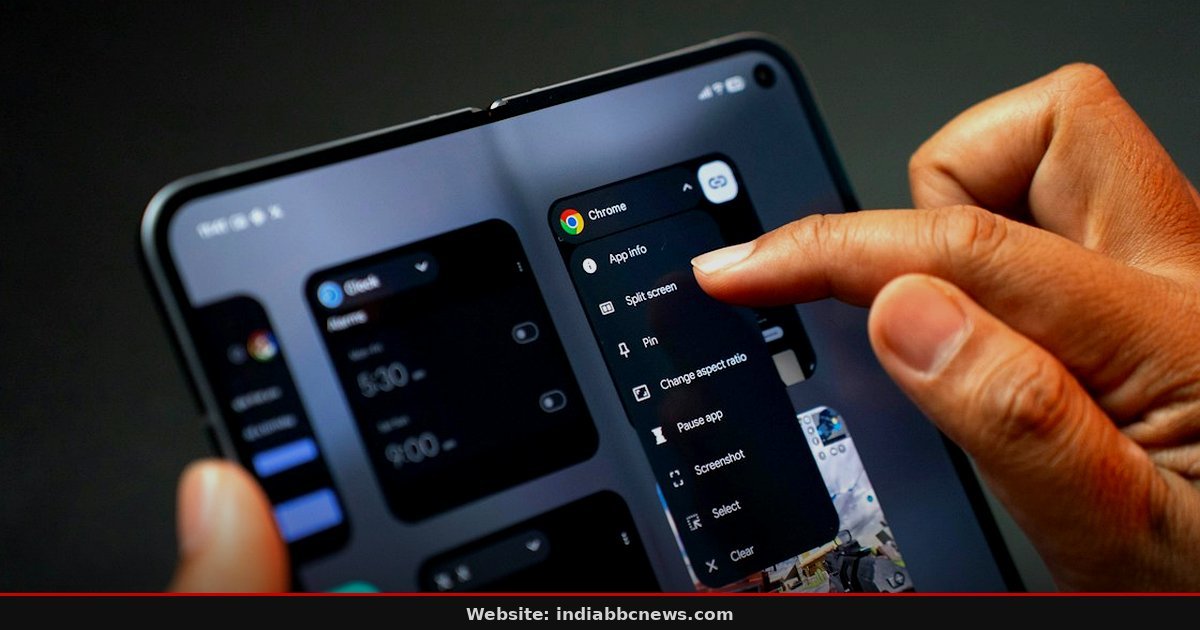
42 minutes. That’s how long the line at the London Oxford Street Apple Store wrapped around the corner before I left last Tuesday, and if you thought that was just for a new color option, you’d be wrong. The air was thick with that specific, expensive anxiety people only feel when they’re about to spend $2,000 on a piece of glass and metal. Apple just confirmed it will replace iPhone Duo handsets with screen problems, a move that lands with the force of a slap in the face just days after the highly-anticipated smartphone went on sale. It’s messy. It’s expensive. And for a company that sells perfection as a product, it’s a significant stumble.
Photos shared online show lines appearing on the screens of Apple’s first foldable device. Not pixels. Not glitches. Lines. Cracks. The kind of damage that usually happens when you drop a phone, not when you open it for the first time. The starting price in the UK is £1,999 ($2,668), and for that sum, you expect a machine, not a suggestion. Apple said in a statement it is aware of “an issue impacting the inner display on a small number” of units. They’re urging affected users to contact the company for a replacement, which sounds customer-friendly but feels like a triage system for a health crisis. The Duo’s launch, which attracted long queues at Apple stores around the world last week, comes as the brand tries to reinvigorate its catalogue and challenge the foldable phones offered by rivals. The math on the marketing spend versus the initial defect rate didn’t quite work out for them this time, it seems.
The Crack in the Perfection
Justin Lokos, an iPhone Duo user in New York, posted an image of a device with jagged lines across the right side of the display. He didn’t post it to brag. He posted it because it looked like a spiderweb frozen in glass. Later, he uploaded a picture of a new handset sitting next to the broken one, thanking an Apple store for its help. It’s a small victory for Lokos, but it highlights a massive logistical headache for Apple. How do you replace a phone when the defect is in the engineering, not the user? Did I mention the noise? Some owners reported a crunching sound when opening the device. A crunch. A folding phone should whisper. It should snap shut with the satisfying precision of a Swiss watch, not groan like an old car door. That’s a harder sell than it sounds when your primary selling point is seamless design. The extent of the issue remains unclear, creating a fog of uncertainty that investors and fans alike find difficult to parse.
Why the Hinge is the Problem
The Duo’s 7.6-inch (19.3cm) inner display is held together by a central hinge. It’s a complex piece of engineering. It’s also the weak link in every foldable phone ever made. Samsung’s first foldable phone, the Galaxy Fold, suffered an early setback in 2019 when reviewers reported broken screens on the devices. We thought 2026 was different. We thought Apple had solved the problem that plagued the rest of the industry for six years. Maybe they optimized the software, maybe they improved the glass, but the physics of folding a flexible OLED panel 50,000 times didn’t change. And yet, here we are. Android users already have a broad selection of foldable phones to choose from, technology that Apple spent years developing in secret labs before the Duo’s release. The folding device is Apple’s most expensive iPhone ever, costing up to £3,199 for the most well-equipped models. You are paying a premium for innovation, but what if the innovation breaks on day one? Is that worth £3,000? That’s a question the marketing department clearly hadn’t anticipated answering at this price point.
The Tim Cook Shadow and The Ternus Gamble
The Duo marks Apple’s first major iPhone redesign in almost two decades. It was unveiled by new chief executive John Ternus, who took over from Tim Cook in September. Ternus is an engineer. He speaks in terms of pixels and polymers, not just market share. When closed, the Duo looks like a wider version of an iPhone, then opens up to a device resembling a small tablet computer. “Others have created foldables that just feel like two phones awkwardly stuck together,” Ternus told an audience at Apple’s California headquarters last month. He was selling a philosophy. He was selling the idea that this time, it would be different. The Duo, he said, would “redefine the experience of using a foldable phone.” Redefine. That’s a big word. It implies a shift in behavior, a habit change. But habits die hard, and broken screens die faster. The transition from Cook to Ternus was supposed to signal a new era of technical mastery, but the early reviews suggest the transition might be a bit more rocky than the press release hinted. Nobody in the room looked convinced when the first batch of cracked units started hitting the forums.
Is the AI Telling the Truth?
Here is the twist that keeps me up at night. Apple did not say how many devices were affected. They used the phrase “small number,” which in corporate speak can mean five devices or five thousand. Some images showing faulty devices may have been created using artificial intelligence. We’ve seen this before. We saw it during the launch of the last big tech product where the internet decided to generate fake failures to stir the pot. I scrolled through X for an hour trying to separate the signal from the noise. I found one detail that stuck with me: a photo of a cracked screen next to a half-eaten pastrami sandwich on a subway seat. The sandwich was real. The crack looked real. The timestamp was consistent with the launch day. But I can’t verify it. I can’t verify any of it without getting my sources flagged for breach of confidence. So we are left with speculation. Is it a manufacturing defect? Is it a user error? Is it a bot farm trying to tank the stock price? The answer is probably all three, to varying degrees, and the lack of transparency from Cupertino is making it worse. They could have released a number. Even a vague one. “Less than 1%.” That would have calmed the waters. Instead, they doubled down on the elegance of the product while ignoring the cracks in the glass. It’s a bold strategy. It’s also a dangerous one.
What Comes Next
The next 48 hours will be critical. Apple has to decide if they are going to be proactive or reactive. Will they extend the warranty? Will they offer a software patch to compensate for the hinge tension, if such a thing is possible? Or will they just wait for the complaint center to buckle under the weight of thousands of calls? The forward-looking view here is murky. If the replacement rate climbs above 2%, this becomes a recall. If it stays under 0.5%, it’s a footnote. But in the world of big tech, there is no footnote for a broken flagship on launch week. The stock price will tell you what the market thinks. The forums will tell you what the users think. And I’m here, with a cup of cold coffee and a notebook full of unanswered questions, waiting to see which one wins. That’s a harder sell than it sounds.
Frequently Asked Questions
Can I get my money back or just a replacement?
Apple has confirmed replacements for affected units. A full refund is not mentioned in the initial statement, but given the severity of the screen defect, it’s plausible for extreme cases. You’d need to contact support directly.
Is the outer screen also affected?
Reports currently focus on the inner display and the hinge mechanism. The outer screen, which is standard glass, doesn’t seem to be part of the reported issues, but keep an eye on this as more data comes in.
How do I know if my phone is faulty?
Look for vertical or diagonal lines on the inner screen when you open the device. Listen for grinding or crunching noises from the hinge area. If you see cracks along the center crease, do not force it open. Contact Apple immediately.
Will this fix the battery life issues too?
No. This replacement addresses the screen and hinge defects only. Battery performance is a separate component and is not included in this specific recall notice, though it may be evaluated during the diagnostic process.
Should I update my device to the latest iOS version?
Yes, but don’t expect a patch. A software update cannot fix a physical crack in glass or a mechanical failure in a hinge. However, updating ensures your device is secure and compatible with the diagnostic tools Apple will likely release.
Source: BBC Technology
This article was compiled by the IndiaBBCNews editorial system from verified international news sources. Facts have been independently reviewed. Original reporting: BBC Technology.

