

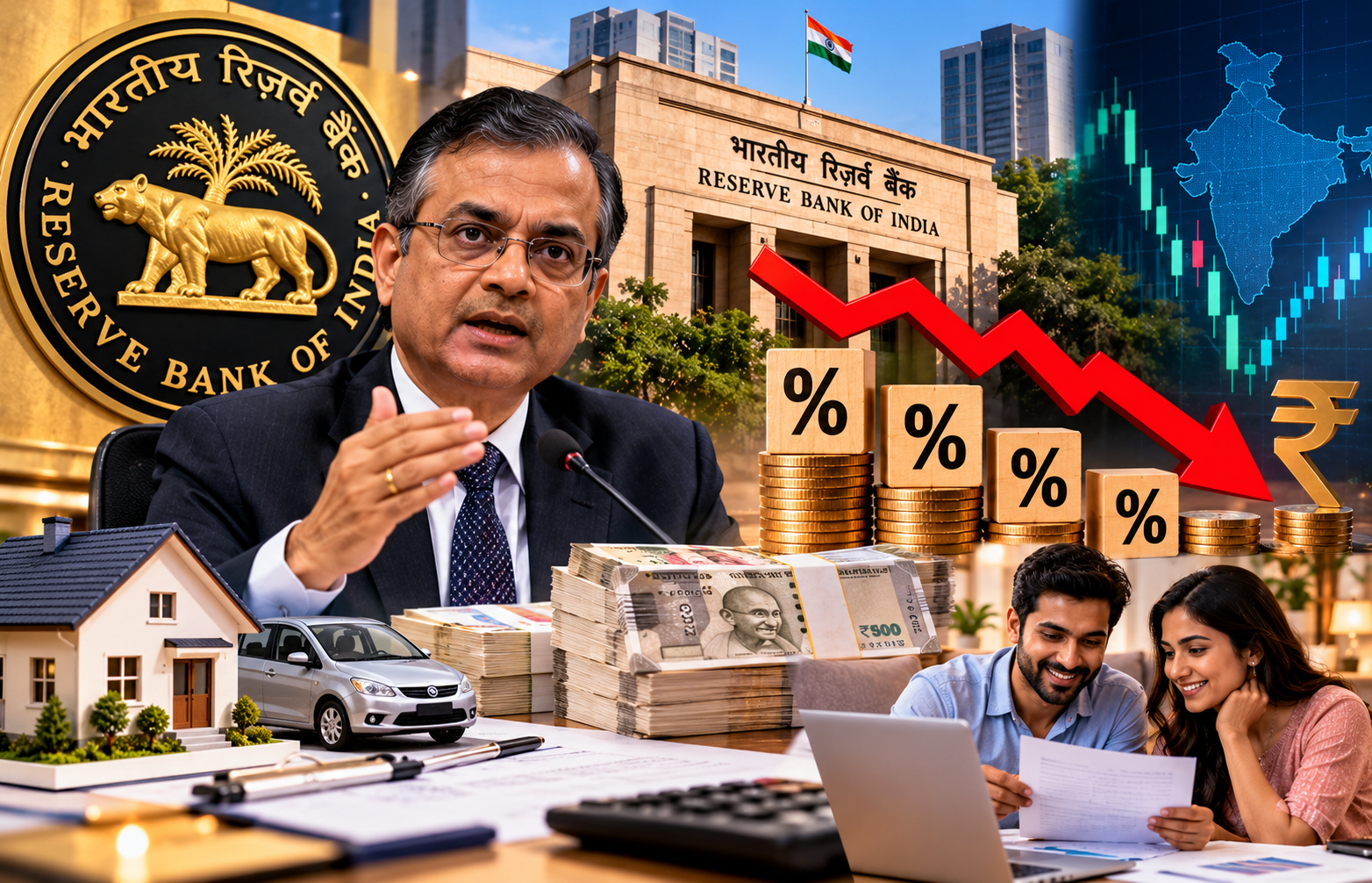
The Reserve Bank of India’s Monetary Policy Committee meets this week in a meeting that could reshape borrowing costs for millions of Indian households and businesses. After holding the repo rate at 6.5% for over a year, signals from RBI Governor suggest that the central bank may be ready to begin its rate-cutting cycle — but the timing and pace remain uncertain.
The Case for Cutting Rates
India’s economic growth at 7.8% remains robust, but there are early signs that high borrowing costs are beginning to bite. Housing loan growth has slowed, unsecured personal loan NPAs are rising modestly, and the manufacturing PMI, while still expansionary, has softened from recent highs. Globally, the US Federal Reserve has signaled it will cut rates in early 2027, giving the RBI some headroom to move first without triggering a destabilizing rupee depreciation.
India’s CPI inflation at 5.7% remains within the RBI’s 2-6% tolerance band, and food price spikes that caused concern earlier in the year appear to be normalizing as the kharif harvest season delivers better-than-expected results.
The Case for Holding
Oil prices at $95+ are a genuine concern. Crude is India’s single largest import, and a sustained oil price increase could push the current account deficit wider and put pressure on the rupee. A rate cut that weakens the rupee while oil is expensive could create a dangerous feedback loop that stokes imported inflation.
What Economists Expect
A Bloomberg survey of 35 economists shows 22 expecting a 25 basis point cut this week, 10 expecting rates to hold, and 3 expecting a hawkish hold with a change in stance from “withdrawal of accommodation” to “neutral.” The consensus leans toward a cut, but it’s the most closely contested RBI meeting in 18 months.
What This Means for Your EMIs
If the RBI cuts by 25 bps, banks will likely pass on 15-20 bps within 3-4 months. On a ₹50 lakh home loan over 20 years, that translates to roughly ₹800-1,000 reduction in monthly EMI. Not dramatic, but a direction of travel that matters psychologically and for housing demand.
For readers and citizens trying to make sense of a rapidly changing landscape, the most useful approach is to track credible reporting, maintain a healthy scepticism about unverified claims, and remember that initial reports are often incomplete. The full picture takes time to emerge — but when it does, it usually tells a richer and more nuanced story than the first headlines suggested.