

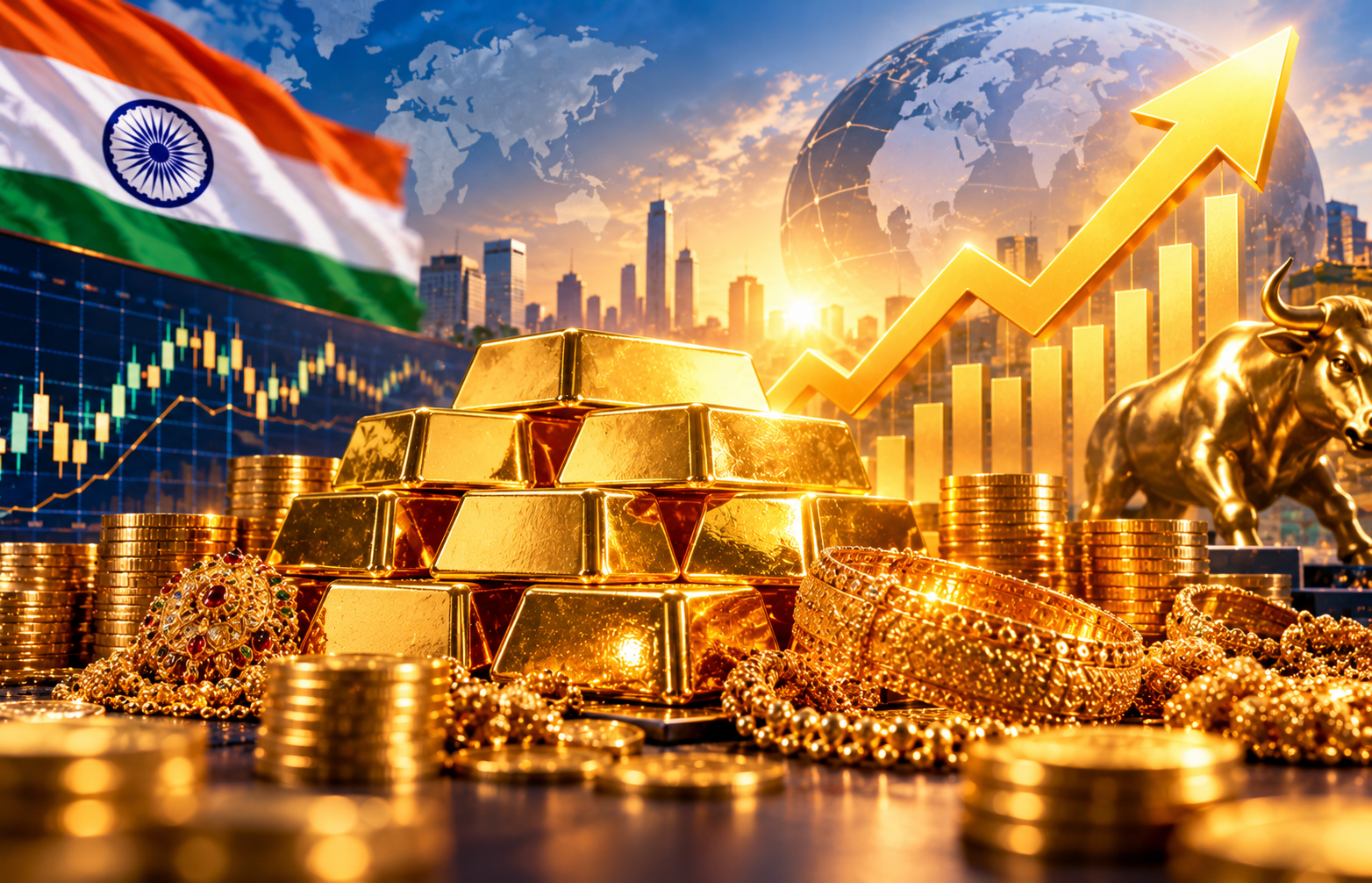
Gold has done something remarkable in 2026 — it has crossed ₹80,000 per 10 grams for the first time in Indian market history, while also setting new dollar-denominated records above $3,100 per ounce globally. For a metal that has been a store of value for thousands of years, gold’s 2026 rally is raising both excitement among holders and genuine questions for those wondering whether to invest now.
Why Gold Prices Are Rising
Several converging factors are driving gold’s extraordinary performance. Central banks around the world — led by China, India, Poland, and Turkey — have been buying gold at record rates as they diversify away from US dollar reserves. This structural demand from sovereign buyers creates a price floor that retail market volatility doesn’t easily breach.
Geopolitical uncertainty is also playing a significant role. The Russia-Ukraine conflict, Middle East tensions, and US-China trade friction all push investors toward safe-haven assets, and gold remains the ultimate safe haven with a track record spanning millennia.
Gold in India: Cultural and Investment Demand
India consumed approximately 800 tonnes of gold in 2025, second only to China globally. Much of this demand is cultural — weddings, festivals like Dhanteras and Akshaya Tritiya, religious purposes — but investment demand has been growing. Gold ETFs and Sovereign Gold Bonds have made it possible to invest in gold without the security concerns of physical storage.
Should You Buy Gold Now?
The honest answer is: it depends on your existing gold allocation. If you have no gold in your portfolio, adding 5-10% as a diversifier makes sense regardless of current price. If you’re already heavily weighted toward gold, adding more at record prices is riskier. For the purists who believe gold will continue to rise — central bank buying shows no signs of slowing, and global uncertainty isn’t disappearing — there’s a case for holding through volatility. For practical investors, Sovereign Gold Bonds offer gold price exposure plus 2.5% annual interest, making them the most rational gold investment vehicle available in India today.
Key Takeaways
As we look at this story in the broader context of what’s happening in India and around the world, several important points stand out. First, the pace of change in this area has accelerated significantly over the past 24 months. Events that once took years to unfold are now happening in months or even weeks.
Second, the impact on ordinary Indians is real and immediate. Whether it’s the price of petrol, the availability of jobs, or the content we watch on our phones, the big stories of 2026 touch everyday life in ways that weren’t true of news stories a decade ago. That’s partly why public interest in these topics has never been higher.
What Experts Are Saying
Analysts across India’s leading think tanks and media organisations have weighed in on this development. The consensus appears to be that this is a significant moment — one that will have ripple effects for months and possibly years to come. The speed with which the situation is evolving means that yesterday’s analysis can quickly become outdated, so staying informed through reliable sources matters more than ever.
Industry observers point out that India’s unique position — as a rapidly growing democracy with 1.4 billion people, a young population, a dynamic private sector, and an increasingly active foreign policy — means that developments here don’t just affect Indians. What happens in India has consequences for the global economy, geopolitics, and technology that reverberate from Silicon Valley to Beijing to Brussels.
Looking Ahead
The next few weeks and months will be critical. There are several key developments to watch: policy responses from the government, market reactions, public opinion shifts, and how this story interacts with other major trends unfolding simultaneously. India rarely has the luxury of dealing with one challenge at a time, and the interplay between different stories is often where the most important dynamics emerge.
For readers trying to make sense of a rapidly changing landscape, track credible reporting, maintain healthy scepticism about unverified claims, and remember that initial reports are often incomplete. The full picture takes time to emerge — but when it does, it usually tells a richer and more nuanced story than the first headlines suggested.
Stay tuned to indiabbcnews.com for the latest updates, analysis, and expert commentary on this and all the major stories shaping India’s present and future.