

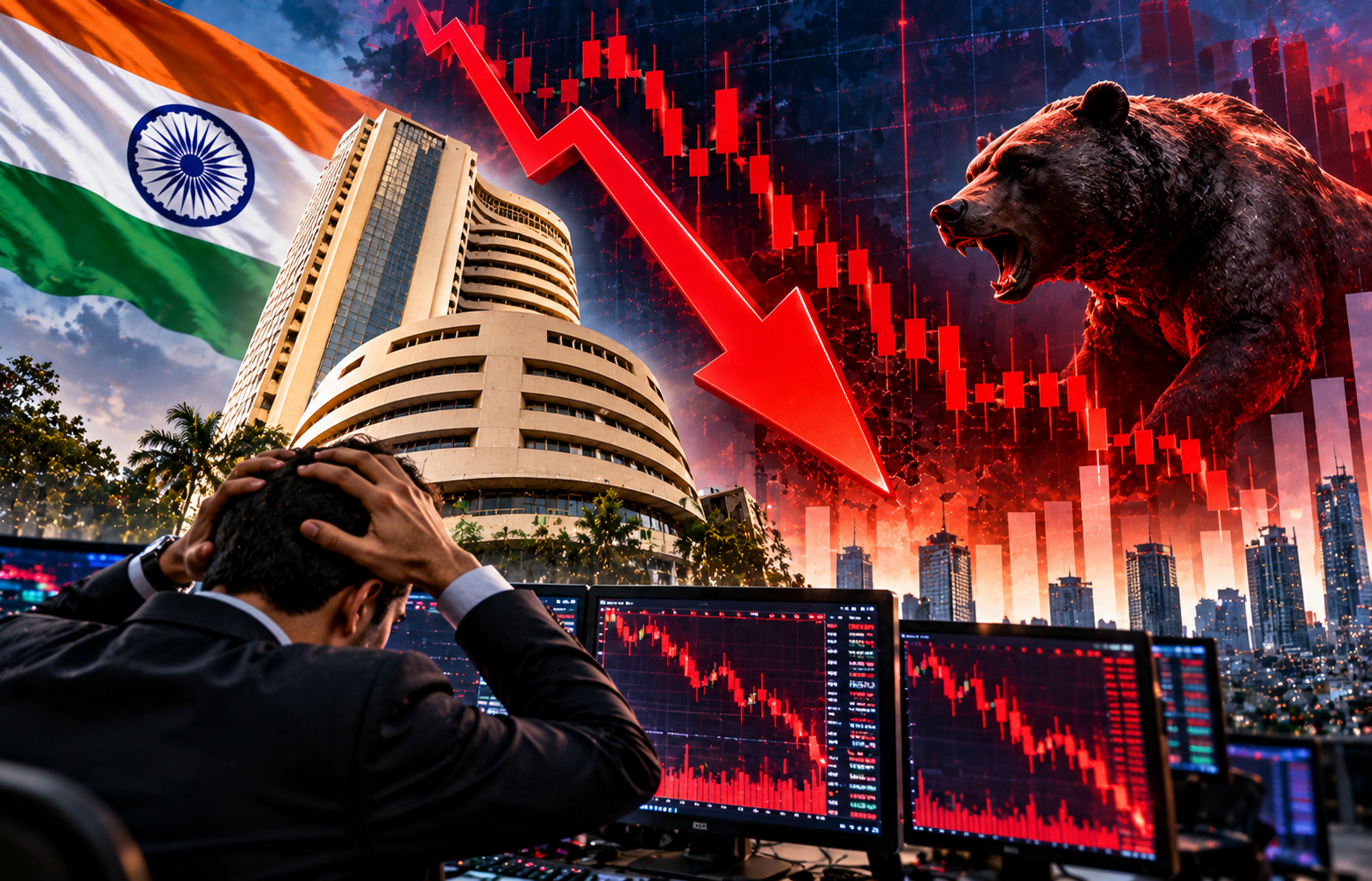
The BSE Sensex plunged over 2,000 points in a single trading session this week, erasing lakhs of crores in investor wealth and sending shockwaves through Dalal Street. While market corrections are a normal part of investing, the speed and scale of this fall has caught many by surprise. Here are the top five reasons behind the crash.
1. Foreign Institutional Investor Outflows
Foreign Institutional Investors (FIIs) have been aggressive sellers in Indian markets, withdrawing over ₹25,000 crore in the past two weeks. The primary driver is rising bond yields in the United States, which are making American government bonds more attractive compared to emerging market equities.
2. Rising Oil Prices
Crude oil prices have surged to $95 per barrel amid Middle East tensions and OPEC+ production cuts. As a major oil importer, India is particularly vulnerable to oil price spikes, which worsen the current account deficit and put pressure on the rupee.
3. Inflation Concerns
India’s CPI inflation reading of 5.7% has raised fears that the Reserve Bank of India may be forced to maintain higher interest rates for longer than previously expected. Higher rates reduce corporate profitability and make bonds more attractive versus stocks.
4. Weak Q2 Corporate Earnings
Early second-quarter earnings results from major companies have disappointed analysts. Several IT majors have guided for slower revenue growth due to reduced tech spending by their US and European clients, while FMCG companies cite rural demand weakness.
5. Global Risk-Off Sentiment
Global risk appetite has declined due to a combination of geopolitical tensions, China’s economic slowdown, and concerns about US recession risks. Indian markets, which are increasingly integrated with global financial markets, cannot remain immune to these external headwinds.
Key Takeaways
As we look at this story in the broader context of what’s happening in India and around the world, several important points stand out. First, the pace of change in this area has accelerated significantly over the past 24 months. Events that once took years to unfold are now happening in months or even weeks.
Second, the impact on ordinary Indians is real and immediate. Whether it’s the price of petrol, the availability of jobs, or the content we watch on our phones, the big stories of 2026 touch everyday life in ways that weren’t true of news stories a decade ago. That’s partly why public interest in these topics has never been higher.
What Experts Are Saying
Analysts across India’s leading think tanks and media organisations have weighed in on this development. The consensus appears to be that this is a significant moment — one that will have ripple effects for months and possibly years to come. The speed with which the situation is evolving means that yesterday’s analysis can quickly become outdated, so staying informed through reliable sources matters more than ever.
Industry observers point out that India’s unique position — as a rapidly growing democracy with 1.4 billion people, a young population, a dynamic private sector, and an increasingly active foreign policy — means that developments here don’t just affect Indians. What happens in India has consequences for the global economy, geopolitics, and technology that reverberate from Silicon Valley to Beijing to Brussels.
Looking Ahead
The next few weeks and months will be critical. There are several key developments to watch: policy responses from the government, market reactions, public opinion shifts, and how this story interacts with other major trends unfolding simultaneously. India rarely has the luxury of dealing with one challenge at a time, and the interplay between different stories is often where the most important dynamics emerge.
For readers trying to make sense of a rapidly changing landscape, track credible reporting, maintain healthy scepticism about unverified claims, and remember that initial reports are often incomplete. The full picture takes time to emerge — but when it does, it usually tells a richer and more nuanced story than the first headlines suggested.
Stay tuned to indiabbcnews.com for the latest updates, analysis, and expert commentary on this and all the major stories shaping India’s present and future.