


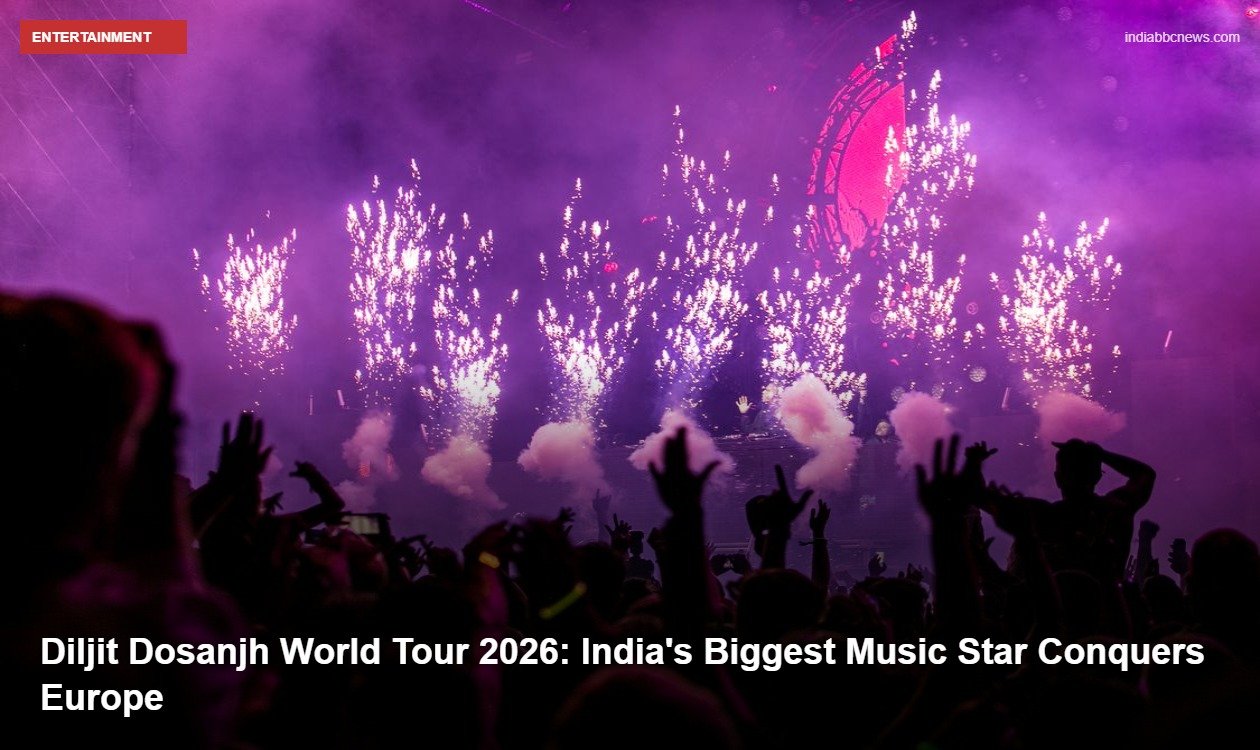
Diljit Dosanjh is doing something no Indian artist has done before — selling out major concert venues across Europe, singing almost entirely in Punjabi. His ongoing 2026 world tour has become a cultural moment that music historians will likely write about for years to come.
The London O2 Arena show sold out 20,000 seats in under three minutes. Amsterdam’s Ziggo Dome — 17,000 people — gone in four. Paris saw queues forming outside the venue the night before, with fans having flown in from across Europe just for the experience. The numbers are staggering, but the real story is who’s in those seats.
A Genuinely Global Audience
Walk through the crowd at a Diljit show in Europe and you’ll find something extraordinary: it’s not just the Indian diaspora. Yes, they’re there in huge numbers — NRIs who grew up listening to Punjabi music and are now bringing their European-born children to experience the culture. But sitting alongside them are Dutch, French, and British fans who discovered Diljit through Instagram reels, YouTube, or streaming playlists and fell in love with the energy, even without understanding a single word.
This is Diljit’s real superpower. His music communicates something that transcends language — joy, longing, celebration — in a way that few artists manage across cultural lines.
The ‘Chamkila’ Effect
The 2024 Imtiaz Ali biopic gave international audiences a new lens through which to understand Punjabi music. Diljit’s soulful portrayal of Amar Singh Chamkila introduced his dramatic range to viewers who might only have known his pop persona, and the film’s Netflix global release brought millions of new fans to his music catalog.
India Tour Dates
The India leg is widely expected to be announced before December 2026. Based on previous patterns, Mumbai’s DY Patil Stadium, Delhi’s Jawaharlal Nehru Stadium, Bengaluru’s Chinnaswamy, and Chandigarh are the likely venues. Fans are advised to register on BookMyShow well in advance — last year’s presale queue peaked at 2 million users simultaneously.
What This Means for Indian Music
Diljit’s global success is opening doors for other Indian regional artists. Record labels that once only promoted Bollywood music are now actively signing Punjabi, Tamil, and Telugu artists for international distribution deals. The message is clear: Indian music, in all its regional diversity, has a global audience waiting to be found.

