

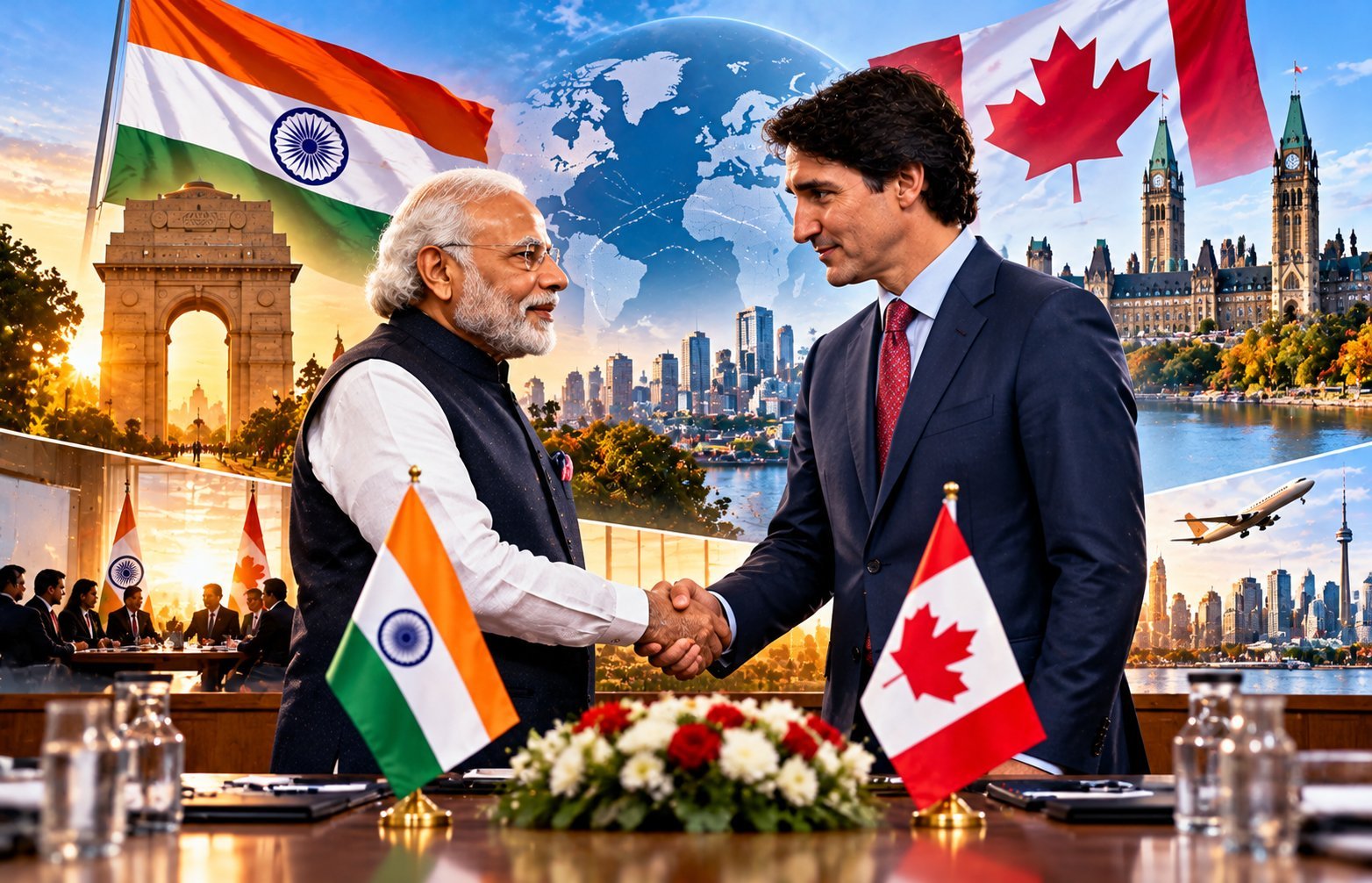
India and Canada appear to be turning a new page in their diplomatic relationship following one of the most significant bilateral crises in recent memory. After a period of severely strained ties that saw ambassadors withdrawn and visa services suspended, both countries are now taking cautious steps toward normalization.
What Led to the Crisis
The diplomatic rupture stemmed from Canadian allegations regarding Indian government links to the killing of a Sikh separatist leader on Canadian soil — allegations India firmly denied. The crisis led to the expulsion of diplomats from both sides and created significant disruptions for the 1.8 million strong Indian-Canadian diaspora.
Steps Toward Normalization
Several developments have improved the bilateral atmosphere. A new Canadian government, more focused on pragmatic trade relationships, has sought to reset ties with India. Both sides have quietly resumed consular services, and there are reports of back-channel diplomatic communications being restored.
Economic Interests Push Both Sides Together
Despite political friction, economic interests create strong incentives for normalization. Canada is home to some of the world’s largest uranium and potash reserves — critical resources India needs for its energy and agricultural sectors. India, meanwhile, is one of Canada’s fastest-growing trade partners with a highly educated diaspora that contributes enormously to the Canadian economy.
What It Means for Indian Diaspora
For the Indian-Canadian community, normalization would mean simplified visa services, restored consular services, and a more stable environment for business and family connections between the two countries. Student visa applications, which had declined significantly during the crisis, are expected to pick up.
For readers and citizens trying to make sense of a rapidly changing landscape, the most useful approach is to track credible reporting, maintain a healthy scepticism about unverified claims, and remember that initial reports are often incomplete. The full picture takes time to emerge — but when it does, it usually tells a richer and more nuanced story than the first headlines suggested.