

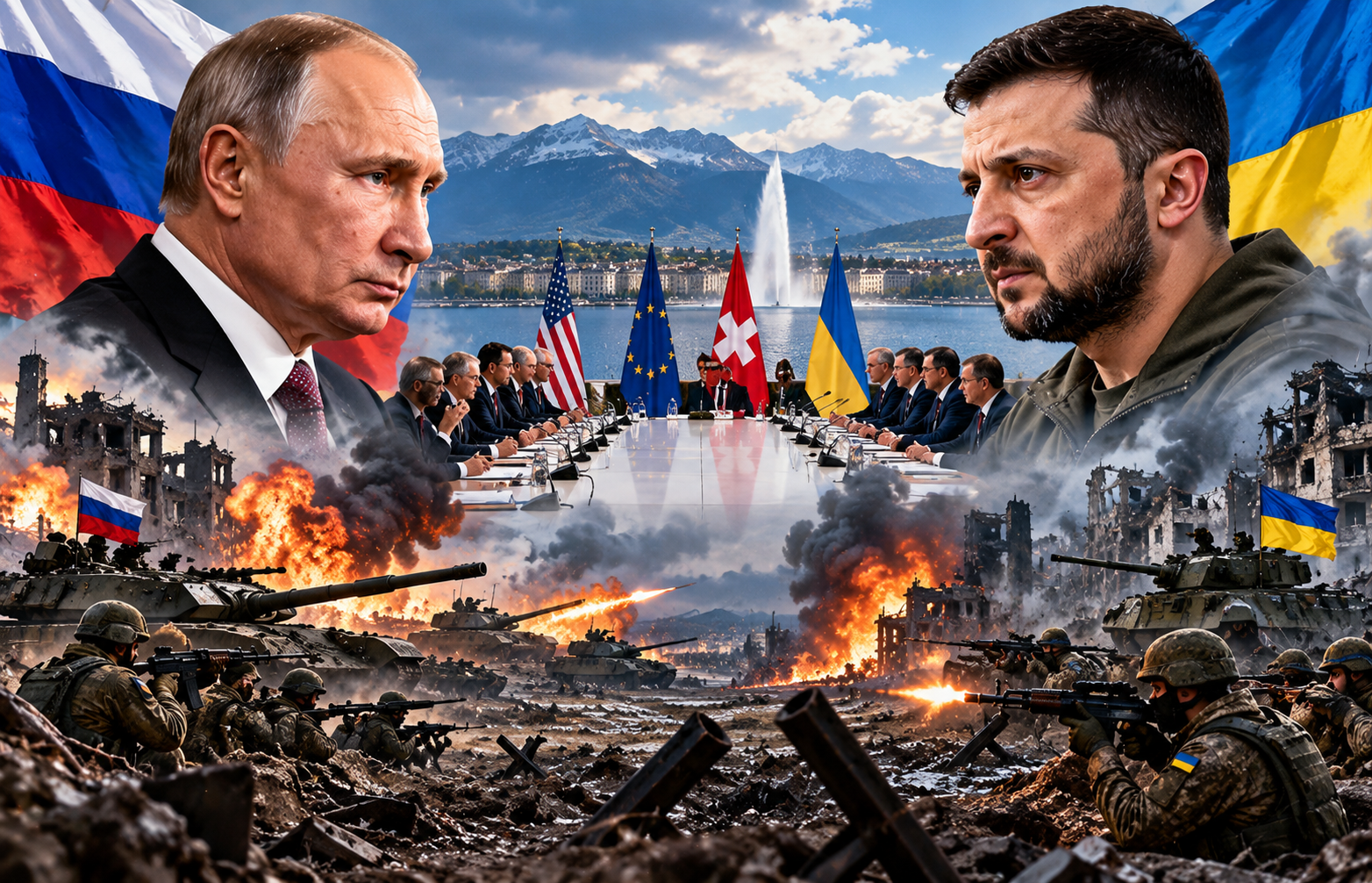
For the first time in over two years, official peace negotiations between Russia and Ukraine have formally begun in Geneva, Switzerland, facilitated by UN mediators and with indirect support from the United States and European Union. While expectations remain carefully managed, the talks represent the first genuine diplomatic opening since the conflict began.
What Brought Both Sides to the Table
Several factors have created conditions for dialogue. Battlefield exhaustion on both sides has slowed offensive operations significantly. Russia faces mounting economic pressure from Western sanctions, while Ukraine’s military aid pipeline from the West has faced domestic political challenges in several donor countries.
Core Issues in Negotiations
The fundamental disagreements remain stark. Ukraine insists on restoration of its internationally recognized borders including Crimea, while Russia seeks recognition of its control over occupied territories. A potential compromise framework includes a demilitarized buffer zone, internationally monitored ceasefire lines, and a phased approach to territorial questions.
Role of China and India
Both China and India have positioned themselves as potential mediators, leveraging their relationships with Moscow to encourage participation in talks. India’s “Vasudhaiva Kutumbakam” diplomatic philosophy has been cited by both sides as a neutral framework, with Indian diplomats playing a quiet but significant role in facilitating initial communication.
What a Peace Deal Would Mean Globally
A resolution of the Russia-Ukraine conflict would have enormous economic implications. Global food and energy prices would ease significantly as Black Sea shipping routes normalize. European defense spending could shift from emergency mode to long-term strategic planning, while reconstruction of Ukraine could become one of the largest economic projects in European history.
For readers and citizens trying to make sense of a rapidly changing landscape, the most useful approach is to track credible reporting, maintain a healthy scepticism about unverified claims, and remember that initial reports are often incomplete. The full picture takes time to emerge — but when it does, it usually tells a richer and more nuanced story than the first headlines suggested.