

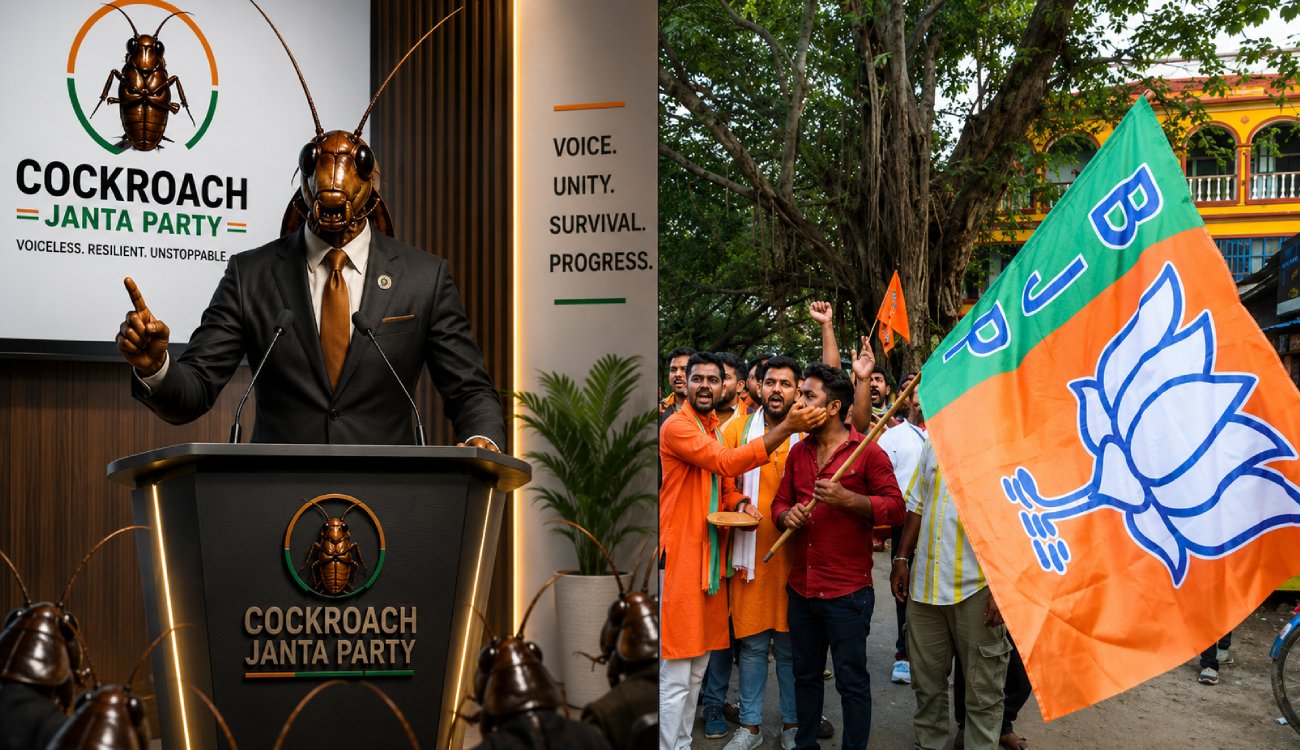
The numbers are real. On Instagram, the Cockroach Janta Party has 16 million followers. The BJP’s official handle, by comparison, has significantly fewer. The comparison is being shared across platforms with varying degrees of earnestness — and it’s worth unpacking what it actually means.
The Follower Count Reality
The CJP’s Instagram growth is genuine and it is remarkable. Abhijeet Dipke’s combination of absurdist political commentary, high-production viral content, and a genuinely distinctive visual identity has translated into follower numbers that mainstream political parties’ social media managers are studying with something between admiration and alarm.
The BJP, for its part, has traditionally focused its social media energy on WhatsApp — where it has arguably the most sophisticated grassroots distribution network in Indian political history — and on Twitter/X, where political discourse is more concentrated among journalists, commentators, and engaged partisans. Instagram is a different audience.
What Follower Counts Do and Don’t Tell You
Here’s the part that requires some care: Instagram followers and votes are not the same thing, and treating them as a proxy is one of the persistent errors of political commentary in the social media era.
The CJP’s Instagram audience skews young, urban, and educated — a demographic that over-indexes on social media engagement and under-indexes on voter turnout in many Indian constituencies. The party has never contested an election at scale. Its 16 million followers have never been tested against the friction of actually going to a polling booth and casting a ballot for a candidate who might not win.
None of that diminishes the CJP’s achievement. Building 16 million followers on any platform requires genuine creativity and consistent output. As a measure of cultural relevance and attention capture, it’s significant.
What It Actually Signals
The more interesting question the follower count raises isn’t “can the CJP beat the BJP?” — a question that misreads what the CJP is. The more interesting question is: what is this audience telling us about what young Indians find compelling in political communication?
The CJP’s content works because it’s honest about its absurdity. In a media environment saturated with political content that takes itself with absolute seriousness, something that treats the entire enterprise with ironic distance has found a significant audience.
Whether that audience eventually coalesces around anything that changes electoral outcomes — or whether it remains a commentary on politics rather than a participant in it — is the question that will define the CJP’s long-term significance.
📄 Also Read