

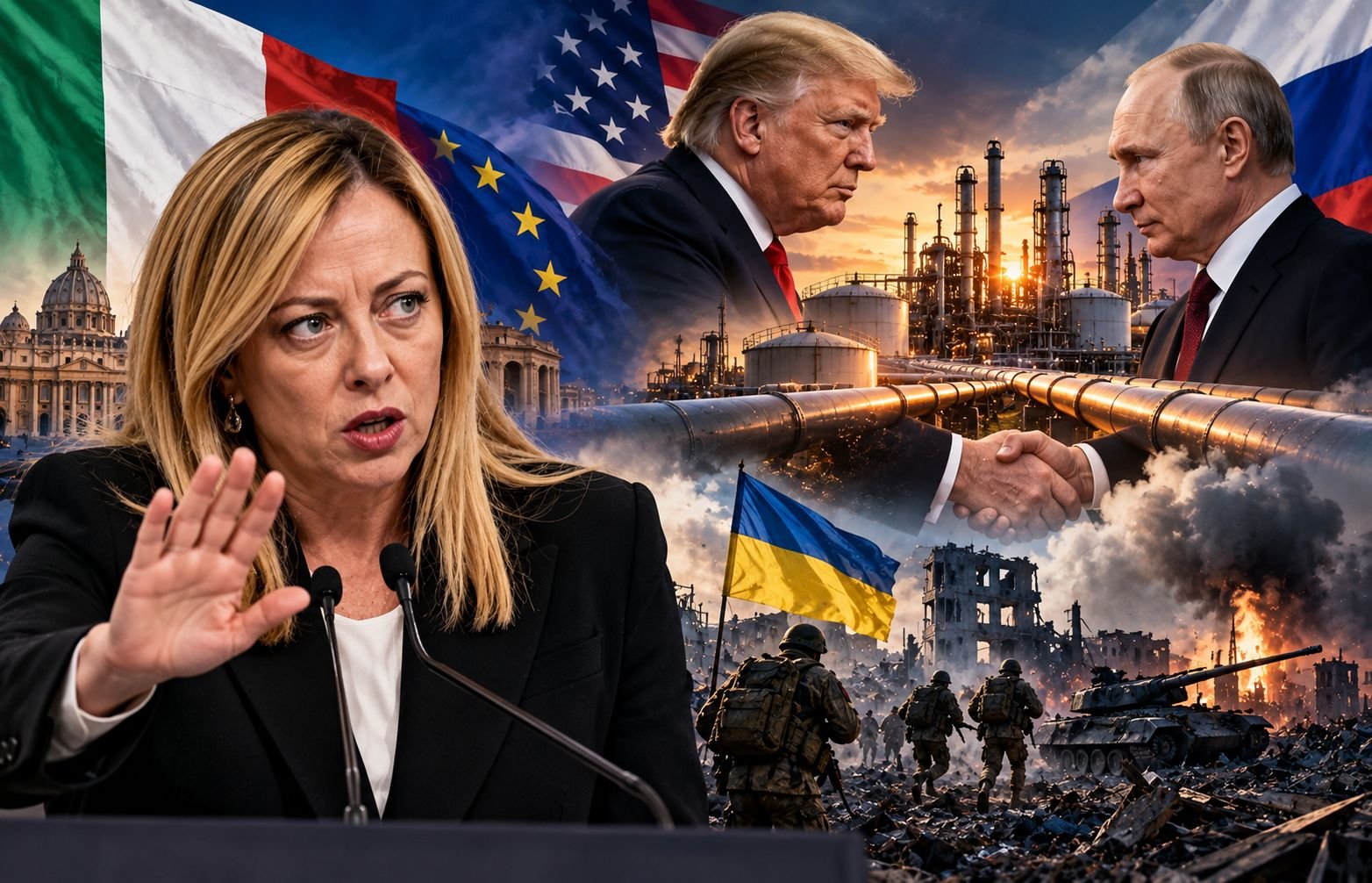
Italian Prime Minister Giorgia Meloni pushed back sharply this week against reports of a possible energy deal between the United States and Russia, calling it a “very risky choice” that could fatally undermine the West’s unified stance against Moscow over the war in Ukraine.
Her intervention was pointed and deliberate — a rare moment of public friction between Rome and Washington, and a sign that European leaders are growing genuinely worried about where American foreign policy under Donald Trump might be heading.
What Is the Reported Deal?
Reports in the US and European press suggest that American officials have been in discussions with Russian counterparts about resuming some form of energy trade. The specifics remain unclear and Washington has not confirmed the talks, but the reports have been credible enough to prompt official responses from multiple European capitals.
The concern is not just economic. The West’s pressure campaign on Russia has rested on two pillars: military support for Ukraine and economic isolation of Russia through sanctions. Any energy deal that sends revenue to Moscow — even indirectly — risks cracking the second pillar, which critics say would give Putin relief at exactly the wrong moment.
Meloni’s Warning
Speaking at a press conference in Rome, Meloni was careful not to directly accuse the Trump administration of betraying Ukraine. But her language was as strong as European diplomatic convention allows. “Any choice that benefits Russia economically at this stage is a very risky one,” she said. “European unity on Ukraine cannot be compromised for short-term energy interests.”
She also stressed that Italy, which suffered badly during the energy crisis that followed Russia’s invasion, has made significant and painful adjustments to reduce its dependence on Russian gas. “We paid a price for that,” she said. “We cannot now see that reversed.”
Europe’s Broader Anxiety
Meloni’s comments reflect a wider unease among European governments about Trump’s approach to the Ukraine conflict. Since returning to office, Trump has signalled that he wants to end the war quickly — a position that some European leaders privately worry means a deal that favours Russia and leaves Ukraine with less than it needs to be secure.
Germany, France and the UK have all separately expressed concern about any weakening of the sanctions regime against Russia. But Meloni, who has a complicated political history — her party has roots in the Italian post-fascist movement and she was once seen as sympathetic to Moscow — speaking out so clearly against a potential US-Russia deal carries particular symbolic weight.
What Happens Now?
The White House has not officially responded to Meloni’s remarks. American officials have in the past suggested that Trump’s approach to Russia is about finding a pragmatic path to peace, not rewarding aggression. Whether any energy deal would actually materialise remains uncertain.
But for Ukraine and its European backers, the fact that this conversation is even happening is a source of deep anxiety. The next NATO summit, scheduled for early 2027, is expected to see these tensions come to a head.

