

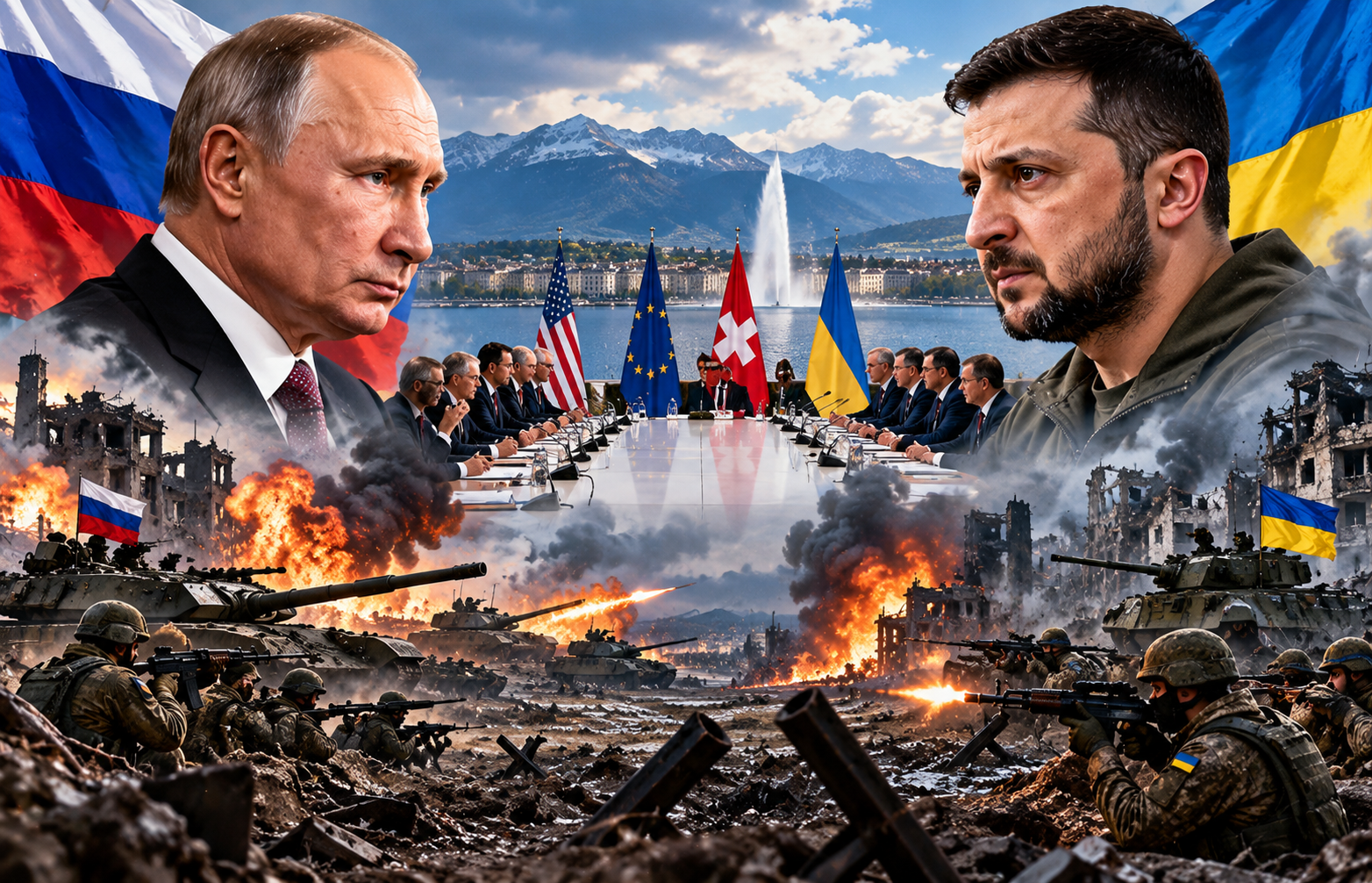
The United States has floated a bold and controversial idea to get Ukraine peace talks back on track: releasing some of the frozen Russian state assets that Western governments seized after Moscow’s invasion, as part of a broader diplomatic package that could bring both sides back to the table.
The proposal was put forward by US Special Envoy Steve Witkoff and Jared Kushner, President Trump’s son-in-law, who has been quietly involved in back-channel diplomatic contacts with Russian representatives. Both men briefed European allies on the idea earlier this week, according to sources familiar with the discussions.
What Are the Frozen Assets?
When Russia invaded Ukraine in February 2022, Western nations froze roughly $300 billion worth of Russian state assets held in accounts across Europe, the United States and other jurisdictions. Most of this — around $260 billion — sits in Belgium, in accounts managed by the financial infrastructure company Euroclear.
The assets were frozen as a punitive measure and as leverage. Some of the interest generated from them has already been redirected to help fund Ukraine’s defence and reconstruction. The underlying principal has remained untouched, partly because releasing it would require complex legal processes and political agreement across multiple countries.
Why Washington Is Considering Returning Them
The Trump administration’s thinking, as explained to European partners, is that offering the return of some or all of the assets could give Russia a concrete incentive to agree to a ceasefire and enter genuine peace negotiations. Without that kind of incentive, officials argue, Moscow has little reason to stop fighting — especially when the situation on the battlefield, while costly for Russia, is not catastrophic from Kremlin’s perspective.
Critics of the idea, including several senior European officials, say it would essentially reward Russia for its aggression — handing back money seized precisely to punish the invasion, without any guarantee that Moscow would actually make meaningful concessions on Ukraine’s sovereignty or security.
Europe’s Reaction Has Been Cold
Several European governments reacted poorly when briefed on the proposal. Officials in France, Germany and Poland all expressed scepticism, with some saying privately that releasing the assets without ironclad guarantees would be a strategic mistake that undermines Europe’s remaining leverage over Moscow.
The European Commission, which oversees the Euroclear assets, would have to sign off on any release — giving Brussels a formal veto over the plan. European Commission President Ursula von der Leyen has previously said the assets should not be returned until Russia pays reparations for the damage it has caused in Ukraine, which could run into hundreds of billions of dollars.
Ukraine’s View
Ukrainian officials have reacted with a mixture of anxiety and guarded interest. President Zelensky has said Ukraine needs any peace deal to include firm security guarantees — NATO membership or something equivalent — to prevent Russia simply regrouping and attacking again in a few years. He has not said whether the frozen assets could be part of a deal package.
For Ukraine, the fear is that Washington might agree terms with Moscow that look acceptable on paper but leave Ukraine exposed. That fear has been present since Trump returned to office and began signalling his desire to end the war quickly, on a timeline that suits American domestic politics rather than Ukrainian security needs.
Whether the assets proposal goes anywhere will depend on Russia’s reaction — which has so far been to demand that all sanctions be lifted as a condition of any deal, a position that Western governments have called non-starter.

