


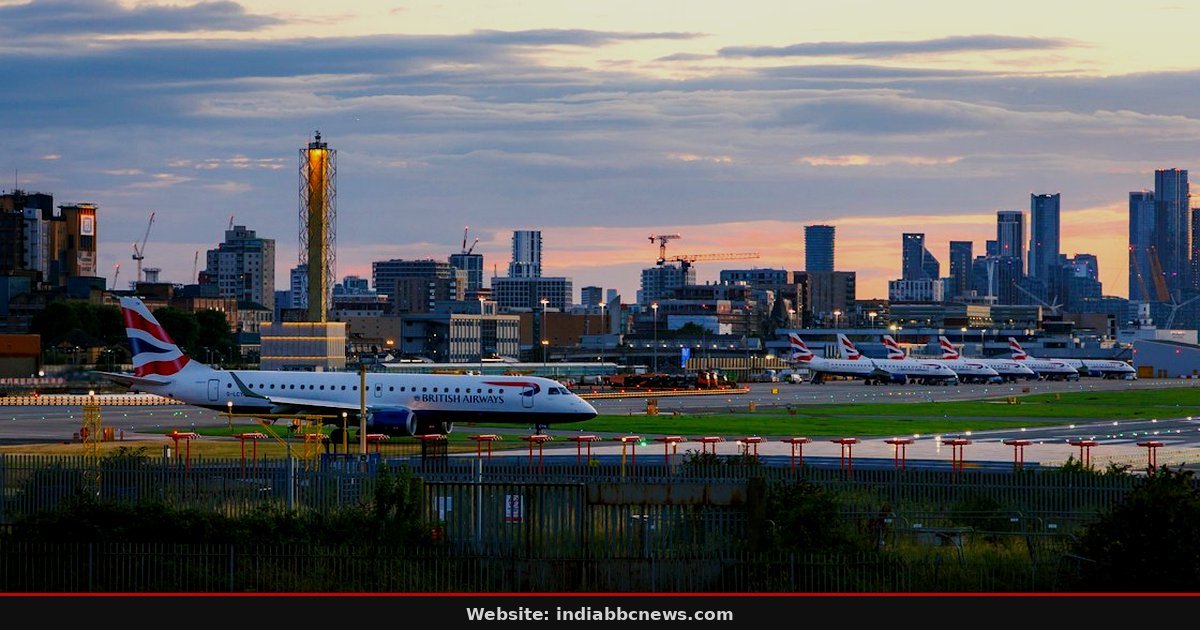
Seven flights. That is how many left Heathrow before the sun had even fully cleared the horizon, a small number against the backdrop of a capital city that usually churns out hundreds of departures in the same window. The fog rolled in like a slow, grey tide, swallowing the runways of London Heathrow and London City Airport in a thick, suffocating blanket that turned visibility to under 50 metres. It was a morning where the usual roar of jet engines was replaced by a heavy, uncomfortable silence.
For millions of commuters, the day got off to a painful start, not with a bang, but with a whimper of cancelled bookings and stranded tourists. The Met Office had called it the “perfect recipe,” and for those stuck on the tarmac, that phrase felt less like a scientific description and more like a cruel joke. The yellow warning covers London and the South East until 11 am, but the disruption is already cascading through the sector.
The Physics of a Grey Morning
It is not magic, despite what the dramatic photos might suggest on social media. Niamh Murray, an operational meteorologist at the Met Office, explained to the Press Association that the conditions were simply too favorable for fog to stay at bay. The autumn nights are longer now, which gives the ground more time to lose heat before the sun rises. This cooling, combined with light winds, creates a saturation point where moisture in the air settles into those low-lying clouds we see encroaching on the terminals.
It is a phenomenon that remains unapologetically stubborn, especially when temperatures dip into the negative numbers. The air holds less moisture when it is colder, so the fog forms more readily and clears more reluctantly.
Murray described the ingredients: clear skies, light winds, and those extended periods of darkness that allow temperatures to fall away. She noted that once the fog sets in, particularly with sub-zero temperatures, it can cling on well into the next day. This is not a transient affair that dissipates with the first ray of sunshine. It is a dense, persistent layer that defies the usual morning routine.
Forecasters have seen this pattern repeat in recent years, and the data shows a trend toward more intense, localized weather events even in the UK. The “perfect recipe” is a term that has become common lexicon for meteorologists, but it carries a weight of frustration for travelers and logistics managers who have no control over the atmosphere above their heads. It is a reminder that nature does not care about your flight schedule.
A Catastrophic Safety Echo from the M20
The danger of this specific type of weather is not just about inconvenience; it is about survival. Just last Saturday, a similar foggy condition led to a harrowing pile-up on the M20 in Kent. More than 30 vehicles crashed into each other between junctions 8 and 9, near Maidstone. Two people were seriously injured, and the motorway was shut in both directions for nearly 12 hours.
That incident serves as a cold, hard warning to anyone currently navigating the roads in the capital. The fog can transform a familiar route into a deadly trap in a matter of minutes. It removes your reference points, your sense of speed, and your ability to judge distance accurately.
Edmund King, the president of the AA, urged drivers to adapt their speed and leave significantly more room between their cars and the vehicle ahead. He warned against the instinct to follow the rear lights of the car in front, a behavior that gives a false sense of security. If that car stops suddenly, you are already too close to react. There is no prize for arriving a few minutes early, and the risk of a fatal collision outweighs the benefit of speed.
The M20 incident proved that even experienced drivers can be caught off guard by the sudden reduction in visibility. It is a sobering reminder that fog is one of the oldest and most persistent killers on UK roads. The current yellow warning is small, but the underlying risk is massive.
The Economic Bleed of Grounded Jets
Money burns fast when planes sit on the tarmac. By 6:30 am, seven flights from Heathrow and three from London City had already been cancelled, and the list grew as the morning wore on. British Airways was particularly affected, with routes to Belfast, Glasgow, Dublin, Edinburgh, Zurich, Paris, and Basel all scrubbed. For the airport operators, each hour of delay means increased fuel costs, passenger compensation payouts, and potential claims from airlines for breach of contract.
The ripple effect touches hotel bookings, rental cars, and local businesses that rely on the flow of visitors. It is a small-scale economic shock, but it is a predictable one that the industry struggles to mitigate.
London City Airport, with its short runways and high-density operations, was even more vulnerable to the visibility restrictions. Flights to Luxembourg, Amsterdam, Zurich, and Frankfurt were grounded, disrupting the business travel corridors that keep the capital’s financial district humming. The cost of these disruptions is not just in pounds and pence; it is in lost productivity and strained relationships between airlines and airports. Airlines have to rebook passengers, often at significant expense, and manage the anger of those who have missed connections.
It is a logistical nightmare that plays out in real-time, with no easy fix. The fog does not clear on a schedule, and the economy does not pause for it. This is the hidden tax on unpredictable weather in a densely populated, flight-dependent region.
What This Means for India
It might seem distant to an Indian reader, but the impact of London weather ripples across the globe, and India is no exception. A significant number of Indian nationals study and work in the UK, and a large contingent of Indian tourists visit the UK every year. The disruption to Heathrow, the primary gateway for long-haul flights, directly affects these travelers. Those with tight schedules for exams, job interviews, or family events in India or elsewhere face immediate stress and financial loss.
The cancellation of flights to key European hubs also affects the tourism pipeline, as many Indian tourists combine London with visits to Paris, Zurich, and other cities. The economic implication is subtle but real, touching on the service trade and cross-border mobility.
Furthermore, the reliability of UK airports is a factor in global supply chains and business logistics that Indian companies rely on. If London is a hub for certain high-value goods or financial services, delays here can cascade into operations in Mumbai, Delhi, and Bangalore. While not as direct as a port strike, the cumulative effect of frequent weather-related disruptions in major Western hubs can encourage businesses to diversify their routing or airfreight partners. This is part of a broader trend where companies are looking for more resilient logistics networks.
For India, maintaining strong aviation ties with Europe is crucial, and such events highlight the fragility of these connections. It is not just a story about fog in London; it is a reminder of the interconnectedness of the global economy and how weather events in one hemisphere can touch lives in another.
Human Resilience in the Grey
Amid the cancellations and the complaints, there is a quiet dignity in how people cope. I watched a group of travelers at Heathrow Terminal 5, their faces illuminated by the glow of their phones as they rebooked flights. A young couple, likely tourists from Japan, stood near the window, staring at the wall of white mist that obscured the runway. They did not complain loudly; they simply waited.
It is a scene that repeats itself in airports around the world, a daily ritual of patience and frustration. The staff at the check-in desks moved with a practiced efficiency, handling the surge of upset passengers with a calm that borders on stoic. They have seen it before, and they know it will pass, eventually.
There is a strange community that forms in the waiting areas of grounded travelers. Strangers share tips on which cafes are open, which lanes are moving faster, and where to find a better signal. It is a small, temporary solidarity born of shared inconvenience. I saw an older man, presumably a business traveler, sharing his power bank with a younger student who had missed a crucial video call.
These small acts of kindness cut through the irritation of the moment. It is a testament to human adaptability, the ability to find a thread of normalcy in an abnormal situation. The fog may be stubborn, and the flights may be delayed, but the human spirit tends to find a way to endure. It is messy, it is slow, and it is deeply human.
Frequently Asked Questions
Why are flights cancelled at Heathrow today?
Dense fog has reduced visibility to below 50 meters, making it unsafe for planes to take off or land. The Met Office has issued a yellow warning for the area, forcing airlines to make precautionary cancellations to ensure safety for passengers and crew. The yellow weather warning is in place until 11 am on Monday. However, meteorologists warn that if temperatures drop below zero, the fog can be stubborn and may persist well into the afternoon or even the next day.
Until when is the fog expected to last in London?
Which airports in London are affected by the fog?
London Heathrow and London City Airport are the primary ones reporting cancellations and delays. Other airports in the South East may also experience disruptions due to the widespread nature of the fog warning issued by the Met Office. Drivers are urged to take extreme care, reducing speed and increasing the distance between vehicles. The recent M20 crash highlights the danger of following too closely, as reaction times are significantly reduced when visibility is poor. It is best to avoid travel if possible.
Is it safe to drive in these foggy conditions?
Source: Evening Standard UK
Source: Evening Standard UK

