


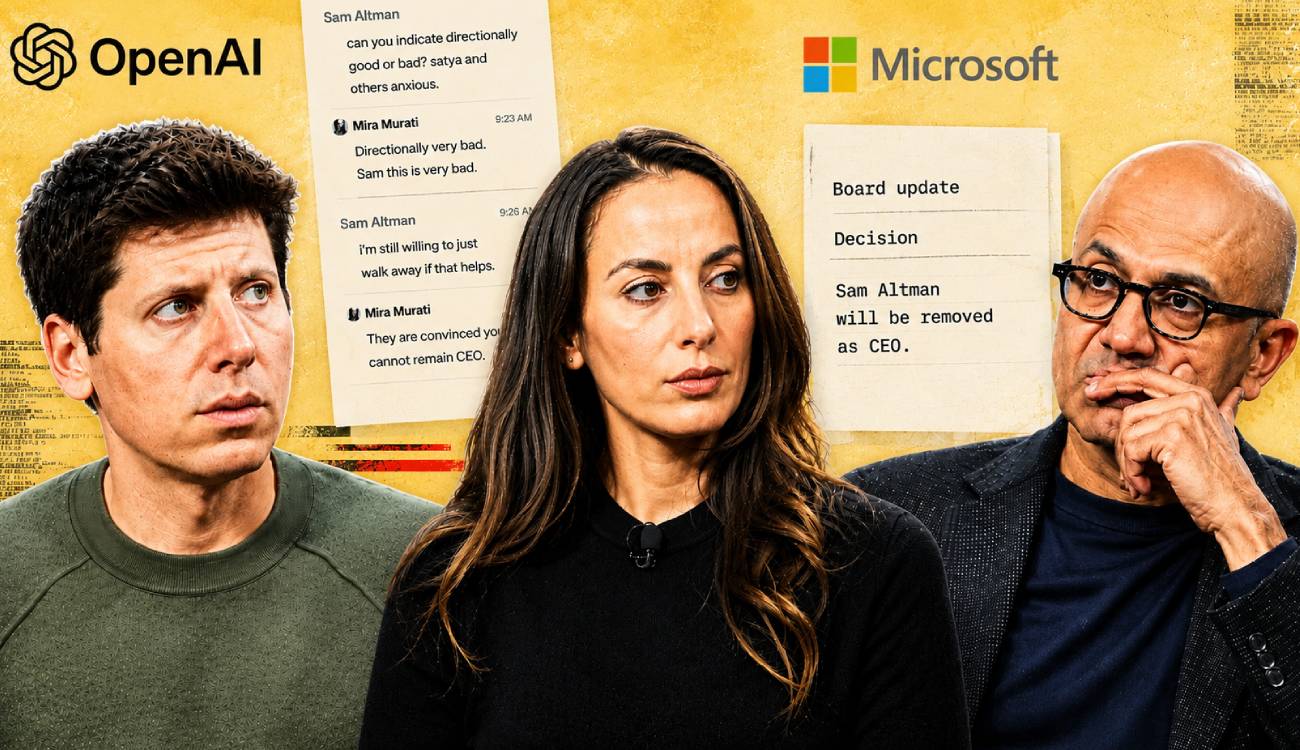
The OpenAI governance crisis of late 2023 — Sam Altman’s firing, the board’s reversal, Altman’s reinstatement — produced an enormous amount of journalism and commentary in real time. Some of it was accurate. Some of it was substantially wrong. A new account, drawing on participants who are now more willing to speak, adds detail to the most consequential episode in AI industry history.
The role of Satya Nadella, Microsoft’s CEO, in the drama’s resolution has been less examined than the board dynamics and Altman’s own actions. The new reporting fills in that gap.
What Nadella’s Intervention Actually Was
Microsoft had invested approximately $13 billion in OpenAI at the time of the crisis. Altman’s departure put that investment — and the entire Microsoft AI strategy, which had been publicly built around OpenAI’s models — at immediate risk.
Nadella’s public offer to hire Altman and the entire OpenAI team at Microsoft was widely covered as a pressure move. What was less covered at the time: the specific conversations Nadella was having with OpenAI board members, the intermediaries involved in those conversations, and the timeline of how those conversations intersected with the board’s reconsideration.
The new account suggests that Nadella’s role was not just public pressure but active back-channel engagement — essentially making clear to board members that a reinstatement was the only outcome that preserved both OpenAI’s viability and the investor relationships that the organisation depended on.
The Deeper Structural Question
The governance structure that allowed this crisis to happen — a nonprofit board with control over a capped-profit subsidiary that had taken billions in investment — was always somewhat anomalous. The crisis forced the question: can a governance structure designed for a charitable organisation function appropriately for the most commercially significant AI company in the world?
OpenAI’s subsequent governance reforms have moved it toward more conventional corporate oversight while retaining some of the nonprofit structure. Whether that hybrid resolves the underlying tension or simply defers it is the question that the next OpenAI governance crisis will answer.