


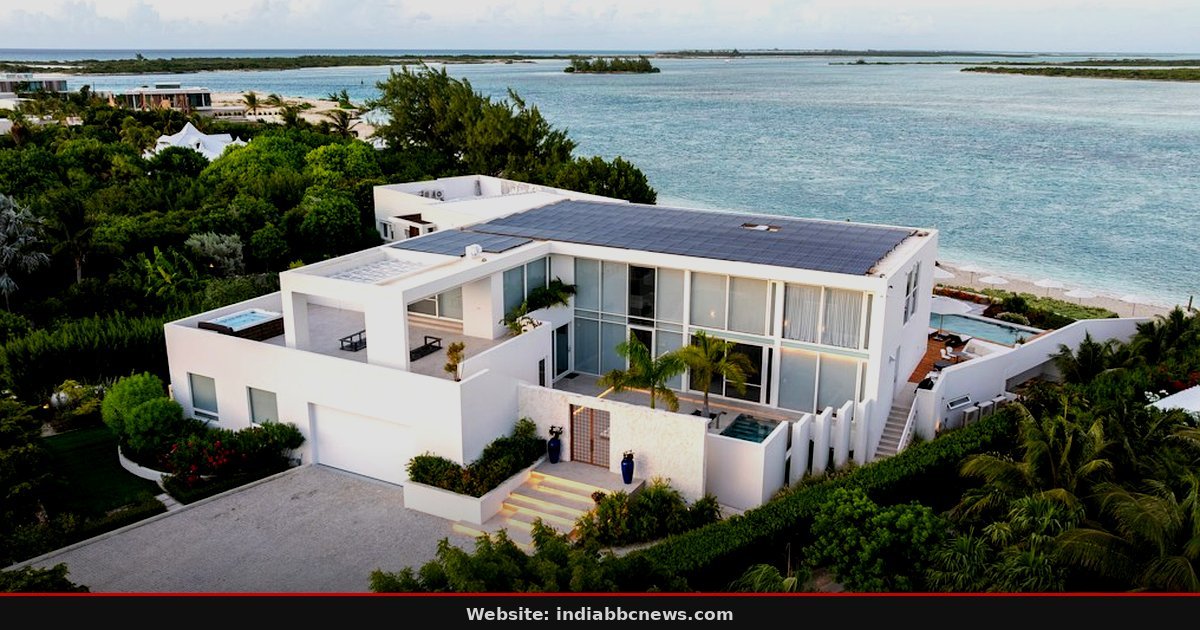
51.89 million dollars. That’s the price tag on a five-bedroom Mediterranean-style mansion in Palm Beach, Florida, now owned by Fran Tarkenton. The former NFL quarterback, who spent 17 seasons in the league and is a Hall of Famer, closed the deal on a property that had sat on the market for months. It’s not just any house.
It’s a renovated estate with direct beach access and ocean views that stretch out to the horizon. The sellers, who bought the place in 2019 for 12.65 million dollars, are walking away with a profit that would make most real estate agents weep with joy. Tarkenton, 78, has been a fixture in the Palm Beach social scene for years. This purchase cements his status as a local legend, not just in sports, but in the high-stakes world of luxury real estate.
The move is significant because it signals that even in a market that has cooled slightly, top-tier assets still command premium prices from buyers with deep pockets and no need for financing. The numbers here are stark. The sellers paid 12.65 million dollars in 2019. Four years later, Tarkenton paid 51.89 million dollars. That’s a 4x increase in value in under 5 years.
The Deal That Defied Market Downturns
It’s a return that outpaces the S&P 500, outpaces gold, and outpaces most tech stocks. How did that happen? Partly, it’s the location. Palm Beach is one of the most exclusive enclaves in the United States.
The property isn’t just a house; it’s a piece of history. The renovation work, which reportedly cost millions, transformed the structure into a modern masterpiece. Buyers in this bracket aren’t looking for square footage alone. They’re looking for privacy, exclusivity, and a sense of permanence.
Tarkenton’s purchase fits that mold perfectly. He didn’t need to haggle. He likely didn’t even need to visit the property with an agent. He knew the value.
He knew the demand. He knew what he was paying for, and he paid exactly that. It’s a reminder that in the luxury market, value isn’t determined by comparisons. It’s determined by scarcity.
But let’s look at the broader context. The US housing market has been volatile. Interest rates have risen. Mortgage costs have soared.
Yet, the ultra-luxury segment has remained largely immune. Why? Because people in this tier don’t use mortgages. They buy with cash.
They buy with liquidity. They buy because they can. That’s a harder sell than it sounds to the average American, who is currently priced out of the entry-level market. Tarkenton’s deal highlights a growing divide in the US property market.
At the top, prices are climbing, driven by a handful of ultra-wealthy individuals. At the bottom, prices are stagnant or falling, driven by a lack of affordable inventory. This bifurcation is not new, but it’s becoming more pronounced. The 51.89 million dollar price tag is not an anomaly.
It’s a signal. It tells other buyers that the market for top-tier assets is still open. It tells them that if you have the money, you can still get the property you want. For everyone else, it’s a painful reminder of how detached the top of the market has become from the rest of the economy.
The ripple effects of this kind of buying are felt in the secondary market, pushing up prices for mid-range homes as well. It’s a complex dynamic, but one that is becoming increasingly difficult to ignore.
Inside the Mediterranean Masterpiece
The property itself is a showpiece. Five spacious bedrooms, each with its own unique design. The living areas are open and airy, with high ceilings and large windows that let in the natural light. The kitchen is a culinary playground, equipped with state-of-the-art appliances and custom cabinetry.
The primary suite is a retreat, with a private terrace that offers unobstructed views of the ocean. The backyard is a landscaped paradise, with mature palm trees, a swimming pool, and a built-in barbecue area. The beach access is exclusive, meaning only a handful of people can enjoy the sand and water at their doorstep. It’s the kind of property that makes you stop and stare.
It’s the kind of property that you see in magazines, if you’re lucky. Tarkenton’s purchase of this property is a testament to its desirability. He didn’t just buy a house. He bought a lifestyle.
A lifestyle of comfort, luxury, and exclusivity. It’s a lifestyle that few can afford, but many desire. The attention to detail in the renovation is evident in every corner of the home. From the custom hardware to the hand-laid tile work, every element has been carefully considered.
It’s a home that feels both modern and timeless. It’s a home that reflects the taste and sophistication of its new owner. But it’s also a home that tells a story. A story of wealth, power, and influence.
A story that is rightfully told. There’s a detail that many reports miss, but it’s crucial to understanding the value proposition. The home features a private elevator that connects all three floors seamlessly. For a 78-year-old former athlete, this is more than a convenience. It’s a necessity.
It’s a practical feature that enhances the livability of the space. It’s the kind of thing that shows the builders and renovators understood their buyer. They knew who Tarkenton was. They knew what he needed.
They tailored the home to fit his lifestyle and his physical needs. This level of customization is rare in the luxury market. Most properties are built with a generic appeal in mind. This one was built with a specific buyer in mind.
That’s a significant differentiator. It explains why the price was so high. It wasn’t just about the location or the views. It was about the bespoke nature of the design.
It was about the fact that the home was designed to fit a specific person, and that person was Fran Tarkenton. Or at least, someone very much like him. The result is a property that feels both personal and universal. It’s a home that could belong to anyone, yet it feels like it was made for one.
That’s the magic of true luxury. It’s not just about having more. It’s about having exactly what you need, and nothing else.
What This Means for India
Why should an Indian reader care about a quarterback buying a house in Florida? The connection might seem tenuous at first glance. But it’s there, and it’s growing stronger by the year. India’s diaspora in the US is one of the largest and wealthiest in the world.
A significant portion of this diaspora has its roots in the IT and tech sectors. These are people who have built successful careers in Silicon Valley and other tech hubs. They are the new elite. They are the ones driving the luxury real estate market in places like Palm Beach, New York, and Los Angeles.
Tarkenton’s purchase is a symbol of the kind of wealth that is now prevalent among Indian professionals in the US. It’s a wealth that is being used to invest in tangible assets. It’s a wealth that is being used to secure a future for their families. The 51.89 million dollar price tag is not out of reach for the top 1% of Indian diaspora.
In fact, it’s well within their reach. That’s a significant shift. Ten years ago, the Indian diaspora was more focused on buying apartments in New Jersey or suburbs of Chicago. Now, they’re buying prime waterfront properties in Florida.
They’re buying estates in California. They’re buying penthouses in Manhattan. The dollar strength has played a role in this shift. The Indian rupee is weaker than it has been in years.
This makes US real estate more affordable for Indian buyers. It’s a double-edged sword. On one hand, it makes it easier to buy property in the US. On the other hand, it makes it harder to send money back to India.
But for those who are already in the US, it’s a golden opportunity. It’s a chance to invest in a stable, appreciating asset. It’s a chance to build a legacy. And it’s a chance to join a select group of global elites.
The India angle here is not just about the money. It’s about the mindset. It’s about the shift from a focus on savings to a focus on investment. It’s about the shift from a focus on local assets to a focus on global assets.
It’s a shift that is reshaping the global real estate market. And it’s a shift that is being driven by Indian ambition.
There’s also a policy angle to consider. The Indian government has been trying to attract more foreign direct investment (FDI) into the country. One way to do this is to make it easier for Indians abroad to invest in India. But the reality is that many of these investors are more interested in investing in the US.
Why? Because the US market is more transparent. Because the US legal system is more predictable. Because the US real estate market is more liquid.
It’s a tough pill to swallow for Indian policymakers. But it’s a reality that they have to face. The fact is, the Indian diaspora is not going to stop investing in the US. If anything, they’re going to invest more.
And that’s a good thing for the US economy. It’s a bad thing for the Indian economy, if the money isn’t coming back. But it’s a complex issue. It’s one that requires a nuanced understanding of global finance.
It’s one that requires a nuanced understanding of the Indian diaspora. And it’s one that requires a nuanced understanding of the US real estate market. The bottom line is that the India-US economic relationship is becoming more intertwined. And that’s a trend that is likely to continue.
The 51.89 million dollar house is just one example of this trend. It’s a small drop in the ocean, but it’s a drop that matters. It’s a drop that shows where the money is flowing. And it’s a drop that shows where the future is heading.
The Psychology of the Ultra-Wealthy Buyer
What drives a person to spend 51.89 million dollars on a house? It’s not just about the square footage. It’s not just about the views. It’s about the status.
It’s about the signal. It’s about the message. The message is: I have made it. I have achieved success.
I have the power to buy what I want. That’s a powerful message. And it’s one that resonates with many people. The ultra-wealthy are not just buying houses.
They’re buying identity. They’re buying belonging. They’re buying a place in the social hierarchy. Tarkenton’s purchase is a reflection of this psychology.
He’s not just buying a home. He’s buying a legacy. He’s buying a place in history. And he’s buying a place in the community.
It’s a complex motivation. But it’s a real one. And it’s one that is hard to ignore. The psychology of the ultra-wealthy is different from the psychology of the average buyer.
They’re not driven by need. They’re driven by desire. They’re not driven by utility. They’re driven by emotion.
And that’s what makes them such powerful buyers. They’re willing to pay a premium for what they want. They’re willing to pay a premium for the status that comes with it. And they’re willing to pay a premium for the satisfaction that comes with it.
It’s a different kind of buying. But it’s a valid one. And it’s one that is shaping the market. The 51.89 million dollar price tag is a reflection of this psychology.
It’s a reflection of the desire for status. It’s a reflection of the desire for belonging. And it’s a reflection of the desire for validation. It’s a complex mix of emotions.
But it’s a mix that is driving the market. And it’s a mix that is unlikely to change anytime soon.
But there’s a darker side to this psychology. The ultra-wealthy are not just buying houses. They’re buying influence. They’re buying power.
They’re buying a say in how the world works. That’s a harder sell than it sounds to the average person. But it’s a reality. The 51.89 million dollar house is more than just a home.
It’s a symbol. A symbol of power. A symbol of wealth. A symbol of influence.
And that’s why it’s so valuable. It’s not just about the bricks and mortar. It’s about the meaning behind them. It’s about the story they tell.
And that story is one of success. Of achievement. Of triumph. It’s a story that many people want to be part of.
And that’s why they’re willing to pay a premium to be part of it. The psychology of the ultra-wealthy is complex. But it’s a complex that is worth understanding. It
Source: Times of India – Top Stories

