

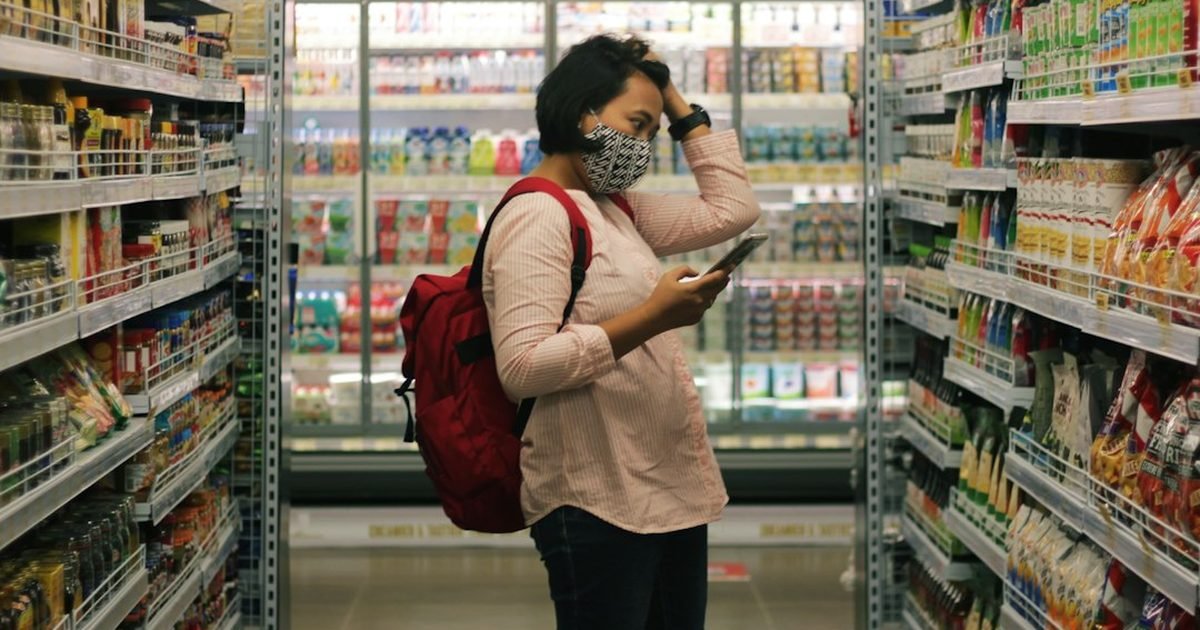
Hundreds of supermarket freezers across France cooked their own contents last Sunday night. Hackers remotely hijacked digital thermostats, pushing temperatures from -27C to over 50C. The result was a mountain of spoiled food and a national security headache.
The attack hit at the worst possible time. Staff arriving for early shifts walked into aisles that felt like ovens. One worker at an Intermarché in Issy-les-Moulineaux described the scene as a catastrophe. ‘They pushed the freezers here up to 62C. Everything had to be thrown away. It was such a waste,’ the worker said. In some stores, the extreme heat even triggered sprinklers, causing secondary water damage.
Scale of the damage
The incident wasn’t isolated. Up to 700 stores were targeted, including major chains like Carrefour, Leclerc, and Monoprix. Dominique Schelcher, president of Coopérative U, confirmed that 80 of their 2,000 supermarkets were hit. ‘This is a completely unprecedented, unexpected, and extremely serious attack,’ Schelcher told French radio. ‘In my entire professional career, I’ve never seen anything like it.’ Staff worked until midnight to clear out tons of perished goods and restock shelves.
Who is behind it?
The Paris public prosecutor’s office has opened an investigation. Cybersecurity expert Gérôme Billois from Wavestone believes the attack looks like political sabotage. ‘The two most feasible scenarios are either it was a group of youngsters or activists who wanted to blow up a few freezers to prove what they could do, or it was a destabilising attack, what we call sabotage, by internal or external state actors,’ Billois said. He pointed to Iran and Russia as the most likely state actors, noting the attack was designed to instill fear and suggest the government is failing.
Outdated tech, easy target
The hackers exploited controllers made by Danish firm Danfoss. Most supermarket cold aisles are connected to the internet for remote maintenance. Danfoss admitted the affected units were running outdated firmware and had known security flaws. ‘We had identified security flaws last year and had long recommended that customers install updates,’ the company said. Cybersecurity researcher Marta Rybczyńska noted that many freezers were running with default passwords. ‘The hackers were able to modify or turn off the alerts so the shops only realised when the first person arrived in the morning,’ she said. The hackers also disabled alarm systems or extended defrost cycles to avoid detection.
France is already Europe’s most hacked country. In the last three years, hackers breached the health system, the jobseekers agency, and the National Agency for Identity Documents. This summer, the finance ministry lost data on 678,000 taxpayers. Billois argues France has fallen behind in cybersecurity, failing to adopt the EU’s Cyber Resilience Act. ‘It’s a text that’s not political and that everyone agrees on but is delayed because there’s always more urgent legislation,’ he said. No group has claimed responsibility yet. Detectives from the anti-cybercrime unit are working the case, but Billois warns it could take weeks or months to identify the culprits. ‘Hackers know how to hide their tracks,’ he added.
Source: Guardian World
This article was compiled by the IndiaBBCNews editorial system from verified international news sources. Facts have been independently reviewed. Original reporting: Guardian World.

