


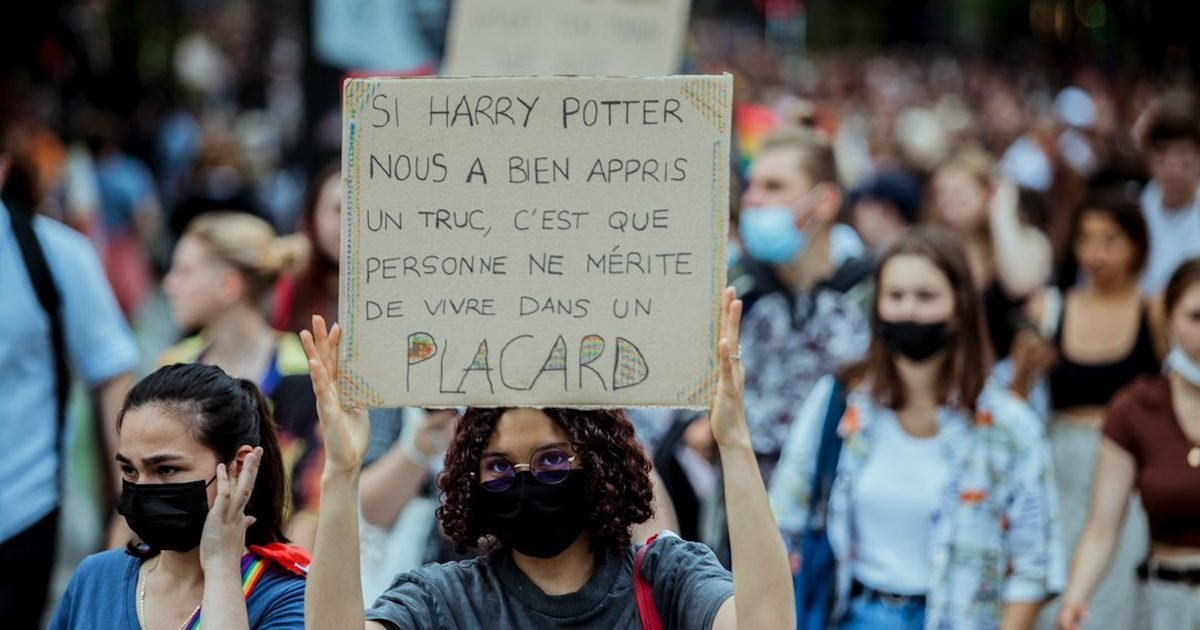
French student protesters are waving signs with a slogan that confuses even the locals: “Bismillah, c’est les ténèbres.”
The phrase translates roughly to “In the name of God, it’s the darkness.” It’s not a call to prayer, nor is it a standard political chant. It’s a cryptic marker of a deep, generational fracture bubbling under the surface of current demonstrations.
Meaningless, Yet Powerful
On the streets of Paris and Lyon, the words have become a badge of identity for a cohort feeling untethered from traditional political narratives. They don’t aim to persuade the older generation; they aim to signal belonging to their own. “It’s less about the theology and more about the aesthetic of rebellion,” one sociology professor in Bordeaux told reporters, noting that the absurdity is the point. The slogan works because it’s opaque to those outside the bubble, creating an immediate in-group/out-group dynamic.
A Generational Divide
This linguistic drift mirrors a broader disconnect. Younger activists are rejecting established party lines and clear ideological labels in favor of vague, internet-born memes that feel more authentic to their lived experience. The phrase captures a mood of existential dread mixed with nihilistic humor. It’s a way to process economic anxiety and political stagnation without sounding like a manifesto. For the older generation, it’s baffling. For the students, it’s shorthand for a reality that feels increasingly dark and undefined.
Political analysts warn that when protest language becomes this fragmented, it becomes harder for policymakers to negotiate or even understand the core demands. The students aren’t asking for specific policy tweaks; they’re expressing a fundamental rejection of the current social contract. As the demonstrations continue, expect more slogans that prioritize vibe over clarity. The message isn’t getting clearer; it’s getting stranger, and that’s exactly what the organizers want.
Source: NYT World

