


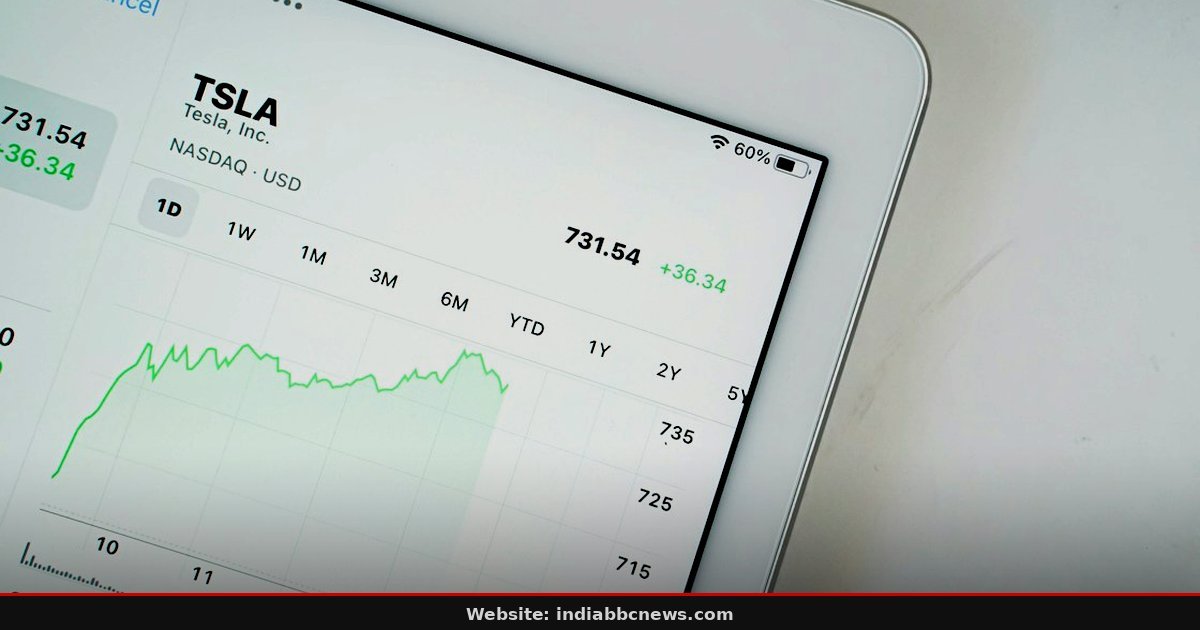
7,416.59. That’s where the S&P 500 settled on Monday afternoon, a number that feels heavy in the mouth given the context. The air in the trading pits, or what’s left of them on the electronic screens, was thick with a specific kind of silence — the kind that follows a gut punch. It wasn’t a chaotic crash, not really.
It was a coordinated retreat. Investors walked away from tech stocks with a speed that suggested they’d seen something in the data, or perhaps just felt the wind change direction. Nvidia dragged the sector down with it, leaving a trail of red across the terminal screens. For anyone watching the markets from London or Mumbai, the message was clear: the easy money in AI is getting harder to find, and the risk appetite is shrinking fast.
The resilience of the broader market is starting to crack. You can see it in the Russell 2000, which slipped 1.7% to 2,742.94. Small caps are often the first to bleed when confidence wavers, and that’s exactly what happened here. It’s a subtle warning sign, but it’s not one to ignore.
The Dow Jones Industrial Average dropped 739.38 points, or 1.4%, closing at 51,608.17. That’s a massive point loss, and it reflects a broad-based retreat rather than just a tech-specific issue. Investors aren’t just dumping semiconductors; they’re rethinking their entire equity exposure. The fear isn’t just about chipmakers anymore.
It’s about the valuation bubble that’s been inflating for two years. Nvidia’s Leadership Vacuum: The Aftermath of a Resignation
Jensen Huang’s departure from Nvidia last week didn’t just shake the company; it shook the entire semiconductor sector. The CEO’s resignation, announced abruptly, left a void that the market has struggled to fill. Analysts are now scrambling to figure out who will steer the ship through the next critical phase of AI development. The uncertainty is palpable, and it’s priced into the stock.
Nvidia sank again on Monday, continuing its slide from last week’s shock. The rest of the chip sector followed suit, with rivals dropping in tandem. The market is treating this as a systemic risk, not just a corporate governance issue.
This isn’t the first time a tech giant has faced a leadership crisis, but the scale of Nvidia’s dominance makes this different. When the leader steps down, the entire narrative wobbles. Investors are asking hard questions about succession planning and strategic direction. The answer, for now, is silence.
That’s a harder sell than it sounds, especially when the stock is trading on multiple of future earnings. The market hates uncertainty, and right now, there’s a lot of it. The FAA Ground Stop and Defense Stocks: A New Front
L3Harris Technologies took a hit on Monday, and it wasn’t related to tech. News that the contractor for the Federal Aviation Administration might be at fault for the nationwide ground stop on Friday sent shockwaves through defense and aerospace stocks. The suggestion from Trump administration officials pointed the finger squarely at L3Harris, sparking a sell-off that had nothing to do with AI or chips. It’s a reminder that geopolitical and regulatory risks can strike any sector, at any time. The market is now worried about the reliability of critical infrastructure.
This incident highlights a growing vulnerability in the US supply chain. When a single contractor can ground the entire aviation system, it’s a red flag for investors. The implication is clear: operational risk is rising. Defense stocks, usually a safe harbor during times of uncertainty, are now being scrutinized for their own operational failures.
It’s a paradigm shift, and it’s one that many hadn’t anticipated. The market is waking up to the fact that stability isn’t guaranteed.
The FAA issue is interesting because it ties back to the broader theme of institutional fragility. When you have a situation where a private contractor’s potential error can halt flights across the country, it raises questions about oversight. Critics have long warned about the privatization of essential services, and this incident adds fuel to that fire. It’s not just a stock market story; it’s a policy story. And the market is starting to price in the costs of that policy choice.
Treasury Yields and Inflation: The Fed’s Dilemma Treasury yields eased on Monday, following their sharp jumps last week. The retreat in yields suggests that investors are losing confidence in the idea that inflation is under control. Or perhaps they’re just taking profits after the recent rally. Either way, the movement is significant.
Oil prices also fell, which is a double-edged sword. Lower oil prices are good for consumers but can signal weak global demand. The Fed is now in a tough spot, trying to balance growth with price stability.
The tug-of-war between growth and inflation is at the heart of the current market narrative. If yields stay elevated, it could further weigh on stocks, particularly those with high valuations. Tech stocks, already under pressure, are particularly vulnerable to interest rate changes. The market is watching the Fed’s next move with laser focus.
Any hint of a hawkish stance could trigger another sell-off. The stakes are high, and the margin for error is slim.
It’s worth remembering that interest rates are the gravity of the financial universe. When they rise, everything gets heavier. Stocks, bonds, real estate — all feel the pull. Right now, the gravity is increasing, and the market is struggling to maintain its orbit.
The recent yield jump last week was a warning shot, and Monday’s easing was a brief reprieve. But don’t mistake the reprieve for a rescue. The underlying tension remains, and it’s likely to define the next several quarters of market performance.
What This Means for India: A Ripple Effect For Indian investors, the sell-off in US tech stocks is more than just a headline. It’s a direct impact on FII flows. Foreign institutional investors, heavily invested in US tech, may need to rebalance their portfolios. This could lead to a withdrawal of funds from other markets, including India.
The rupee, already under pressure, could face further volatility. Indian tech companies, many of which are part of the global AI supply chain, are also at risk. A downturn in US tech demand could translate to lower orders for Indian IT services firms.
The India angle here is critical. While the US market is in the spotlight, the spillover effects are felt globally. Indian markets have been resilient, but they are not immune to global shocks. The key will be how quickly the US market stabilizes.
If the tech sell-off continues, Indian tech stocks could see increased volatility. Investors should watch for any shift in FII behavior. It’s a complex web of interdependencies, and it requires a nuanced understanding of global market dynamics.
The connection between US tech and Indian IT services is tighter than many realize. Many Indian firms provide critical support for AI infrastructure, and a downturn in that sector could have real economic implications. This isn’t just about stock prices; it’s about job security and growth potential. The government needs to be aware of these risks and prepare for potential economic headwinds. The global economy is interconnected, and a stumble in one market can send shockwaves through others.
Historical Context: Comparing to 2000 The current tech sell-off bears a resemblance to the dot-com bubble burst of 2000. Back then, the Nasdaq lost more than 75% of its value over two years. The similarities are striking: high valuations, a focus on a single technology (AI vs. internet), and a leadership crisis at a major player. While it’s too early to call this a bubble burst, the parallels are worth noting.
History doesn’t repeat itself, but it does rhyme. The market is currently navigating a similar terrain, with similar risks and opportunities.
The lesson from 2000 is clear: overvaluation eventually gets corrected. It’s a painful process, but it’s necessary for long-term health. The current tech sector is highly valued, and any sign of slowing demand or leadership instability can trigger a correction. Investors should be cautious and not assume that the rally will continue indefinitely. The market has given a warning, and it’s one that should be heeded.
Looking back at 2000, we see that the correction was prolonged and severe. Many companies that seemed invincible at the time disappeared or were bought out for pennies on the dollar. The same could happen today. The AI sector is crowded, and competition is fierce.
Not all players will survive. The market is starting to differentiate between winners and losers, and that differentiation is causing the current volatility. It’s a necessary churn, but it’s a painful one.
Forward Look: What’s Next? The next few days will be critical for the market. Investors will be watching for any signs of stabilization in tech stocks. If Nvidia can find a new leader and reassure the market, the sell-off could reverse. But if the uncertainty continues, we could see a broader market decline.
The Fed’s next meeting is also on the table, and any comment on inflation or interest rates could move the market. The stakes are high, and the market is on a knife’s edge.
The coming week will test the resilience of the recovery. If the market can hold its ground, it will signal that investors are still confident in the long-term outlook. But if it rolls over further, it could mark the beginning of a new bear phase. The key will be how quickly the market can digest the news and find a new equilibrium. For now, the air is tense, and the next move is anyone’s guess.
Markets are psychological as much as they are financial. When confidence wavers, the reaction can be disproportionate. The current sell-off is a reflection of that psychological shift. Investors are no longer willing to pay a premium for growth without proof.
They want to see results, and they want to see them now. If the companies can’t deliver, the market will punish them. The next few weeks will tell us whether the tech sector can meet that demand. The answer will shape the market for the rest of the year.
Frequently Asked Questions Why did Nvidia stocks drop so much this week?Nvidia stocks dropped because of the resignation of CEO Jensen Huang, which created uncertainty about the company’s future direction. The market reacted negatively to the leadership vacuum, leading to a sharp sell-off. How does the FAA ground stop affect L3Harris Technologies?The FAA ground stop affected L3Harris Technologies because officials suggested the company might be at fault for the incident. This led to a drop in the company’s stock price as investors worried about its operational reliability.
What is the impact of rising Treasury yields on tech stocks?Rising Treasury yields make tech stocks less attractive because they increase the cost of borrowing and reduce the present value of future earnings. This leads to a sell-off in high-valuation tech stocks. How does the US tech sell-off affect Indian markets?The US tech sell-off can affect Indian markets through reduced FII inflows and lower demand for IT services. This can lead to volatility in Indian tech stocks and pressure on the rupee.
Is the current market situation similar to the 2000 dot-com bubble?The current market situation has similarities to the 2000 dot-com bubble, such as high valuations and a focus on a single technology. However, it’s too early to say if it will result in a similar crash. Source: Yahoo Finance
Source: Yahoo Finance

