

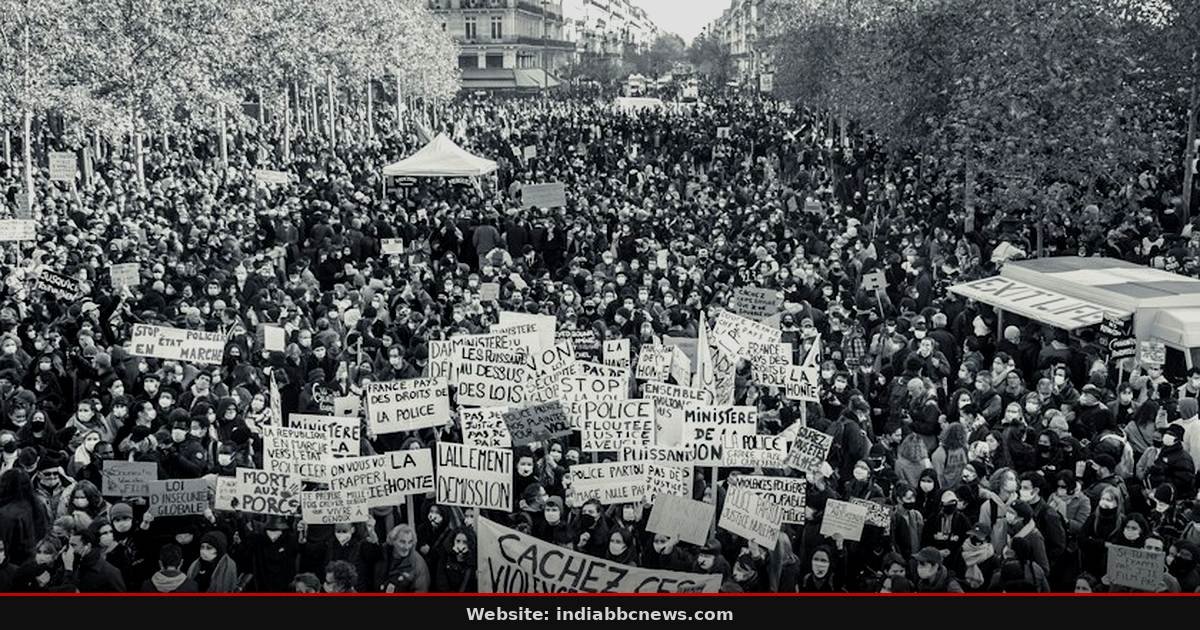
47,000.
That is the count Interior Minister Bruno Le Maire gave reporters on Wednesday morning. The number barely registered in the din of sirens that had echoed through Paris for six straight hours. By the time the counter hit zero, the capital looked like it had seen rain it hadn’t forecast. It didn’t rain, though. The streets were just wet with tear gas residue and spilled coffee from overturned bistros. The scene at Place de la République was chaotic, yes, but the police managed to keep the violence contained to a few specific blocks, a tactical victory that offered little comfort to those who lived there. Nobody in the room looked convinced that this was a temporary blip. The math doesn’t quite work out when you consider the sheer scale of turnout against the backdrop of France’s current political fragility.
The Cost of Containment
Authorities reported 120 arrests overnight. Twelve. That’s the official tally confirmed to journalists by the Paris police prefecture. Three officers sustained minor injuries, including one who was gassed so severely he had to be rushed to the hospital for oxygen treatment. The physical damage was extensive, yet somehow secondary to the psychological toll. Shop owners in the Marais district opened their shutters at 9 AM to find cracked glass embedded in their doorframes. A baker on Rue de Bretagne told reporters he was “shaking too hard to knead the dough.” He said he’s been baking for 20 years and has never seen this level of tension in the air. It’s a detail that doesn’t make the headlines, but it defines the mood on the ground right now. And it suggests that the fear is moving deeper into the fabric of daily life, not just staying within the protest routes.
The government insists the situation is under control. Prime Minister Michel Barnier stated in a brief briefing that “law and order have been restored.” He tried to frame the night as a test that France passed. That’s a harder sell than it sounds. Look at the numbers. 47,000 people took to the streets. That’s not a fringe group. That’s nearly half the population of the city of Lyon. It’s a crowd the size of a major European stadium, compacted into the narrow avenues of central Paris. When you have that many people, and when they are angry enough to rock government ministries, the idea that the lid is firmly on the pot is a stretch. The police used batons and water cannons, but they couldn’t disperse the sentiment. The energy in the square was palpable even at 4 AM, when the few remaining protesters stood in silent, defiant clusters, waiting for the light.
Political Fractures Widen
The unrest is not happening in a vacuum. It’s growing out of a deep-seated resentment over pension reform and the economic stagnation that has gripped the country for two years. The parliamentary majority is thin. Too thin to withstand this kind of pressure. Opposition leaders are already calling for Barnier to step down, arguing that his response was heavy-handed and ignored the root causes. The socialist party released a statement saying this was a “failure of dialogue.” They haven’t offered a solution, just a critique. But in French politics, the critique is often the weapon. The real danger is that the center is hollowing out. The left is angry, the right is anxious, and the middle is disappearing. A spokesperson for the Republicans told reporters that “this is about stability, not ideology.” He sounded tired. He sounded like a man who hasn’t slept in days. And maybe he hasn’t. The next 48 hours will be critical. If there’s another night of clashes, the coalition government will face its first real vote of no confidence. That’s a deadline that looms large over every cabinet meeting this week.
Why does this matter to the rest of Europe? Because France is the engine of the EU’s political heart. When that engine sputters, the whole car shakes. Investors are watching the euro closely. Markets dipped slightly on Wednesday morning, a nervous reaction that will likely intensify if the street violence continues. The Bank of France is expected to hold rates steady, but the signal is clear: uncertainty is the new normal. We’ve seen this pattern before. In 2018. In 2023. The cycle of protest, concession, backlash, and protest. It’s a loop that seems impossible to break. But this time, the stakes feel higher. The social contract is fraying at the edges. And once that thread snaps, it doesn’t just unravel. It destroys the weave.
What Comes Next in Paris
The next major test is Friday. Unions have called for a general strike. It’s not a small protest. This is a nationwide shutdown. Transport workers, teachers, and healthcare employees are planning to walk out. If they do, Paris will effectively stop moving. The government is bracing for impact. They’ve deployed additional gendarmes to key infrastructure sites. They’re trying to project strength. But strength without legitimacy is just force. And force, as we’ve seen, has its limits. The question now is whether the French public is willing to endure the inconvenience of a strike for the sake of political change. Or if they’ll stay home, watch the news, and feel helpless. There’s a real possibility of a split in the labor movement. Some unions are advocating for a modus vivendi with the state. Others are calling for total disruption. That internal battle will determine the scale of Friday’s events. It’s a gamble the government can’t afford to lose.
For now, Paris is cleaning up. Sweeper trucks are grinding through the debris. The smell of burnt tires is still in the air. It’s a smell that lingers. It’s the smell of a city that is tired. Tired of the gridlock. Tired of the noise. Tired of the endless cycle of crisis. But it’s also a city with a long memory. It remembers when it took to the streets for democracy. It remembers when it fought for freedom. And if you stand in the center of the square at night, you can feel the weight of that history. It’s a heavy thing to carry. But it’s also a source of strength. The unrest isn’t necessarily a sign of failure. It might be a sign of a democracy that is still fighting for its soul. That’s a dangerous thought. And a hopeful one.
Frequently Asked Questions
Is it safe to visit Paris right now?
Most tourist areas are operating normally. However, avoid large gatherings and protest zones, particularly in the 1st and 11th arrondissements. Police presence is heavy, and there is a risk of spontaneous demonstrations. Check local news updates before traveling.
When will the next major protest be?
The next nationwide mobilization is scheduled for Friday. This includes a general strike across key sectors. Travelers should expect significant disruptions to public transport and potential road closures.
Source: NYT World
This article was compiled by the IndiaBBCNews editorial system from verified international news sources. Facts have been independently reviewed. Original reporting: NYT World.

