


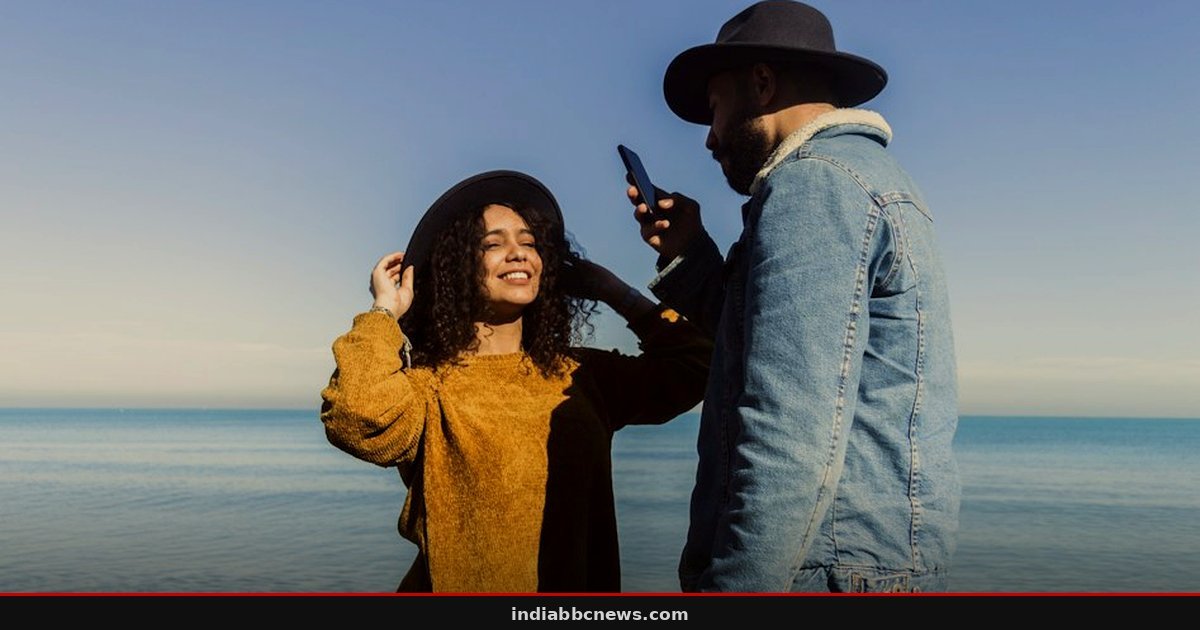
Match Group is betting its next growth surge on cowboy hats, “chivalrymaxxing,” and a mandatory marriage timeline. The strategy hinges on a contrarian bet: that Gen Z, a cohort widely cited as apathetic toward commitment, is actually starving for the rigid structure of traditional courtship. The newly relaunched Christian dating app, Upward, went live last month with a feature set explicitly designed to steer 20-somethings toward the altar, not the hook-up. It’s a pivot that ignores the broader data showing young people are coupling up at record lows, instead targeting the specific 72 percent of Gen Z who still say they want to marry.
The numbers behind the move are precise. Match Group’s 2026 Singles in America study identified a quarter of singles aged 18 to 34 who “identify with a combination of traditional values around family, faith, and community.” Lauren DeFord, director of brand marketing at Match, told WIRED the relaunch opens the door to users who share those goals “but may not lead with a faith-first mindset.” It’s a subtle expansion, but the branding is anything but subtle. The campaign, dubbed “Wanted: For Life,” leans heavily into Americana imagery, featuring video testimonials of newlyweds and a promotional aesthetic that looks less like a tech startup and more like a Western film poster.
The “Chivalry” Code
How does an app enforce tradition? It builds it into the code. The new Chivalry Mode restricts messaging privileges, compelling men to initiate contact. This is a direct return to the operational model Bumble utilized years ago before pivoting. But Upward goes further with its “Marriage Timeline” feature. Users must disclose when they hope to get married. It’s a filter that removes ambiguity, replacing the slow-burn uncertainty of modern dating with a clear, contractual expectation. For a generation raised on fluid relationship dynamics, the requirement to state a deadline for commitment is jarring.
Profiles Defy the Brand
Adreanna Pulliam, a 25-year-old opera singer in Bloomington, Indiana, signed up to test the waters. She expected hyperconservative men. Instead, she found a profile listing a “progressive donkey” as a deal-breaker. “I hadn’t expected to see a moderate libertarian,” she told WIRED. The contrast between the app’s curated “Americana” branding and the chaotic reality of its user base is stark. Pulliam encountered a man advertising his Snapchat handle, “Yaboi Blaze reallysexgod.” Another user included a photo of himself standing in front of a poster-size image of the deceased at a funeral. These are not the polished, cowboy-hat-wearing archetypes Match Group has marketed to investors. They are the messy, often absurd humans actually logging in.
A Reaction to Normlessness
Is this a genuine cultural shift, or a marketing misfire? Daniel Cox, author of Generation Uncoupled and director of the Survey Center on American Life, argues it’s the latter. He sees the “trad” trend not as a resurgence of values, but as a desperate reaction to a vacuum. “People are wanting something over nothing,” Cox said. With the rise of nontraditional partnership models like polyamory and relationship anarchy, many young adults have lost their “script.” The trad script offers clarity: defined roles, clear expectations, a beginning, middle, and end. It’s a comfort blanket in a hyperindividualistic culture that has eroded social and civic ties. Yet, the data suggests this comfort is fleeting.
The Data Doesn’t Lie
Despite the app’s optimistic framing, the macro-trends are grim. A 2023 Pew Research survey found that only 23 percent of adults consider being married “extremely” or “very important” to a fulfilling life. Compare that to 61 percent who said the same about having close friends. The trajectory is a steep downward slope. In 1993, 80 percent of high school seniors said they were likely to marry someday. By 2023, that figure had dropped to 67 percent. The decline is driven largely by young women. An American Institute for Boys and Men survey found that 44 percent of Gen Z men have had no relationship experience during their teen years, double the rate for older men. Cox notes a growing belief among young women that marriage itself makes them less happy than remaining single. “There’s a concern that if they get married, they won’t be as happy as if they are single,” he explained. Upward is selling a timeline to a generation that is actively dismantling the concept of the timeline.
What Happens Next
The real test for Upward isn’t the launch; it’s the retention rate. Match Group will likely release engagement metrics in the coming quarters to determine if this “chivalry” niche is a sustainable revenue stream or a fleeting curiosity. Investors will be watching closely to see if the “Marriage Timeline” feature actually converts swipes into subscriptions, or if users simply bounce when confronted with the rigidity of the platform. The decision point for Match Group comes when they must decide whether to double down on this niche or pivot back to the broader, less structured market. For now, the app sits in a strange middle ground: too traditional for the mainstream, too chaotic for the purists.
Frequently Asked Questions
Does Upward require users to be Christian?
Not anymore. While the app was originally exclusively for Christian daters, the relaunch expanded its focus. Users are still encouraged to include a “Faith Statement” on their profile, but the platform now welcomes individuals who share traditional values around family and community without leading with a faith-first mindset. The core requirement is alignment with the “modern courtship” ethos, which includes features like Chivalry Mode.
What is “Chivalry Mode” on Upward?
Chivalry Mode is a functional setting that restricts who can send the first message. It mandates that men initiate contact, mirroring the early operational model of Bumble. This feature is part of the app’s broader strategy to enforce traditional gender roles in the initial stages of dating, aiming to provide a clear “script” for interaction that contrasts with the free-for-all communication styles of other dating platforms.
Source: Wired

