


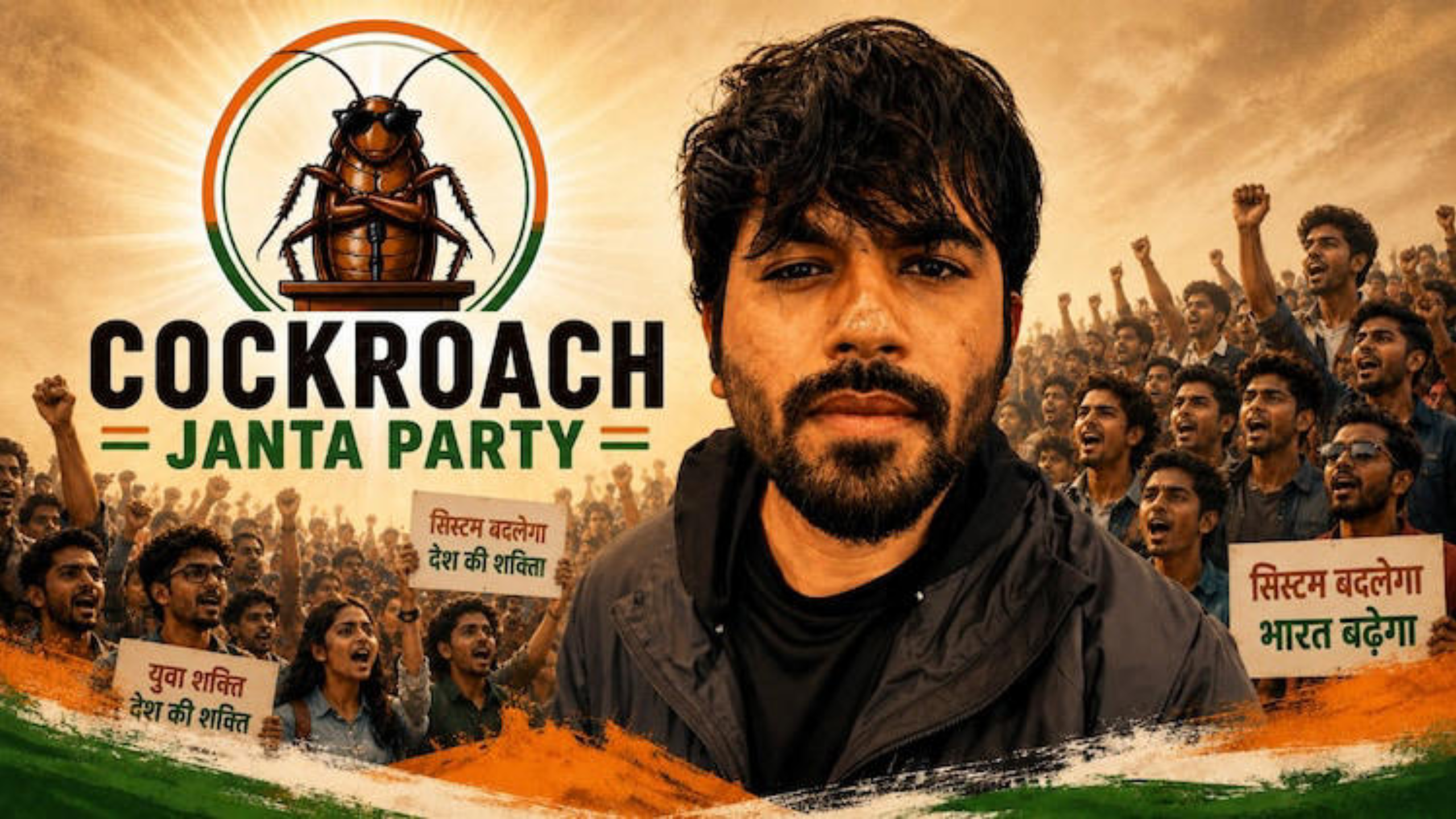
Abhijeet Dipke has a talent for turning even a return from hospital into political theatre — and his announcement that he would be arriving at an airport has generated exactly the kind of chaotic, affectionate crowd response that makes the Cockroach Janta Party difficult to dismiss as simply a joke.
After his assault in Jaipur and subsequent medical treatment, Dipke posted a cryptic message: “Meet me at the airport.” No time. No date. Just the airport.
What Actually Happened
Supporters — and there are more of them than most political observers expected — interpreted the message as a call to gather. Several hundred people showed up at different airports across Maharashtra and a few other states, creating logistical confusion and generating content that went viral before the actual arrival was confirmed.
Dipke eventually arrived at Pune airport to a crowd that, by some accounts, was genuinely substantial. Supporters wore cockroach costumes — a recurring feature of CJP events — held placards, and chanted slogans that mixed political messaging with the absurdist humour that characterises the party’s approach.
The police presence was notable. After Jaipur, nobody wanted another incident, and local administration had clearly been given instructions to ensure the arrival proceeded without disruption.
Is This Political Theatre or Something More?
The easy answer is “both, and that’s the point.”
Dipke has said repeatedly that the CJP’s deliberately absurdist approach is a form of protest — a way of exposing the performative aspects of mainstream political rallies by doing something even more performative, but doing it honestly. When mainstream politicians hold choreographed events, nobody calls it theatre. When Dipke organises a spontaneous airport gathering, people ask if it’s “real.”
That question itself is, arguably, the message.
After the Assault: Has the Support Base Changed?
Several political analysts have noted that the Jaipur assault appears to have increased sympathy for Dipke and the CJP among people who had previously dismissed the outfit as a novelty. Being attacked tends to make people more sympathetic to the attacked — and Dipke’s response, which was measured and focused on the systemic issues rather than personal victimhood, struck many as more politically mature than expected.
Whether that sympathy translates into actual votes in the next election cycle is a different question. The CJP has never crossed the threshold that would make it a meaningful electoral force. But its significance was never primarily about winning seats — it was about what it represents within the broader discourse.
The airport moment, whatever you make of it, added another chapter to a political story that continues to defy easy categorisation.