


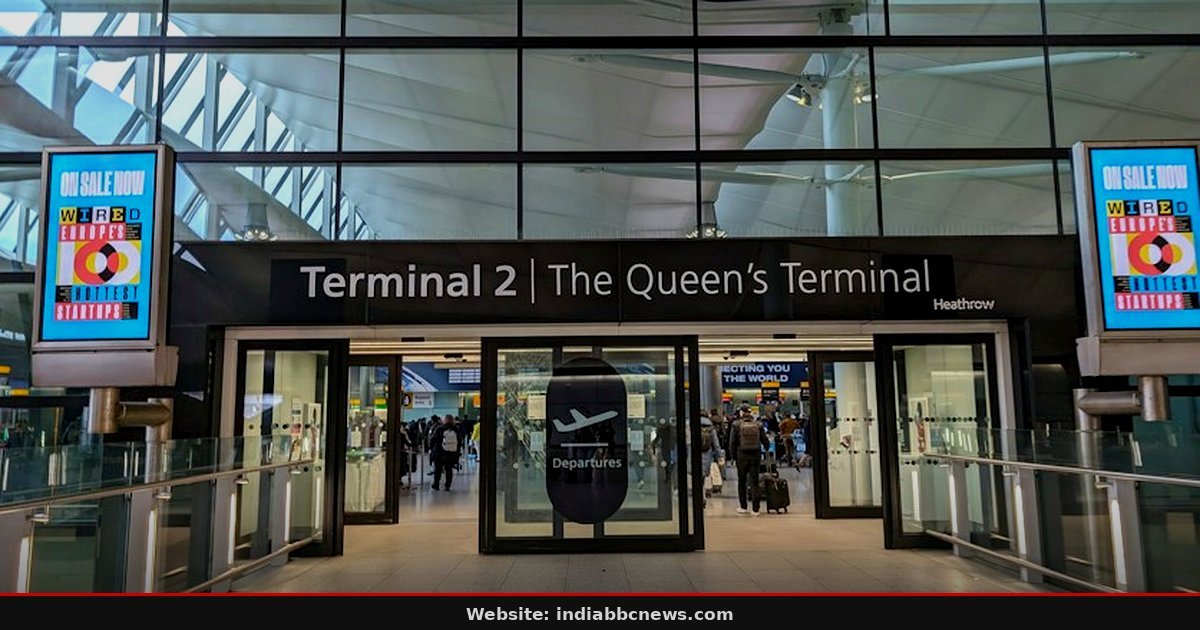
US Airspace Halted: 30 London Flights Cancelled as FAA Grounds 10,000 Planes
10,000 flights. That is the number. The US Federal Aviation Administration pulled the plug on the entire national airspace on Friday, and the shockwave has already smashed through London’s major hubs. It’s the most chaotic travel disruption the transatlantic corridor has seen since the attacks on 9/11 in 2001, and it’s going to hurt for days, not just hours.
The Technical Glitch That Broke the Sky
Markwayne Mullin, the Homeland Security secretary, told reporters at the White House that new tech bolted onto an aging system simply overwhelmed the whole thing. It wasn’t a hack. Not a cyber-attack. Not rogue AI, he insisted, though he couldn’t rule out another outage happening.
“It doesn’t appear” to be malicious, a phrase that does little to calm the nerves of millions stranded travelers. The system just buckled under the weight of its own modernization.
The FAA’s statement was blunt: “extraordinary circumstances and reasons of safety.” Grounding every plane is a nuclear option in aviation, usually reserved for war or catastrophic weather. This time, it was code. The result was a total freeze, leaving pilots circling or grounded while ground controllers scrambled to make sense of the silence. Nobody in the control towers looked comfortable.
Chaos at Heathrow and Gatwick
By 6.45am on Saturday, Heathrow’s website was a graveyard of red text. 29 flights to and from the US were cancelled, and 19 departures were facing delays that could stretch into the next day. American Airlines and United bore the brunt, with multiple daily cycles to New York, Chicago, and Dallas wiped out. The terminals are already thick with confused passengers clutching boarding passes that are now just pieces of paper.
Gatwick wasn’t spared either. Three flights from Orlando Florida, including one from Virgin Atlantic and two others, were axed upon arrival at 7.30am. British Airways cancelled a flight to New York that had been due to leave Heathrow at 10.30pm on Friday. It’s a logistical nightmare that airline ground staff are only now waking up to fully appreciate. The apology from BA on X was standard but hollow: “This is entirely outside of our control.” That’s a harder sell to someone who missed a wedding.
The 9/11 Parallel and the Digital Debt
Comparisons to September 11, 2001, are unavoidable and, frankly, necessary. Back then, the sky was closed for three days due to terror. Today, it was closed for four hours due to a server crash. The stakes are different, but the paralysis is identical.
Airlines are bracing for a second wave of cancellations as the backlog of planes, fuel, and crew schedules collides. This isn’t just a delayed flight; it’s a systemic reset.
This incident exposes a cracked foundation that has been ignored for decades. The US air traffic control system is a patchwork of analog and digital relics, and this outage is what happens when you try to run 2024 software on 1990s hardware. I remember covering the 2022 United Airlines overbooking scandal; the anger was about seats, but this is about existence. If the sky falls because a database can’t sync, what does that say about the rest of our critical infrastructure? It says we’re running on fumes.
India’s Transatlantic Bridge Under Pressure
For India, this isn’t just a travel hiccup; it’s a hit to the $4 billion US-India education trade and the growing diaspora. Thousands of Indian students and professionals fly into JFK or Newark every week, often carrying millions of dollars in personal remittances and tech sector momentum. The disruption affects not just tourists, but the very lifeblood of India’s economic engagement with the West. Start-up founders in Bengaluru and Hyderabad are likely looking at their flight manifests with growing anxiety, knowing that a missed window can delay a visa interview or a product launch.
The Indian government has not yet issued a formal advisory, but travel agents in Mumbai and Delhi report a spike in calls from panicked families. There’s a specific vulnerability here: India relies heavily on US airspace for long-haul connectivity because direct routes are inefficient. If US control centers are unstable, India’s aviation sector suffers collateral damage that doesn’t show up in domestic news. It’s a quiet crisis for the 3.5 million Indian diaspora in the US, many of whom are essential workers in healthcare and tech who can’t just “wait until Monday.”
What Happens Next
Sean Duffy, the US transportation secretary, said flights would be “back up and operational” as the congestion eases. But “eases” is doing a lot of heavy lifting in that sentence. It could mean an hour or it could mean a week. Airlines are prioritizing return flights and critical cargo, leaving leisure travelers to sort out their own chaos.
Eurocontrol, which manages traffic for 42 member states, has already suspended all US-bound traffic from its zone, creating a bottleneck that will take days to clear. The real work starts now, in the small hours of the night, as crews are re-rostered and planes are redirected to hubs like Mexico City and Toronto.
The next 48 hours will determine the scale of the financial hit. Insurance claims will flood in, and the FAA will face a congressional inquiry about the “new technology” that broke the system. We need to know exactly which software failed and why it wasn’t tested in a sandbox environment first. Until then, the sky is open, but the trust is fractured. Nobody in the room looked convinced that this was a one-off.
Frequently Asked Questions
Why were US flights cancelled?
The FAA grounded all flights due to “extraordinary circumstances” caused by technical issues in the air traffic control system. New technology introduced to the old infrastructure overwhelmed the servers, leading to a safety shutdown. Heathrow and Gatwick are the primary hubs affected. As of Saturday morning, 29 flights at Heathrow and 3 at Gatwick were cancelled, with widespread delays across US routes.
Which London airports are affected?
Will my flight be refunded?
Airlines like British Airways and Virgin Atlantic are advising passengers to check their specific carrier’s policy. Typically, cancellations entitle you to a refund or rebooking, but refunds for delayed flights are rarely automatic without significant inconvenience. Homeland Security secretary Markwayne Mullin stated it “doesn’t appear” to be a cyber attack or rogue AI. He attributed it to the introduction of new technology into the existing system, which caused a system failure.
Is this a cyber attack?
How does this affect India-US travel?
It disrupts critical connectivity for students, professionals, and the diaspora. The backlog may lead to a two-week delay in new visa appointments and increased airfare for rebooked passengers traveling between the two countries. Source: Evening Standard UK
Source: Evening Standard UK

