


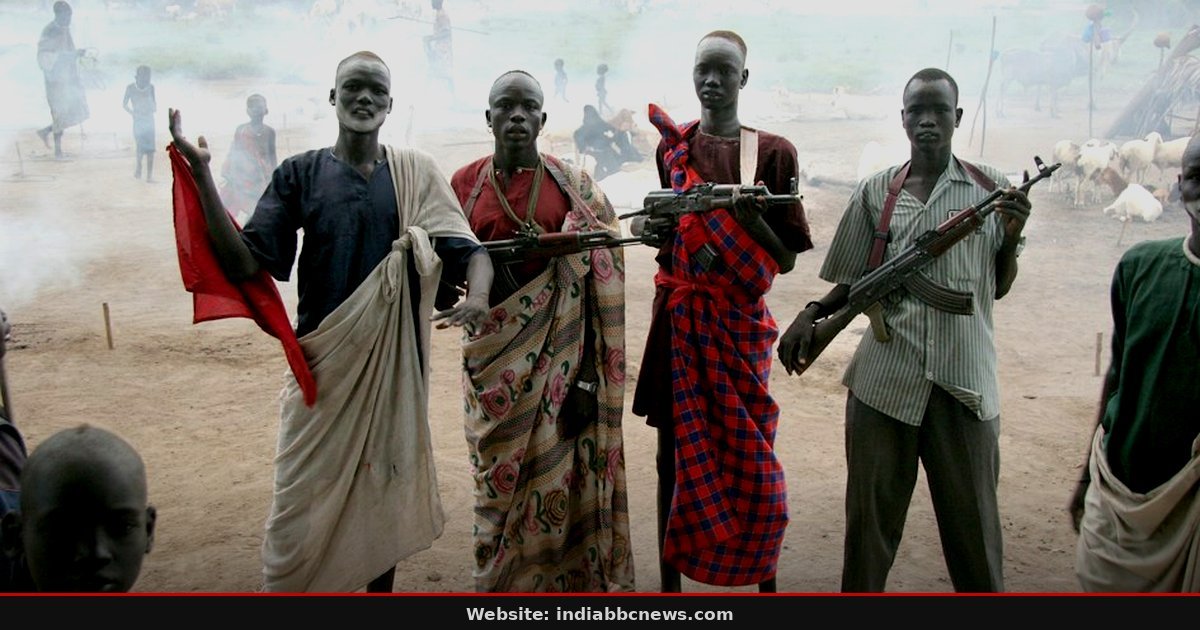
El Obeid smells of burnt rubber and diesel.
It is not the smell of peace; it is the scent of a city holding its breath under drone strikes. In the heart of North Kordofan, the smoke hangs low, mixing with the dust that has coated everything for two years. This is no longer just a border skirmish or a minor civil unrest. It is the epicenter of a global disaster that has quietly swallowed 14 million people. The numbers are staggering, almost incomprehensible in their scale, forcing us to confront a reality that the rest of the world has largely chosen to ignore.
150,000 Dead: The Silent Toll of a Forgotten War
There is no official body count because no one is left to count. The conflict monitor Acled has verified nearly 60,000 deaths, but local officials and humanitarians whisper the real figure is closer to 150,000. We don’t have luxuries of precision here, only the grim certainty that every single day brings more bodies into the unmarked earth. It’s a death toll that rivals the worst conflicts of the 20th century, yet it makes only sporadic headlines in New York or London.
The silence is deafening. Why did the world let this happen? The answer lies in the lack of strategic interest; Sudan is not an oil-rich Gulf state or a nuclear-armed power. It is a vast, arid land where the suffering is invisible until it is too late.
That’s a failure of moral imagination that should haunt every major capital on Earth. The quiet brutality here is not a mistake; it is a neglect that has allowed an 18-month siege to turn a city into a graveyard.
El Obeid: The New Front Line of Desperation
El Obeid sits at a crossroads, linking central Sudan to the west. The city, home to half a million residents and another 100,000 displaced refugees, is currently under partial siege by the Rapid Support Forces (RSF). Until recently, it was almost completely surrounded, with only thin ribbons of access remaining for aid convoys. Now, even those are shrinking as the artillery gets louder and the drones more frequent.
The UN has warned that the patterns of violence seen here are mirroring the horror in El Fasher. Nobody in the room looks convinced that an immediate ceasefire is possible. It’s a harder sell than it sounds, given the entrenched positions of the warring factions. The air raid sirens, once a distant sound, are now a constant, low hum that vibrates in your chest. You can feel the tension in the way people flatten themselves against walls, eyes glued to the ceiling, waiting for the next explosion to decide their fate.
How Two Generals Turned Allies into Arch-Enemies
This war did not start out of nowhere. In 2019, General Abdel Fattah al-Burhan of the Sudanese Army and General Mohamed Hamdan Dagalo, known as “Hemedi,” of the RSF, joined forces to overthrow dictator Omar al-Bashir. They were uneasy partners, bound by a joint government with a civilian prime minister, but the cracks were always there. By 2021, they had staged a coup, silencing the civilian voice, and by April 2023, their power struggle over integrating the RSF into the army snapped into open war.
The RSF, whose roots trace back to the Janjaweed militias accused of ethnic cleansing in Darfur, has been accused of receiving bankrolls from the UAE in breach of arms embargoes. The Emirates denies this loudly, while the RSF claims the army is backed by Egypt and Iran. It’s a proxy war in all but name, with external powers fueling the fire from the sidelines. The result is a chaos that no diplomatic note can soothe, a mess that has consumed the very fabric of Sudanese society.
Genocide Hallmarks and the Weaponization of Rape
A UN independent fact-finding mission recently stated that actions in Darfur bear the “hallmarks of genocide.” This is not hyperbole; it is a legal term with heavy consequences. The RSF has been accused of ethnically targeted killings, widespread sexual violence, and enforced disappearances. The brutality is not random; it is systematic, calculated, and designed to terrorize entire communities into submission. The evidence is mounting, and it is damning beyond repair.
Sexual violence has been used as a weapon of war on a scale that is unprecedented. Unicef has documented the rape of children as young as one year old, a fact that makes the stomach turn with a nausea that goes beyond physical discomfort. It’s not just about the physical trauma, though that is severe enough to break families for generations. It’s about the intentional erasure of dignity, the systematic dismantling of the social order.
The WHO has verified 217 attacks on healthcare facilities, leaving 21 million people without basic medical services. How does a society recover when its hospitals are rubble and its doctors are dead? The answer, tragically, is that it doesn’t. Not without massive, sustained intervention.
What This Means for India and the Global South
For India, this is not just a distant tragedy; it is a bordering crisis on the African continent. Over 4.4 million Sudanese refugees have fled to neighboring countries, including Chad and Egypt, creating a ripple effect that impacts regional stability. Indian companies have significant investments in African infrastructure and energy, and political instability in Sudan threatens these broader regional markets. We can’t afford to view Africa as a periphery; it is a core component of India’s rising geopolitical role.
There is also a human cost that touches home. The Indian diaspora in Sudan, while small, is vulnerable, and the crisis highlights the need for a more robust evacuation protocol. Furthermore, the famine risk, with 20 million people facing acute food insecurity, affects global food prices. That’s a direct hit to Indian inflation rates, which are already under pressure.
If Sudan’s grain stores burn, bread prices in Mumbai and Delhi could rise. The connection is direct, immediate, and often overlooked. We must act as a stabilizing force, not just a silent observer, or we risk seeing the chaos spill over into our own sphere of influence.
Frequently Asked Questions
Why did the war start in Sudan?
The war broke out in April 2023 due to a power struggle between the Sudanese Army and the Rapid Support Forces. It was triggered by disagreements over integrating the RSF into the regular army and control over state resources. There is no official death toll, but Acled has verified nearly 60,000 deaths. Humanitarian estimates suggest the number could be as high as 150,000, making it one of the deadliest conflicts in recent history.
What is the current death toll in Sudan?
Is there a ceasefire in place?
No, there are no signs of an immediate ceasefire. Both sides continue to claim territory, and the front lines are shifting rapidly, particularly in the Kordofan region. Diplomatic efforts have stalled due to the involvement of external proxies.
How does the Sudan crisis affect food security in India?
Sudan is a significant grain exporter, and the conflict has disrupted production and trade. This contributes to global food price volatility, which can impact inflation and food costs in importing nations like India. Human Rights Watch alleges the UAE has bankrolled the RSF, while the RSF claims the army is backed by Egypt and Iran. These accusations are denied by the respective governments, but the flow of weapons suggests external involvement.
Who is supporting the warring factions?
Source: The Independent World
Source: The Independent World

